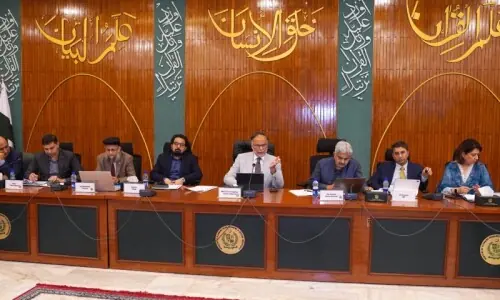
GROWING American interest in Pakistan’s critical minerals is no longer speculative. According to US diplomats, American companies are actively examining several mineral projects here as part of Washington’s push to diversify mineral supply chains away from China. That interest has already produced a $500m agreement between the two countries and approval of $1.3bn in US financing for Reko Diq. For Pakistan, the opportunity extends beyond capital inflows. Its mineral wealth can attract new technologies, diversify exports and generate employment. That outcome depends on treating these resources as long-term national assets rather than items to be signed away in closed rooms. The experience of Reko Diq offers an important lesson. Years of legal disputes and policy reversals imposed enormous costs on Pakistan. While the project has since been revived, the controversy demonstrated the consequences of weak governance, lack of transparency and poor contract management. Any future agreements involving critical minerals must therefore be subjected to rigorous legal, financial and technical scrutiny.
Transparency should be the guiding principle. The terms of any contract, its fiscal implications and obligations should be placed before parliament. Such openness would strengthen investor confidence by demonstrating that agreements enjoy political legitimacy and are less vulnerable to future disputes or policy reversals. Also important is the role of local communities. Most of the country’s mineral deposits lie in some of its least developed regions, where residents have long complained that natural resources are extracted while poverty persists. Any investment framework must ensure that local populations become major stakeholders through employment, skills development, infrastructure, social investment and economic benefits. Without local ownership, even commercially viable projects may struggle. That said, the government must not rush into agreements simply because American firms have shown interest in its critical minerals. Contracts signed today will shape the nation’s economic future for years. Therefore, Islamabad should also actively court Chinese firms with extensive expertise and technological capabilities across the entire critical minerals value chain rather than relying on US firms alone. A competition between Chinese and US investors can ultimately work in Pakistan’s favour, attracting better commercial terms, and encouraging higher standards of technology transfer and value addition.
Published in Dawn, August 7th, 2026