ISLAMABAD: As the Federal Investigation Agency’s (FIA) Islamabad Zone continues its inquiry against officials of the Pakistan Institute of Medical Sciences (Pims), senior doctors have called for reforms in the criminal justice system and medico-legal departments.
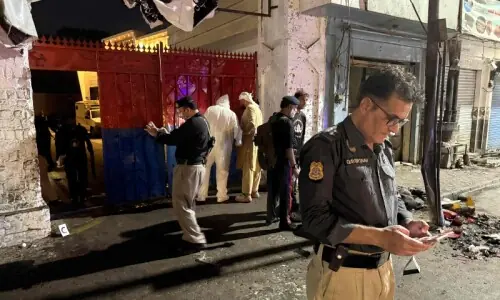
Last month, the FIA’s Anti-Corruption Circle conducted a trap raid at Pims under the supervision of a judicial magistrate and with prior approval from the competent authority.
An FIA official posed as an injured person and paid marked currency as an advance for obtaining a fake medico-legal certificate (MLC), after which three suspects, including a medico-legal officer, were arrested red-handed.
Old records of fake MLCs were seized from the site, and an FIR was registered against the accused under Sections 420, 468, 471 and 109 of the Pakistan Penal Code (PPC), as well as Section 5(2) of the Prevention of Corruption Act, 1947.
A senior doctor at the hospital, requesting anonymity, said the incident was unfortunate as it had become a source of embarrassment for both the hospital administration and the health ministry.
He suggested reforms in the medico-legal department to prevent such incidents from recurring.
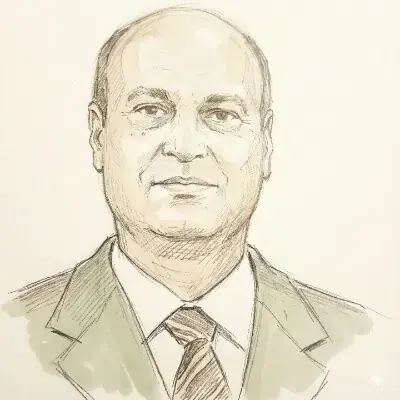
Pims Deputy Director Dr Saifur Rehman, who holds a postgraduate qualification in forensic medicine and medical jurisprudence, told Dawn that there was an urgent need to reform the criminal justice system and the medico-legal departments of hospitals.
“In Pakistan, a modified continental system is practised, which is itself not considered an ideal system due to its dichotomy. Moreover, senior police officers of BPS-17 and above are generally not assigned field duties related to the documentation of medico-legal and post-mortem cases,” he said.
Instead, junior officials such as constables, head constables, assistant sub-inspectors and sub-inspectors perform these duties, he added.
“In hospitals, although doctors are BPS-17 officers with MBBS degrees, medico-legal responsibilities should ideally be assigned to doctors with postgraduate qualifications in medical jurisprudence. Therefore, both the police and hospitals should have specialised forensic units,” he suggested.
Dr Saif said that the United States follows the medical examiner system.
“In the medical examiner system, a medical doctor with a postgraduate qualification in medical jurisprudence is designated as the medical examiner, who conducts both the inquest and the post-mortem examination. It is considered the best system because the same official visits the scene of death to conduct the inquest and later performs the autopsy, ensuring that no information is lost,” he explained.
He urged Parliament, legislative bodies and all relevant stakeholders to play their role in introducing reforms to the criminal justice system and the medico-legal departments of hospitals.
Published in Dawn, August 3rd, 2026