I was seated on a bench in my school, waiting for my father to pick me up.
“It makes me sad to think about the poor people in Gaza. People are dying of hunger,” Amna, who was sitting beside me, said seriously.
“Poverty is increasing day by day in the world, yet we are too busy with our own lives to notice or help others,” I remarked.
“Yeah… Oh! My father has arrived. Bye!” Amna said hastily, picked up her bag and left.
I sat there, lost in my thoughts. After a while, I got bored and began walking around the school grounds. It was hot and I wished time would pass more quickly, but a watched pot never boils.
Many girls were waiting nearby. I caught sight of my classmate, Hareem. Born with a silver spoon in her mouth, she loved showing off her possessions. I didn’t like her.
Whether she was in the classroom or on the playground, she always wanted everyone’s attention. She brought expensive things to school and showed it off so that others could admire them. She laughed so loudly that it seemed a person standing a kilometre away could hear her.
She was doing exactly that now.
“You know, my father bought me this fancy clipboard for only Rs10,000. Look at the glitter and liquid inside, and this beautiful scenery in the background. Don’t they look amazing? Quite cheap for something this beautiful, right?” she said proudly.
A few girls looked amazed, while others seemed jealous. They could do nothing except stare at her expensive belongings.
Hareem never seemed to care about other people. She kept talking until her driver arrived. Most of our classmates admired her, but a few, including me, felt sorry for her.
A little later, my father arrived. I greeted him and climbed onto the motorbike.
On the way home, I saw many poor people trying their best to earn a living. A street vendor was selling plastic bowls. If he returned home empty-handed, his family might sleep hungry, but if he earned even a little money, they would be overjoyed.
My heart felt heavy, yet I could do nothing. I saw another man pushing a cart full of snacks, hoping to make enough money for his family. People sat on the footpaths, waiting for someone to help them. At a traffic signal, vendors sold pens, dates, flower garlands and other small items. Their tired faces reflected quiet hope.
I handed a hundred-rupee note to a needy woman. At least I had helped one person, but it still didn’t feel like enough. What could Rs100 buy these days?
I saw young children collecting rubbish instead of going to school. They should have been sitting in classrooms, not searching through waste just to survive. Then there were janitors standing outside schools and shops in the sweltering heat. Were they even paid enough to support their families? The list went on and on, but would it ever end? Lost in these thoughts, we reached home.
The next day was bright and clear. I went to school with my siblings. During the lunch break, my friends and I heard loud laughter. Curious, we walked over and saw Hareem and her friends making fun of our classmate Zara because the lid of her water bottle was broken.
“Hareem, will you please stop?” I said. “How can you be so careless and heartless? Do you do anything other than insult people and show off your wealth? Look at the people on the streets struggling to survive while you spend money on unnecessary things. If you have more wool than a lamb, use it wisely. And always think before you speak. You never know what someone else is going through.”
Then I turned to the others.
“And I really question why you admire people who insult and disgrace others. What is the use of education if we cannot tell the difference between right and wrong?”
After saying that, I walked away with my friends. Hareem also left with hers.
After lunch, we were supposed to have mathematics, but our teacher was absent, so our class teacher came instead. Since she had already taught us earlier that day, she decided to have a discussion instead. She spoke about the suffering of innocent people caught in wars and conflicts, especially children who had lost their homes, schools and loved ones. She reminded us to pray for them and thank our Creator that we lived in a peaceful environment. Her words stayed with me long after the lesson ended.
A few days later, I was surprised to see Hareem apologising to Zara for her rude behaviour. Then she walked over to me, shook my hand and said, “I understand now. You weren’t wrong. I’ll try to become a better person.”
I smiled, and from that day onwards, we became friends.
The next day, we came up with a plan. Every month, we would contribute a small amount from our pocket money to help a needy family. We also shared our idea on social media and designed posters with slogans such as, “Children are meant to learn, not to earn!”
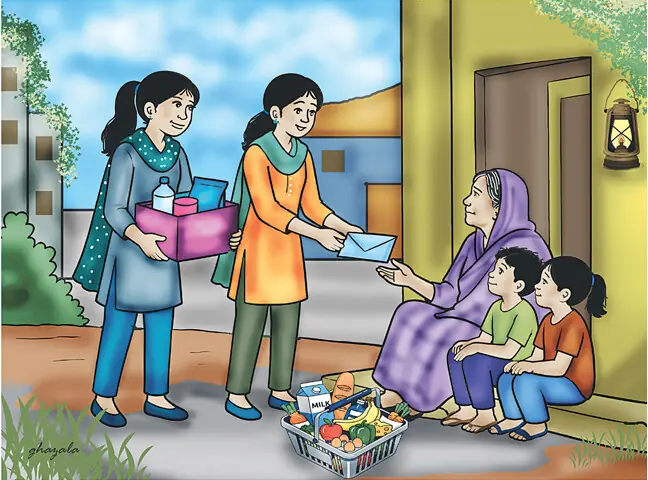
At the end of the month, we pooled our pocket money, placed it in an envelope along with some food items, and delivered it to a needy family we had chosen beforehand.
That was the beginning of a meaningful journey. Together, we pledged to continue helping those in need and work alongside charities and donation drives to support the poor in our country.
Published in Dawn, Young World, August 1st, 2026