• Adopts two resolutions, one backing Truth and Reconciliation Commission and calling for ‘negotiated settlement’ to crisis
• Protesters urged to distance themselves from armed, violent elements
MUZAFFARABAD: The Azad Jammu and Kashmir (AJK) Legislative Assembly on Thursday unanimously adopted two resolutions on the recent unrest in Rawalakot and other parts of the region, with one condemning statements by federal ministers on the crisis and the other endorsing the establishment of an independent Truth and Reconciliation Commission to investigate the violence and pave the way for a negotiated settlement.
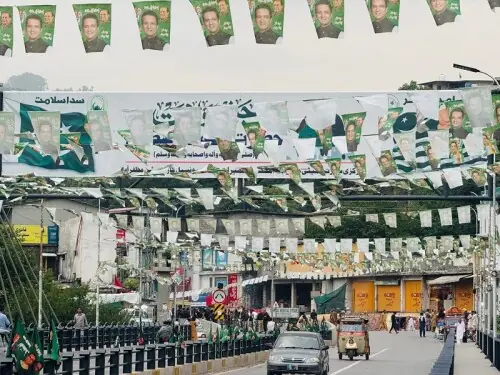
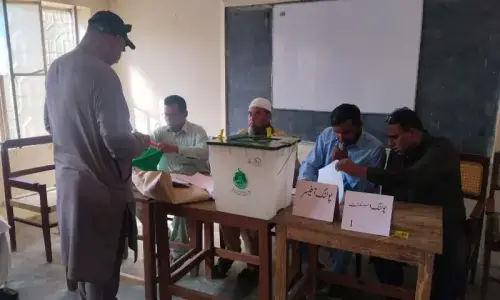
The development came amid polls in AJK, which are being held in three phases over security concerns, with the first phase conducted in Mirpur division on Monday.
Scuffles, violence and allegations of rigging marred the polling process, with the PML-N and PPP accusing each other of electoral malpractice.
The assembly met under the chairpersonship of panel member Nabeela Ayoub, but only nine members were in attendance — seven from the ruling PPP and one each from the opposition PML-N and PTI.
The first resolution was tabled by former AJK president Sardar Muhammad Yaqoob Khan on Wednesday, while the second was moved by PPP regional president Chaudhry Muhammad Yasin. Mr Yaqoob, however, was not present during the session.
Endorsing his resolution, the assembly condemned what it described as “irresponsible” statements by federal ministers regarding the recent Rawalakot incidents.
The resolution particularly censured Defence Minister Khawaja Asif for allegedly refusing to recognise the people of Rawalakot as
Kashmiris, saying that such remarks had hurt public sentiment and should have been taken notice of by the prime minister.
Recalling the role of the people of Poonch in the Pakistan Movement and the state’s subsequent accession to Pakistan, the resolution said those whose skins had been flayed alive in 1832 belonged to the same land.
It further stated that Ghulam Haider Jhandalvi, who represented the Kashmiris at the adoption of the Pakistan Resolution in Lahore on March 23, 1940, and AJK’s founding president, Sardar Muhammad Ibrahim Khan, at whose Srinagar residence the July 19, 1947, accession resolution was adopted, were also sons of the same soil.
The resolution said the federal ministers’ statements had “added fuel to the fire” and adversely affected people in Rawalakot, elsewhere in the state and among the Kashmiri diaspora.
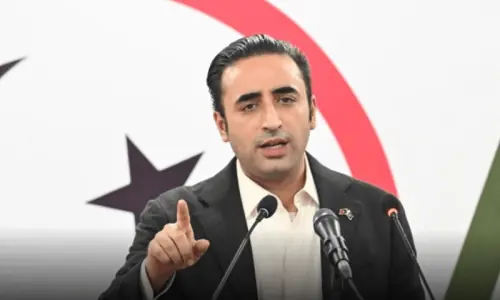
It called for the implementation of PPP Chairman Bilawal Bhutto-Zardari’s proposal to establish a Truth and Reconciliation Commission and urged that no further action be taken in Rawalakot until such a mechanism was put in place.
The resolution further called on the Election Commission to ensure free and fair elections and demanded that alleged irregularities in the recent elections in Mirpur division be addressed before fresh polling.
It also stressed that dialogue was the only way forward, warning that continued confrontation would only harm the people of the state while providing India with an opportunity to exploit the situation internationally.
‘Violence unacceptable’
The assembly also unanimously adopted the second, more detailed resolution moved by Mr Yasin, reaffirming its commitment to constitutional supremacy, democracy, the rule of law, and the protection of life and property.
The resolution paid tribute to security forces, police and law enforcement personnel who lost their lives in the line of duty and expressed sympathy with the families of all civilians, police personnel and security officials killed or injured during the recent unrest.
While affirming that peaceful protest, freedom of expression, and the presentation of legitimate political, economic, administrative and social demands were constitutional and democratic rights, it declared that the use of weapons, violence, vandalism, intimidation and other unlawful means could not be accepted as legitimate means of political struggle.
It called on peaceful protesters to distance themselves from armed and violent elements and stressed that responsibility for any offences should be determined individually through evidence, transparent investigations and due legal process.
It also demanded that the government and law enforcement agencies act against armed and violent elements without discrimination and in accordance with the Constitution and the law, making it clear that the objective of state action should be the enforcement of the law and the restoration of peace rather than revenge.
The resolution proposed that the federal government and representatives of the protesters jointly endorse in writing the establishment, composition, terms of reference, scope and procedure of the commission, after which the AJK government should constitute it without delay under the relevant law.
After the resolutions were passed, PML-N’s Nisara Abbasi pointed out the lack of quorum, following which the chair ordered the bells to be rung.
Ms Ayoub adjourned the assembly for 15 to 20 minutes, but when it reconvened, attendance had not improved, prompting the chair to adjourn the session until Friday (today).
Published in Dawn, July 31st, 2026