Floodwaters displace thousands, inundate 22 areas in Multan

• Man drowns attempting to rescue his livestock; cotton, chilli and other crops damaged
• Low-level flood at Kalabagh, Taunsa on Indus River; flash flood hits Hodur Valley in GB
• Centre urged to provide six Bailey bridges amid forecast of week-long rains across Gilgit-Baltistan
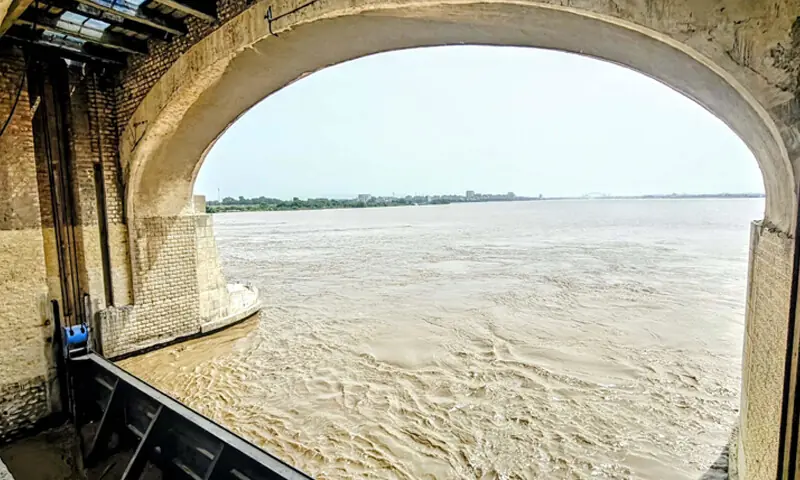
LAHORE/BAHAWALPUR: At least 22 mouzas in Multan district have been submerged under three to four feet of floodwater from the River Chenab, forcing thousands of residents to flee homes with their livestock and leaving vast stretches of standing crops under water, according to the district administration’s latest flood situation report.
The report, compiled by assistant commissioners and available with Dawn, says 22 of the district’s 138 flood-prone mouzas have been partially inundated. Four are in Multan Saddar, seven in Shujaabad and 11 in Jalalpur Pirwala tehsils.
The affected mouzas include Abu Hatta, Vellan, Dhello and Zaman Pur in Multan Saddar; Soman, Pounta, Tahir Pur, Marha, Agar Khawani, Dhundoon and Wanis in Shujaabad; and Ripri, Manik Wali, Jung Wala, Narol, Wacha Sandila, Shahpur Lamma, Bait Kaitch Janubi, Shehni Shumali, Shehni Janubi and Bait Qaiser in Jalalpur Pirwala.
Residents said advancing floodwaters had inflicted heavy agricultural losses.
Civil society activist Majid Zahoor said Bait Kaitch and Sheeni union councils in Jalalpur Pirwala tehsil were largely under water. He said locally built dykes meant to protect crops and homes had washed away, leaving settlements including Basti Bakhsh, Basti Bandooqi, Basti Basera, Basti Jhangi Ahmad Khan, Basti Chandia, Basti Channar and Basti Dadda inundated.
Police recovered the body of Rab Nawaz from floodwater near Basti Shabni Miani. Residents said he drowned while attempting to save his animals.
Residents of affected areas, including Nazool, Sandaila and Bait Moghul, who moved to safer places, alleged the locally built embankments had weakened and eventually breached as authorities failed to reinforce them, resulting in widespread damage to cotton and chilli crops.
Meanwhile, Multan Deputy Commissioner Dr Faisal Saleem said the Chenab’s flood flow had receded to around 110,000 cusecs.
The Provincial Disaster Management Authority (PDMA) said Indus was flowing at low flood level at Kalabagh and Taunsa, while flows in all other major rivers remained within normal limits.
The PDMA warned that forecast rainfall in upper catchment areas could raise water levels in the eastern rivers and adjoining nullahs, increasing the risk of flash floods.
GB seeks more Bailey bridges
Amid the heightened flood risk, Gilgit-Baltistan Chief Minister Amjad Hussain has sought six Bailey bridges from the National Disaster Risk Management Fund (NDRMF) to help restore road links quickly after flash floods and ensure uninterrupted movement of relief supplies, emergency services and affected communities.
In a letter to the NDRMF, CM Hussain said the recent spell of flash floods, glacial lake outburst floods (Glofs) and cloudbursts had caused widespread devastation across the region. He urged the NDRMF to provide six Bailey bridges on a priority basis to strengthen the GB Disaster Management Authority’s emergency response capacity.
Meanwhile, the GBDMA reported fresh damage after a flash flood struck Hodur Valley on Tuesday evening, damaging houses, roads, bridges and other infrastructure.
Issuing a fresh weather advisory, the GBDMA warned of moderate to heavy rainfall and thunderstorms across Diamer, Astore, Ghizer, Gilgit, Hunza, Nagar, Skardu, Shigar and Ghanche for another week.
Jamil Nagri in Gilgit also contributed to this report
Published in Dawn, July 30th, 2026