Aurangzeb for deeper partnership with US


 0
0
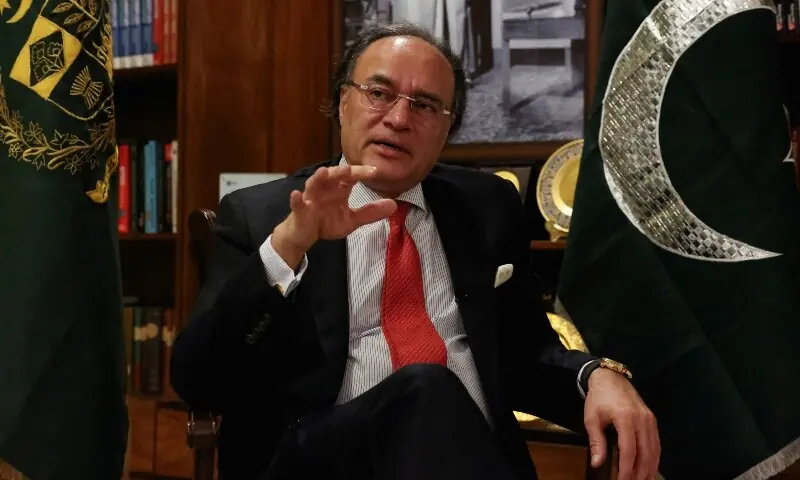

WASHINGTON: Finance Minister Muhammad Aurangzeb’s three-day visit, which ended early on Thursday, highlights Islamabad’s attempt to move Pakistan’s economic relationship with the US beyond the familiar cycle of financial crises, IMF programmes and emergency support.
The visit produced no immediate announcement of a major financial package, but it opened discussions on several fronts — from IMF-backed reforms and possible foreign exchange support to American investment in energy, infrastructure, technology, minerals and agriculture.
The message Pakistan carried to Washington was clear: the country believes it has moved from a phase of economic stabilisation towards recovery and now wants international partners to participate in its growth story.
The most important meetings remained those with the International Monetary Fund. Aurangzeb met senior IMF officials, including First Deputy Managing Director Dan Katz, Deputy Managing Director Nigel Clarke, Middle East and Central Asia Department Director Jihad Azour and Pakistan Mission Chief Iva Petrova.
Discusses $10bn stabilisation facility, investment in energy and minerals
The finance minister highlighted what Islamabad considers signs of economic improvement: better fiscal and external balances, achievement of revenue targets, stronger foreign exchange reserves, record remittances and an improved current account position.
For Pakistan, the IMF relationship remains the gateway to global financial markets. Any improvement in investor confidence, sovereign ratings or access to international borrowing depends heavily on continued Fund support and the perception that Islamabad is implementing difficult structural reforms.
The objective is not merely to complete the current IMF programme but to convince markets that Pakistan has entered a period of sustained economic stability.
The meeting with US Treasury Secretary Scott Bessent, however, underscored Pakistan’s effort to go beyond the IMF.
According to reports, Aurangzeb requested a $10 billion Exchange Stabilisation Support Facility from the United States to strengthen Pakistan’s foreign exchange position. Such a facility, if approved, would represent an unusual form of bilateral financial backing and could provide additional confidence to currency markets and investors.
The request has not been officially acknowledged by Washington, and its prospects remain uncertain. The US has traditionally relied on multilateral institutions such as the IMF and World Bank for economic support to countries like Pakistan. A direct stabilisation facility would therefore require a significant policy decision.
The more visible outcome of the visit came from discussions with US economic institutions focused on investment rather than assistance.
In meetings with the US Export-Import Bank and the International Development Finance Corporation (DFC), Pakistan sought to develop a pipeline of commercially viable projects that could attract American financing and technology.
The Exim Bank discussions were particularly significant. Both sides agreed to work on a broader framework covering priority projects, a multi-year transaction pipeline and financing opportunities involving American equipment, services and technology.
For Pakistan, this approach could help address one of its longstanding economic challenges: attracting foreign investment rather than relying primarily on foreign loans.
The meeting with DFC officials reflected similar ambitions. Aurangzeb invited the US development finance agency to send a team to Pakistan to identify bankable projects in energy, IT, infrastructure, minerals, agriculture and manufacturing.
The possibility of a DFC presence in Pakistan was also discussed, which could create a more permanent channel for American private-sector investment.
Energy was another major focus.
A proposal by Honeywell Technologies to modernise and expand Pakistan’s refinery sector fits into Islamabad’s broader effort to reduce dependence on imported petroleum products and improve energy security.
Published in Dawn, July 24th, 2026