BEIRUT: Lebanon and Israel plan to hold their next round of US-brokered talks in Italy on Aug 4, a Lebanese official said on Wednesday, as the two countries began implementing a plan for Israeli withdrawals and Lebanese army deployment in the south.
The two countries have held more than three months of face-to-face talks, billed as a way to put a permanent end to hostilities between Israel and Hezbollah, triggered by the wider US-Iran conflict.
The ambassador-level direct meetings are unusual for countries that remain formally at war and have had no normal diplomatic relations through decades of invasion, military occupation and cross-border conflict.
Five meetings hosted by the United States produced a framework deal late last month which foresees the disarmament of Hezbollah, the progressive withdrawal of Israeli troops from southern Lebanon and the deployment of Lebanese troops.
The ambassador-level talks have since moved to the Italian capital so that delegations could discuss the technical details and guidelines of the pilot zones – the term for the geographical areas where that phased process would be implemented.
Beirut hails Israeli pullback from areas in the south, but says it wants full withdrawal
‘Full Israeli pullout’
The first Israeli withdrawal under the pilot zone programme took place this week.
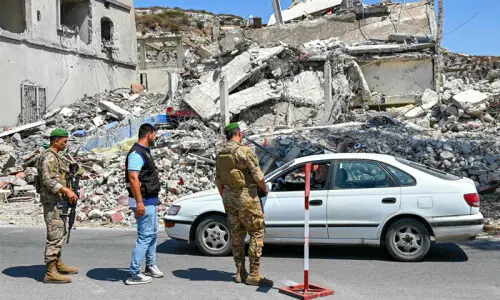
Israeli forces pulled out of the southern Lebanese town of Zawtar al-Gharbiyeh and the Lebanese army began deploying troops there, but asked residents to delay their return until the town was cleared of unexploded ordnance.
Lebanese Prime Minister Nawaf Salam visited Zawtar al-Gharbiyeh on Wednesday and planted a Lebanese flag there, saying the state would work to reopen roads, clear rubble and restore public services so that residents could return.
Salam said Israel’s withdrawal was a significant first step, but Lebanon wanted a full Israeli withdrawal.
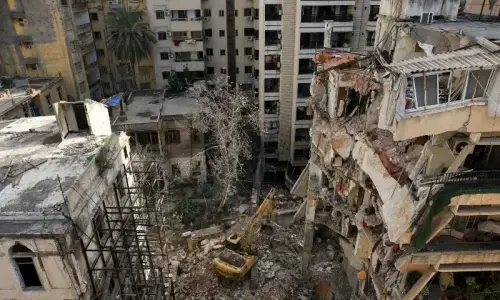
Israel continues to occupy what it describes as a buffer zone about 10 kilometres inside Lebanon along the length of the border, where Israeli troops have ordered local residents to leave and razed villages.
Despite a ceasefire that came into force last month, controlled demolitions have continued.
Tens of thousands of Lebanese people remain displaced, unable to return home because their villages remain occupied by Israeli troops or have been destroyed.
Israeli officials have said they will remain in southern Lebanon as long as Hezbollah remains armed. The group has rejected Beirut’s direct talks with Tel Aviv and has refused to disarm in full.
During his first official trip to Washington, Lebanese President Joseph Aoun said Israel’s withdrawal from Lebanon could remove “the root cause that Hezbollah has long cited as its justification”.
Only then could Hezbollah be disarmed, Aoun told guests at a reception at the Lebanese embassy in Washington, according to comments shared by his office.
‘Heads held high’
The war has caused widespread destruction, mainly in the south, though violence has declined since the signing of a framework agreement between the United States and Iran last month and the Lebanon-Israel deal.
According to the UN, more than 700,000 people have returned home over the past few weeks.
In Zawtar al-Gharbiya, dozens of residents waited at the village’s entrance for permission to go check on their homes. “We will enter the town with our heads held high, thanks to the presence of the Lebanese army,” Abbas Yaghi, 73, said.
The military has told residents to avoid entering the village “until the security situation stabilises”.
The army is conducting a sweep of the town, which is geographically contiguous with its Israeli-occupied neighbour, Zawtar al-Sharqiya.
Israeli troops still launch intermittent strikes in surrounding towns, the latest on Nabatieh al-Fawqa.
Published in Dawn, July 23rd, 2026