PM Shehbaz launches first AI-based digitisation platform to replace paper-based work in PMO

Prime Minister Shehbaz Sharif on Tuesday launched a new artificial intelligence (AI)-based digitisation platform for the Prime Minister’s Office (PMO), designed to replace paper-based working in governance.
According to a statement by the PMO on social media, the premier described the Prime Minister Office System (PMOS) as a transformative digital platform that would “modernise governance” by “recording, communicating, monitoring and tracking every directive issued by the prime minister from issuance through implementation, verified completion and post-completion monitoring”.
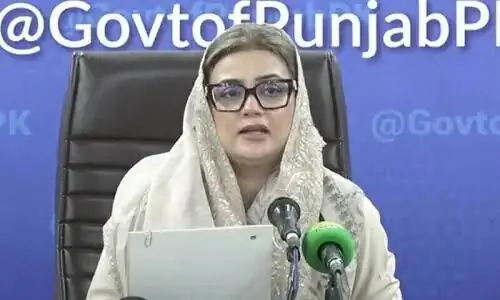
During the launch ceremony of the system at the PMO — attended by Minister for Economic Affairs Ahad Khan Cheema, Minister for IT and Telecom Shaza Fatima Khawaja, and other senior officials — the prime minister was given a comprehensive briefing on the AI-powered platform and its objectives.
Addressing the ceremony, the prime minister directed all relevant authorities to ensure the immediate and full implementation of the new digital system. He said that traditional paper-based working would be replaced by digital processes.
“From today onwards, I will not expect any of you in my office with a file in your hand. Everything will be discussed through this mechanism,” the prime minister said.
He praised IT Minister Shaza Fatima Khawaja and Secretary IT Zarrar Hasham Khan for their efforts in developing and operationalising the system, the statement added.
PM Shehbaz urged all ministries and government departments to adopt the platform, saying it would significantly improve the government’s ability to deliver results and “make service delivery easier”.
During the ceremony, the prime minister was informed that PMOS was the first government platform in Pakistan to integrate AI as a central component of decision-making and implementation monitoring, calling it a “trailblazer for the digital transformation of the federal government”.
According to the briefing, PMOS was developed at the centre of government to ensure efficient communication of the premier’s directives throughout the machinery of government, while enabling “timely implementation in accordance with defined quality standards”.
“The system also serves as a secure technology-driven decision-support platform by integrating analytics and structured information within a protected IT environment,” the statement added.
During the briefing, officials were informed that PMOS would facilitate “continuous policy calibration” by enabling the government to utilise technological, human and financial resources more effectively to generate better economic outcomes.
“By introducing the platform at the PMO, the government intends to embed governance reforms at the highest level before extending them across the wider administrative structure,” the statement said.
“At the heart of the platform is a comprehensive digital repository that records every directive issued by the prime minister together with the complete chain of implementation, making PMOS both an institutional knowledge base and a permanent record of government decision-making.”
The briefing also noted that unlike conventional government tracking systems, PMOS was capable of reading, classifying and analysing directives via AI rather than merely storing them.
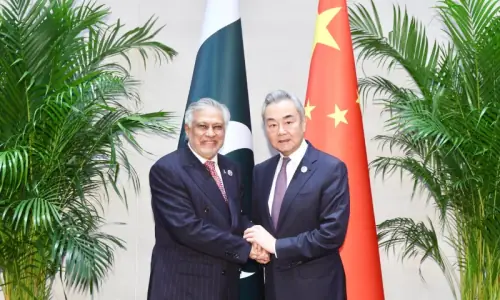
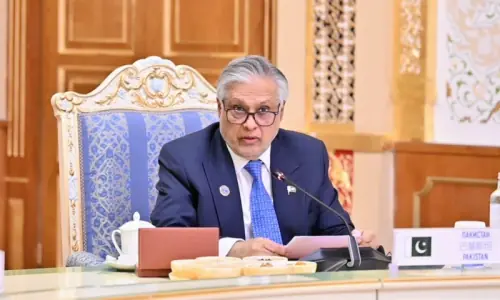
Last week, Pakistan became a founding member of the World Artificial Intelligence Cooperation Organisation (Waico) after Deputy Prime Minister and Foreign Minister Ishaq Dar signed the agreement establishing the forum in Shanghai, China, according to the Foreign Office.
In February, PM Shehbaz announced that the government would invest $1 billion in the country’s AI sector by 2030 to build a future-ready digital economy and empower the country’s youth.