0
0

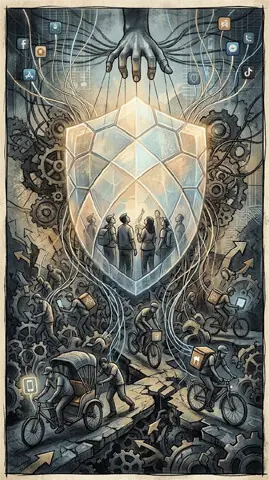
THIS is with reference to the report ‘UN labour organisation adopts first treaty to protect gig workers’ (June 13). At present, gig workers comprise independent contractors, freelancers, and temporary staff who earn income through short-term, project-based or on-demand tasks rather than permanent, full-time employment. Instead of receiving a traditional salary, they are paid per deliverable, like, say, a ride, a delivered meal or a completed project.
In such a scenario, adopting employment standards, such as guaranteeing minimum wage, healthcare, sick leave and social security contribution, will surely provide great relief to a large sector comprising workers who are at the moment solely dependent on income based on freelance projects and assignments undertaken for the customers.
Furthermore, in Pakistan, most of the ride-hailing motorcyclists often negotiate their charges with each prospective passenger instead of following their rates fixed by the company. Apart from such dealings, food delivery riders are also given tips by the customers, the amount of which varies.
Like other conventions issued by the International Labour Organisation (ILO), the convention on fixing employment standards for gig workers will also require ratification by the countries desirous of adopting it. Of the total members, many countries, including the governments of China, Japan, Germany, France and South Africa, have voted in favour of the employment standards convention.
The World Bank has estimated that the number of app-based gig workers globally ranges between 154 million and 435 million individuals. Pakistan has approximately 2.39 million gig workers, which accounts for roughly 2.9 per cent of the country’s total employment.
Having so many gig workers, Pakistan needs to ratify the ILO convention, which will oblige the companies to pay them the minimum wage and provide other benefits, thus taking them out of their current classification as independent contractors. Implementation will remain a challenge, but effective remedies will be available to lay claim to the guaranteed benefits.
Parvez Rahim
Karachi
Published in Dawn, July 5th, 2026