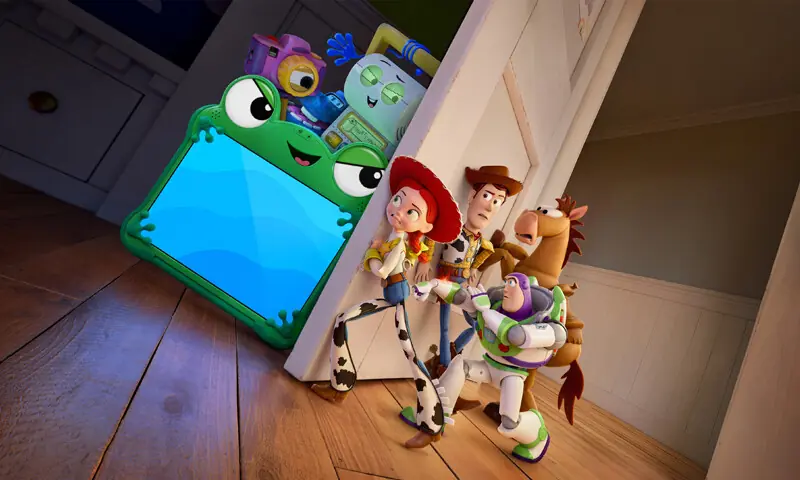

As a father of a four-year-old, there is one key lesson to be learned from Toy Story 5 — keep your kids away from tablets, especially ones that connect children to social media hubs filled with virtual friends.
Let me put a reminder on my phone for that.
Jokes aside (no matter how painfully real), it has been a good while since we’ve seen quality storytelling from Pixar that appeals to both four-year-olds and 40-year-olds who feel as if they are four. By the time Toy Story 5 ends, the chances are that you’ll want to unpack your old toys from their cardboard boxes. If, that is, you haven’t given them away.
The nearly forgotten “Pixar touch” is strong with this one.
Toy Story 5 uses a familiar adventure to explore how screens are replacing imagination, while reminding adults why they once loved their toys
While bittersweet nostalgia tugs at your emotions, technical brilliance seizes your visual senses. Look past the glorious images (courtesy of their in-house, industry-standard rendering software, RenderMan) and take note of the body movements and actions of the individual toys. That is a lot of work up there on the screen.
However, the film’s $250 million price tag is a little on the steep side. Especially for a film that is somewhat limited in scope.
As the middle entry of the second trilogy — the first three featured Andy and his toys, Woody and Buzz (voiced by Tom Hanks and Tim Allen) — we get Jessie’s solo show here (her voice, complete with the cowgirl drawl, comes courtesy of Joan Allen).
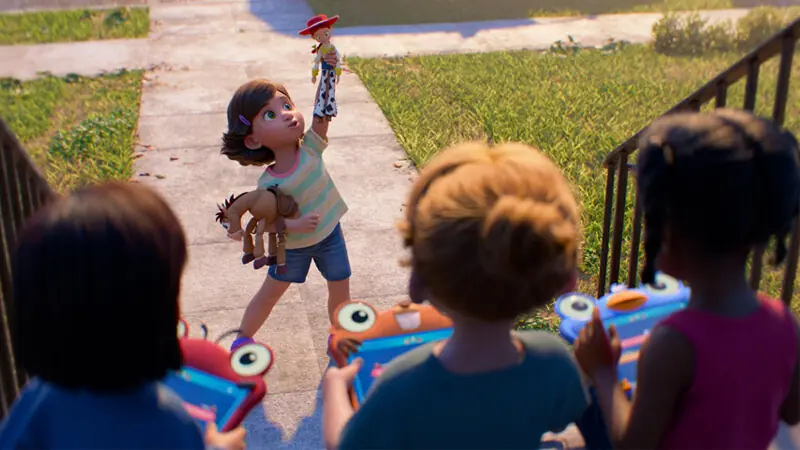
Jessie’s pride and joy is her human playmate, Bonnie (Scarlett Spears), though Bonnie isn’t Jessie’s first owner. Her past becomes an emotional crux that pushes her to the edge when she realises that Bonnie, now eight years old, might be outgrowing the days of carefree imagination.
While Bonnie still plays with toys, every other child in her vicinity (and perhaps the world) spends their waking moments on electronic devices. Bonnie’s days as an outcast with no friends change when her mother and father get her Lilypad (Greta Lee), a frog-themed tablet.
Lily gets to work as soon as she’s turned on, cutting short Bonnie’s childhood while piling societal pressures into the little girl’s mind. Playing with toys is a turn-off and socially unacceptable — no matter how hard it hurts the toys’ feelings. I’ll make sure my GI Joes, He-Man and Transformers action figures don’t hear that.
Woody, balding with a fat gut, and Buzz are afterthoughts in this one — perhaps even more so than in Part 4. Mr and Mrs Potato Head, Hamm, Rex and the others are nearly background decorations, with a few lines here and there.
The new characters — forgotten devices played by Conan O’Brien, Craig Robinson and Shelby Rabara (playing a toilet-training toy, a hippo GPS, and a low-megapixel toy camera) — share part of the spotlight in Jessie’s attempts to return to Bonnie and make her believe that toys still have worth.
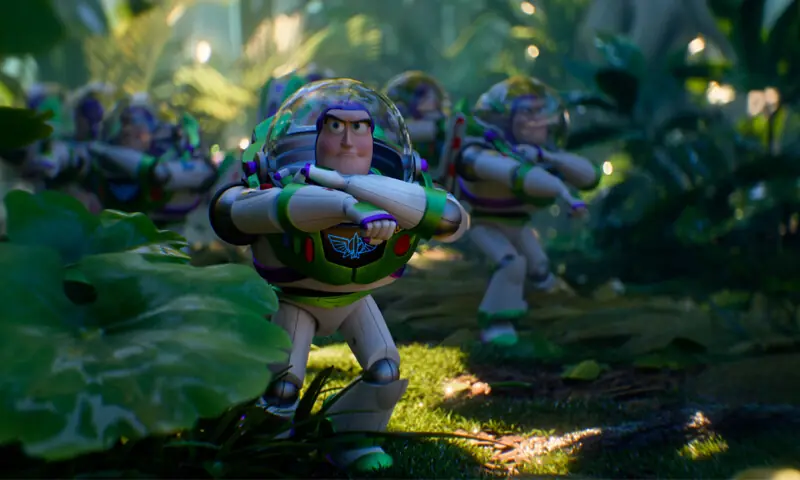
A parallel track involving 50 lost Buzz Lightyears (updated ones who can really fly) and a girl named Blaze (Mykal-Michelle Harris), who somewhat shares Bonnie’s predicament, supports the deliberately constricted screenplay co-written by Kenna Harris and director Andrew Stanton (Finding Nemo, Finding Dory, Wall-E).
Toys getting lost and returning to their owners is a surprisingly old trope that still works after five films, though one can feel that things have changed quite drastically in tone. Gone are the days of wonder and imagination. In their stead — since Part 3 — Toy Story has slowly become a tale of survival. Although it has worked well until now, I think the approach will definitely lose its appeal by Part 6, when Bonnie grows up and her trilogy concludes.
Till then, one hopes that Pixar continues to tell good stories — both for four-year-olds and 40-somethings who still want to remember what being four, and carefree, felt like.
Released by Disney and HKC, Toy Story 5 is rated U and is suitable for everyone
The writer is Icon’s primary film reviewer
Published in Dawn, ICON, July 5th, 2026