Trump briefed on military options against Iran, but sticks to diplomatic negotiations for now: report
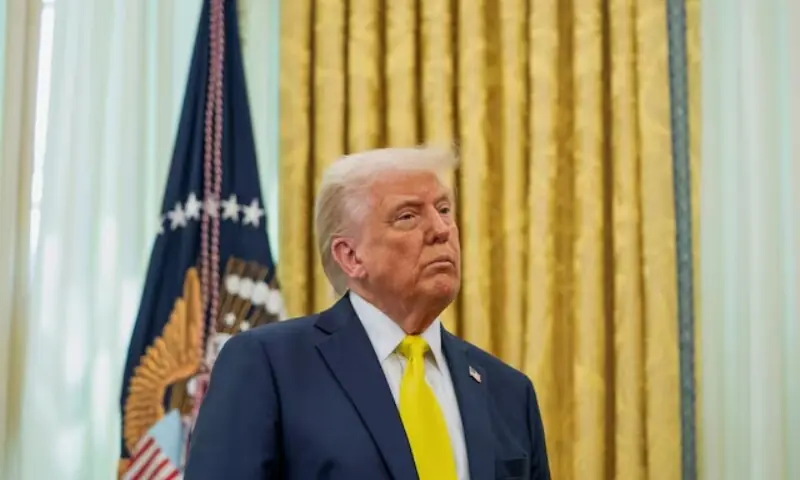

WASHINGTON: US President Donald Trump has held a series of meetings with senior national security officials to review US policy towards Iran, including whether Washington should continue negotiations with Tehran or resume broader military strikes, according to the Wall Street Journal.
Trump has been briefed on options for a possible return to broader military confrontation with Iran but has, for now, chosen to continue diplomatic negotiations, according to a report by the Wall Street Journal citing US officials familiar with internal deliberations.
The Journal said the discussions involved Defence Secretary Pete Hegseth and Joint Chiefs Chairman Gen. Dan Caine, as officials assessed whether the United States should abandon talks with Tehran and resume full-scale military strikes. Some officials involved in the deliberations reportedly described the harder option internally as “finishing the job”.
While the deliberations reflect renewed debate within the administration over escalation, the report said Trump has not made a final decision and has instead leaned toward maintaining the diplomatic track, arguing that large-scale military action could disrupt fragile negotiations over Iran’s nuclear programme.
According to the WSJ, the president has also told advisers he is comfortable allowing nuclear negotiations with Tehran to extend beyond an August 18 deadline, effectively giving diplomacy additional time to produce results. Officials cited in the report said this flexibility reflects an effort to avoid locking Washington into a rigid timetable while talks remain in progress.
At the same time, Trump is said to remain open to limited retaliatory measures, including “one-off” strikes in response to Iranian violations of a memorandum of understanding (MoU) that previously helped structure a fragile ceasefire arrangement. Such calibrated responses, officials suggested, are seen within parts of the administration as a way to apply pressure without escalating into a wider war.
The WSJ report also noted that indirect negotiations are continuing in Doha. US envoys Steve Witkoff and Jared Kushner have are in Doha for a new round of mediator-led discussions, according to the US, but Iran has ruled out any meeting with the United States in the Qatari capital.
A central sticking point in the negotiations remains Iran’s push to impose service charges on commercial shipping passing through the Strait of Hormuz, a strategic waterway through which a significant portion of global energy supplies flows. The United States has rejected the proposal, insisting that the strait remain open to free transit under international norms.
US Energy Secretary Chris Wright was cited in the WSJ report as saying that Iran has not been cooperative in broader discussions, while he credited US naval escort operations for stabilising global oil flows despite continued tensions in the region.
To reduce the risk of miscalculation, officials confirmed that Washington has established a crisis communication channel between the Islamic Revolutionary Guard Corps and US Central Command. The channel, described as already active, is intended to manage escalation risks even as diplomatic and military pressures continue in parallel.
Analysts quoted in the report, including Brookings Institution scholar Suzanne Maloney, said the administration still retains tools short of war, such as financial leverage over frozen Iranian assets and economic pressure linked to maritime access.
However, they cautioned that such measures may have a limited impact if core disagreements over Iran’s nuclear programme and regional posture remain unresolved.
The developments underscore an ongoing policy tension in Washington between sustaining diplomatic momentum and maintaining credible military deterrence, as the administration seeks to avoid a renewed large-scale conflict while keeping pressure on Tehran.