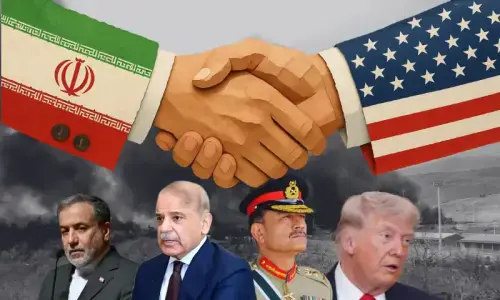


WITH the signing of a memorandum of understanding between the US and Iran, an interim deal has been agreed. In what will be a two-step peace process the first phase freezes the war by extending the ceasefire for another 60 days. It commits Iran to open the Strait of Hormuz and the US to end its blockade. That process is already underway. But the hard part lies ahead as the second phase has to address the nuclear file and other thorny issues. If reaching a preliminary agreement proved so difficult, negotiating a comprehensive settlement will be tougher, especially with Israel’s malign presence looming in the background.
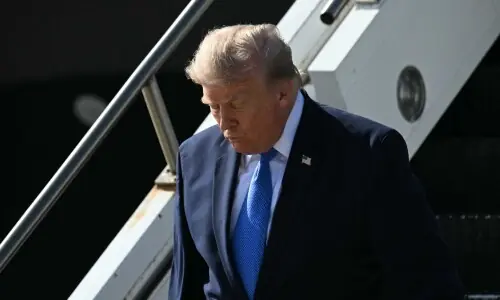
After four months of war, both sides wanted an exit ramp from the fighting. President Donald Trump seemed to want it more. Domestic political and economic pressure mounted on him, especially the fear that higher oil prices and inflation would hit American consumers and damage the US economy. This, as mid-term Congressional elections loomed with an unpopular war and the Republican party increasingly divided.
Moreover, continuing the conflict did not seem to bring Trump closer to any of his ever-changing objectives. If regime change was a core objective, the war failed to achieve that. More bombs would not have secured that outcome or his other stated aims. Around 40 times in 90 days Trump claimed “a deal is imminent”. This reflected his desperation for one as well as the constant effort to calm markets and drive down oil prices. The economic consequences of the Strait of Hormuz’s prolonged closure had begun to weigh heavily on Washington.
Iran was prepared to play the long game, especially as its control of the Strait of Hormuz gave it crucial strategic leverage. Its retaliatory attacks on US bases and energy infrastructure in Gulf countries raised the costs of war for America, its regional allies and the global economy. Tehran used the economic weapon to full effect. But there were limits to this strategy because of the substantial losses Iran also faced. Its ailing economy came under severe stress by reduced access to oil markets, restrictions on shipping and higher inflation. Another round of war heightened the economic risks. Having attained the upper hand in the conflict, a deal made sooner rather than later made more sense when Tehran’s negotiating position was relatively strong. Iran had already emerged as a symbol of defiance.
The US was unable to achieve its objectives both on the battlefield and negotiating table.
The deal ending the four-month war shows the failure of military force. The war imposed by the US and Israel did not compel Iran to surrender and accept terms dictated by them. A militarily weaker country under sanctions was able to hold out because of what the US has historically underestimated — the power of nationalism. While the US waged a war of choice with unclear objectives, for Iran it was an existential challenge. The will to survive powered by nationalist sentiment proved decisive in Tehran’s ability to resist aggression.
The broader question raised by this is about the limits of military power. The might-is-right paradigm is being challenged in an era where big powers can’t get their own way because modern warfare has levelled the ground between them and smaller countries. Military superiority does not guarantee dominance or victory, as exemplified by America’s operation Epic Fury, Russia’s unwon war against Ukraine and India’s aggression against Pakistan last year.
Whether the tentative US-Iran truce is followed by lasting peace depends on how issues deferred to the next stage of negotiations are tackled. This involves a 60-day, extendable period to reach agreement on Iran’s nuclear programme and sanctions relief for Tehran. But before that, Lebanon remains an obstacle if Israel, opposed to the US-Iran deal, continues its military rampage there. While the MoU says Lebanon is part of the “immediate and permanent termination of military operations on all fronts”, Israel seems intent on playing a spoiler.
The nuclear negotiations will of course be the key to a permanent settlement. Iran has already reaffirmed it will not “procure or develop nuclear weapons” in the 14-point MoU. The document also refers to agreement to resolve the stockpiled enriched uranium issue in the talks ahead. It holds out the option to resolve it by down-blending (diluting) the material on site under the IAEA’s supervision. This is what Iran offered all along despite Trump’s frequent declarations that the “nuclear dust” will be removed from Iran. Negotiations will also have to find common ground on the duration of a moratorium on enrichment of nuclear fuel. Sanctions relief will be tied to accord on these issues.
The MoU is a testament to US inability to accomplish its objectives both on the battlefield and the negotiating table. It sets out multiple concessions that Iran secured with Washington abandoning many of its red lines. This is reflected in Trump’s defensive remarks during his press conference at the G7 meeting. Iran can keep some ballistic missiles, which he had vowed to destroy, because other regional countries have them. He also said Iran could have its own nuclear programme because “other adjoining states have it”. Iran will receive waivers for oil exports immediately after signing of the MoU and before nuclear talks begin. As for the release of billions of dollars of Iran’s frozen funds, Trump said “We have taken a lot of their money, it’s not our money” and has to be returned. But he made it clear that the funds will be released in return for “good behaviour” by Iran and implementation of the MoU. The document also sets out a pathway for substantial financing for Iran’s reconstruction. Significantly, Iran’s support for its regional allies doesn’t figure in the MoU.
The deal got swift international applause. But its future remains uncertain. First comes the test of implementation. Will both sides honour the MoU? Then come the technical talks to hammer out a lasting settlement. As the gap between the two sides remains wide, negotiations may be long-drawn-out. For now, the deal has widened the rift between the US and Israel with America’s leaders rebuking the Israelis for their criticism of the agreement and Trump even taking a public swipe at Benjamin Netanyahu. Israel is already defying the latest ceasefire in Lebanon. But it is unlikely that its efforts to sabotage the interim deal will succeed.
The writer is a former ambassador to the US, UK and UN.
Published in Dawn, June 22nd, 2026