0
0

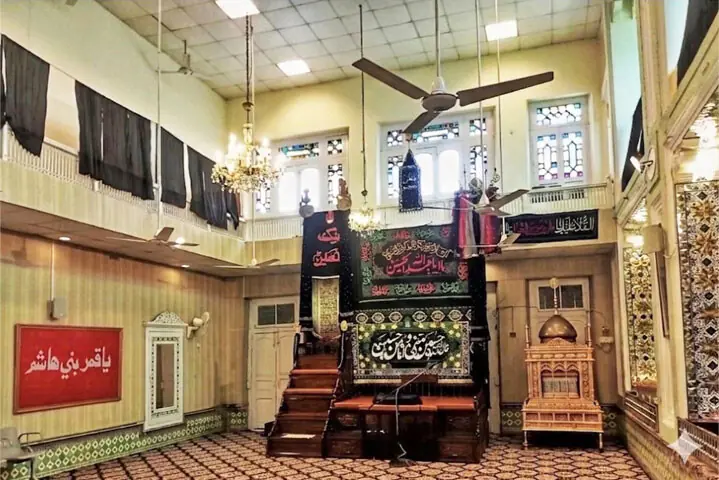
Situated in the narrow streets and bustling bazaars of the garrison city, historic imambargahs have served as sacred congregation halls for more than a century, where Shia Muslims gather to commemorate the martyrdom of Imam Hussain (AS) and his companions in Karbala.
In the downtown area, the prominent historic imambargahs are Qadeemi Imambargah, Colonel Maqbool Hussain Imambargah and Hifazat Ali Shah Imambargah.
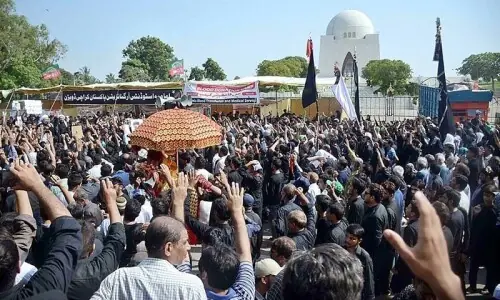
Most majalis are held in these imambargahs, and mourning processions are brought out from them. These religious sites reflect the rich history of Azadari in the region.
These centres also provide scenes of brotherhood during Muharram, as Shias and Sunnis alike prepare ‘Niaz’ (food offering) and set up stalls around these places to distribute food such as biryani, kheer and zarda.
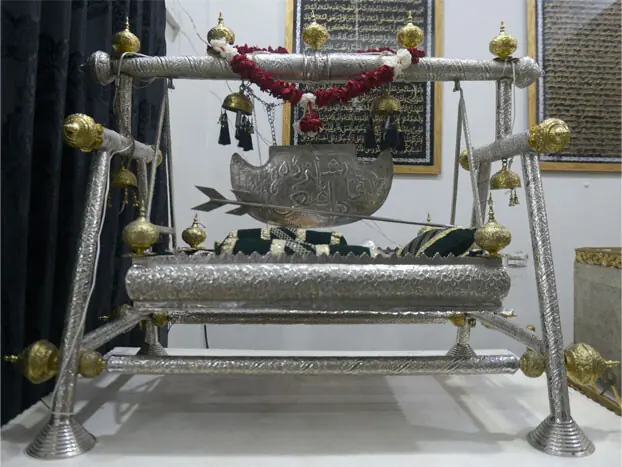
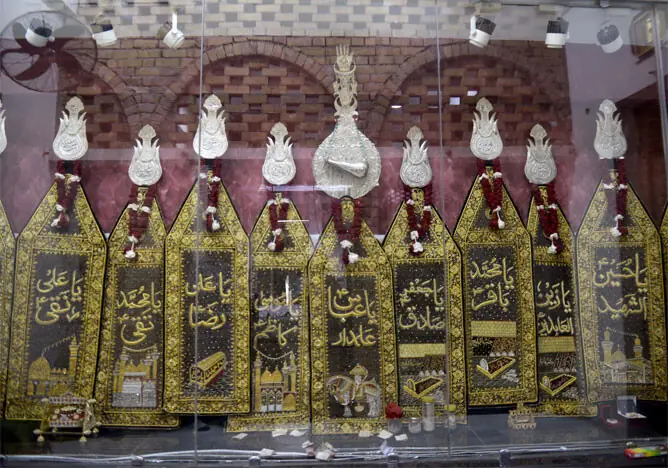
Alams, tazias, jhoolas and Zuljinnah are brought out during Muharram. Zuljinnah, which symbolises the horse of Imam Hussain (AS), is cared for throughout the year by well-to-do Shia families.
As the ninth and tenth of Muharram approach, these imambargahs receive Shias from across the twin cities of Rawalpindi and Islamabad, as well as other areas.
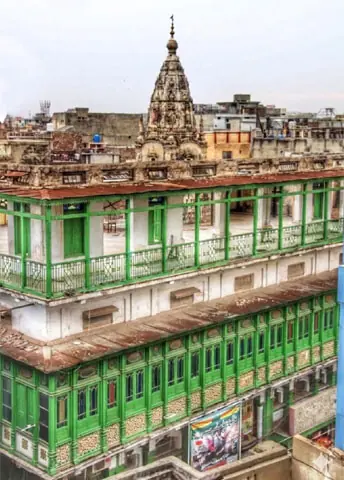
Walking from Murree Road along the traditional route of the Ashura mourning procession, one can stop at Colonel Maqbool Hussain Imambargah, a century-old three-storey building whose wooden balconies attract visitors. A white front gate leads through a narrow corridor to the inner courtyard.
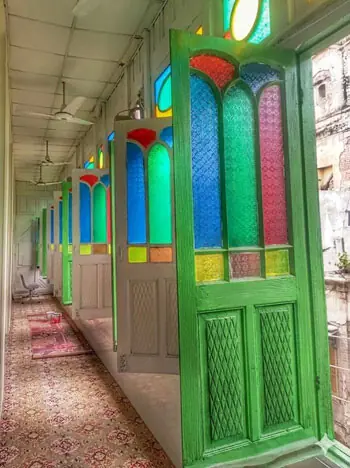
The building is well maintained by its organisers and remains largely in its original form. Coloured glass windows are still intact, while the woodwork and old floor tiles reflect the craftsmanship of a bygone era.
Since November 1947, the central Muharram 10 procession in Rawalpindi has emerged from Imambargah Colonel Maqbool Hussain in the old city on Gordon College Road. Colonel Maqbool Hussain converted a large haveli, with a spacious hall on its ground floor, into an imambargah, which was later named after him.
The procession route was finalised in coordination with the local administration at the time. The imambargah was the first in the city to conduct organised majalis and introduce mourning processions.
“Since November 1947, the markazi jaloos of Muharram 10 has emerged from Imambargah Colonel Maqbool Hussain in the old city on Gordon College Road,” said Syed Saqib Imam Zaidi, a member of the organising committee of the imambargah.
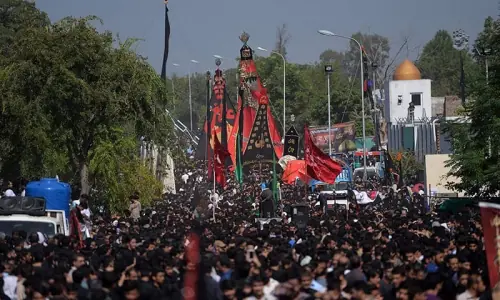
After leaving Imambargah Colonel Maqbool Hussain, the procession moves along College Road and passes through Iqbal Road, Fawara Chowk, Raja Bazaar and Purana Qila Bazaar before culminating at Imambargah Qadeemi in the Bani area.
Imambargah Hifazat Ali Shah
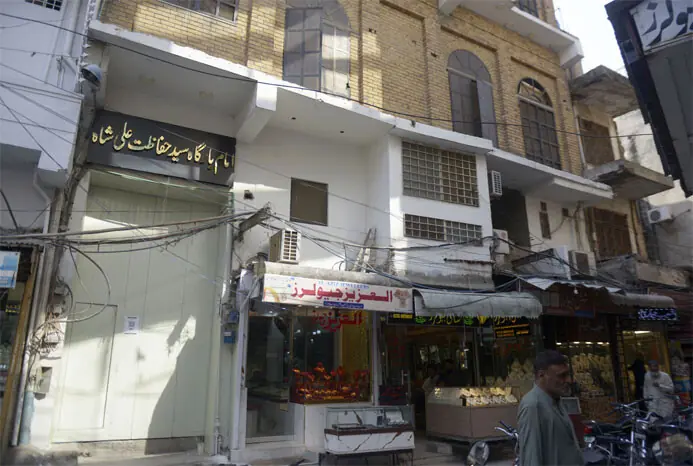
Located in Sarafa Bazaar, Imambargah Hifazat Ali Shah was established in Rawalpindi before the partition of the Indian subcontinent. It is considered one of the oldest imambargahs in the garrison city. Its founders migrated from Gali Syedan in Delhi and brought with them a licence for a mourning procession issued by the British Indian government in 1887.
“Our family arrived from Delhi, where we held a licence for a mourning procession dating back to 1887. Our grandfather established this imambargah and arranged majalis in the garrison city before 1947,” said Iqrar Hussain, its custodian.
He said two major processions are brought out from the imambargah on Muharram 7 and Muharram 10. Alams, tazias and jhoolas are also taken out from here before joining the main procession at Iqbal Road in Trunk Bazaar, alongside processions from Colonel Maqbool Hussain Imambargah and Ashiq Hussain Imambargah in Teli Mohallah.
He said the imambargah occupies more than 18 marlas and can accommodate over 3,000 people at a time. He maintained that Hifazat Ali Shah Imambargah is the oldest in the garrison city.
Qadeemi Imambargah
The more than 100-year-old Qadeemi Imambargah is situated on Jamia Masjid Road. All mourning processions culminate at this imambargah. Originally built with Kashmiri-style wooden balconies, the structure was damaged in a fire in 1966 and later reconstructed.
It was founded by Agha Mustafa Shah and Agha Fazal Ali Shah. Today, it is managed by Anjuman Imamia Asna Ashria.
Allama Syed Qamar Haider Zaidi told Dawn that Qadeemi Imambargah was among the oldest in the garrison city and served as the final destination for all mourning processions.
He said the main procession starts from Imambargah Ashiq Hussain in Teli Mohallah. The processions from Colonel Maqbool Hussain Imambargah and Hifazat Ali Shah Imambargah merge on Iqbal Road, while smaller processions from other localities join at Fawara Chowk.
When participants in the main Ashura procession reach Raja Bazaar and Purana Qila, Zuljinnah processions from Imambargah Kashmirian in Tyre Bazaar and Darbar Shah Chan Chiragh also merge into the main procession before it culminates at Imambargah Qadeemi, he said. He added that Hifazat Ali Shah Imambargah dates back to before the partition of the Indian subcontinent, while Colonel Maqbool Hussain Imambargah has been functional since 1947.
Published in Dawn, June 22nd, 2026