BUDGET 2026-27: CM aide says power to curtail provincial expenditure vested in NFC, not NEC


 0
0


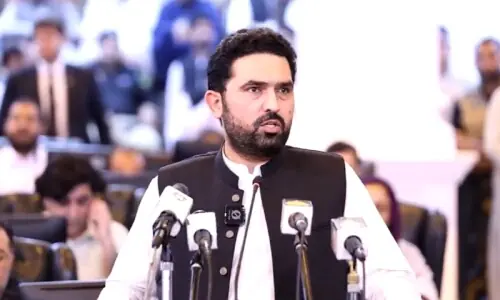
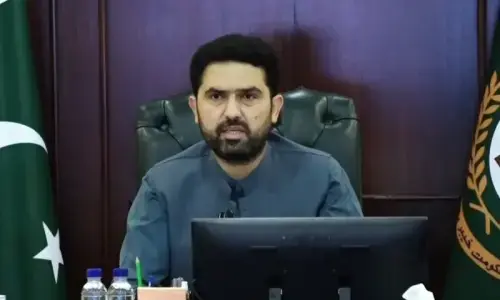
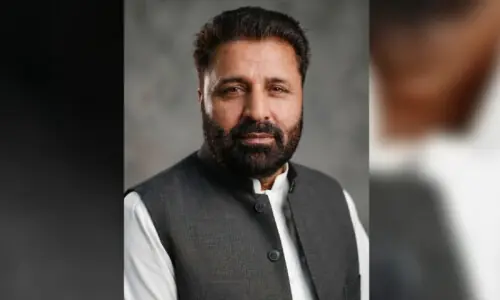
PESHAWAR: Khyber Pakhtunkhwa adviser to the chief minister on finance Muzzammil Aslam on Saturday said the National Economic Council (NEC) was not the legal forum for authorising and cutting any provincial expenditure as that power was vested in the National Finance Commission (NFC).
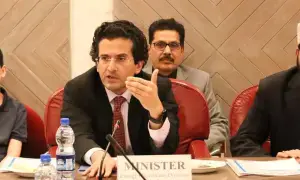
Addressing the post-budget briefing at the Civil Secretariat along with information minister Shafi Jan, Mr Aslam said there was no legal forum for the purpose other than the NFC.
He said that Chief Minister Sohail Afridi had made it clear in his budget speech that he should be allowed to consult his party PTI’s founder Imran Khan in jail to decide about the release of grants to the federal government as the matter carried “huge political implications”.
The adviser said that the mechanism proposed by the federal government in the NEC meeting stipulated that the Federal Board of Revenue (FBR) will share Rs13.35 trillion of its collection with the provinces under the divisible pool formula.
Complains Centre allocated Rs66bn for merged districts last year but released just Rs50bn
“The portion of the FBR’s next fiscal tax target of Rs15.2 trillion, which is over and above Rs13.3 trillion, will stay with the Centre,” he said.
Mr Aslam said that if the FBR failed to meet its tax target, then the share of the Centre would decline.
“A narrative was spun that provinces have agreed to provide Rs1.2 trillion to the Centre but KP has not done so,” he said.
The adviser said that the notion of the Centre making at source deduction from provinces’ divisible share was also mistaken, one as first they give the money to the provinces who in turn return it to the Centre in the form of grant in aid.
“To make at source deduction from provinces divisible pool share, the federal government needs to enact a constitutional amendment,” he said.
Mr Aslam said that the statements about those issues created misunderstanding within the Pakistan Tehreek-i-Insaf (PTI) as the party was in a “sensitive position”.
He said that provincial budgets were as important as the federal one, whereas the federal budget decided the income, taxation, export and industrial policies, while the provincial budgets were meant to minimise the impact of the federal policies on general public as well public service delivery.
The adviser said that they had named the budget ‘Khushal Khyber Pakhtunkhwa’ and focused on nine priority areas.
He said that there was a talk of turning surplus budgets into deficit as resistance to the federal government but this notion was not true as every province had its own priorities.
Mr Aslam said that there was a Rs121 billion deficit in the merged districts budget, which was the main reason behind presenting a deficit budget.
He said that if the federal government had announced a new NFC Award, the province would not have faced this deficit and Rs300 billion, which the province was to receive for merged areas, had turned the budget into surplus one.
The adviser said that merged districts’ current expenditure for the current fiscal stood at Rs180 billion, whereas the Centre had allocated Rs95 billion only.
“Any structural grants for the federal government were not possible without the consultation of Imran Khan,” he said.
Mr Aslam said that the KP revenue target of Rs2.122 was based on the federal tax target of Rs15.2 trillion.
He also said that KP government had not reflected the grant in aid to the Centre in its budget documents unlike other provinces but the federal government couldn’t make a source deduction from the province’s divisible pool share.
The adviser said that when the current government took over, KP’s own tax and non-tax revenue stood at Rs64 billion and current year target was Rs129 billion, which was likely to go up to Rs135 billion by the close of the year. He said that no new taxes had been imposed and instead, the government had reduced several taxes.
Mr Aslam said that they would take the provincial tax target to Rs200 billion.
He said that the province had made strides towards a cashless economy, digitalisation and ease of doing business has resulted in an increase in the province’s revenue.
The adviser said that salaries accounted for 45pc of provincial budget and together with 12.6pc pension, it accounted for nearly 58pc of total budget.
He said that education, health and home accounted for nearly 55pc of total expenditures of the province.
Regarding the annual development programme, Mr Aslam said that in the current fiscal, the federal government had allocated Rs37 billion for the accelerated implementation programme but only Rs22 billion was released.
“We have spent Rs41 billion under the AIP and contributed Rs19 billion from our own sources,” he said.
The adviser said that last year, the Centre allocated Rs66 billion for merged districts of ADP but released Rs50 billion only.
He said that provincial ADP has been allocated Rs235 billion.
Mr Aslam said that in the current fiscal Rs102 billion had been materialised under the foreign funded projects.
He said that Rs50 billion had been allocated for Sehat Card and three years allocation under this head amounted to Rs125 billion.
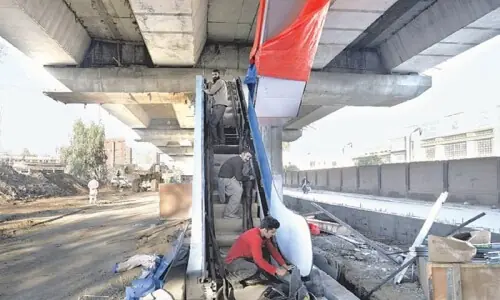
The adviser also said that Peshawar BRT service was being extended to divisional headquarters.
Published in Dawn, June 21st, 2026