Public transport fares reduced by 12-18pc in Rawalpindi region


 0
0
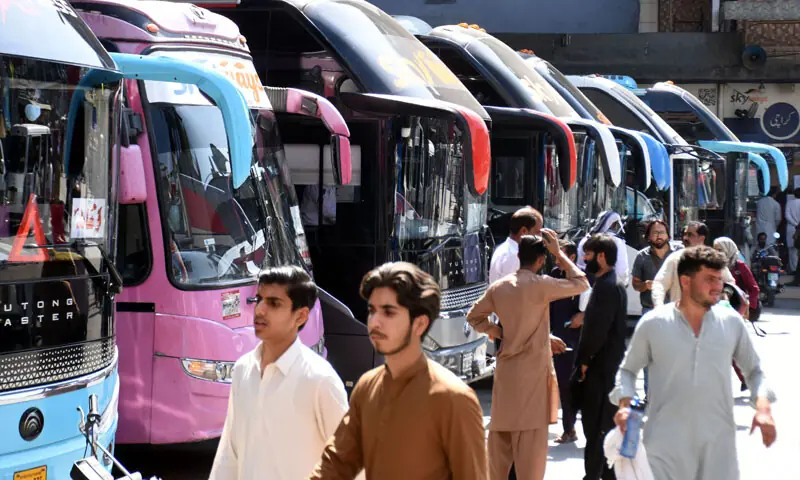

RAWALPINDI: The Regional Transport Authority (RTA) on Saturday announced a 12 to 18 per cent reduction in public and goods transport fares following a sharp decline in petroleum prices.
Private bus operators also announced substantial cuts in fares for intercity routes.
According to officials, the decision was made during a meeting between the RTA secretary and representatives of transport unions. It was agreed that the benefit of an approximately 20pc reduction in fuel prices would be passed on to commuters.
Under the revised fare structure, fares for diesel-powered air-conditioned passenger vehicles have been reduced by 12pc, while those for diesel-powered non-AC vehicles and petrol-powered public transport have been cut by 15pc. Goods transport charges have been reduced by 18pc.
Islamabad-Lahore bus fare drops to Rs3,080 after fuel price relief
RTA Secretary Syed Asad Abbas Shirazi told Dawn that the revised fares would be implemented with immediate effect.
He said directives had been issued for displaying updated fare lists at transport terminals and warned that strict action would be taken against transporters violating the new rates.
The RTA secretary also urged citizens to report cases of overcharging by calling 1071. He said a complaint mechanism had been activated to record passenger grievances, and transporters had been instructed to comply with the new fare structure.
A manager at a bus terminal in Faizabad told Dawn that the Islamabad-Lahore fare had been reduced to Rs3,080 for business class from Rs3,500, while the executive class fare had been lowered to Rs2,090 from Rs2,370.
Similarly, the Islamabad-Multan business class fare has been reduced to Rs4,060 from Rs4,200, while the executive class fare on the route has been cut to Rs2,850 from Rs2,990.
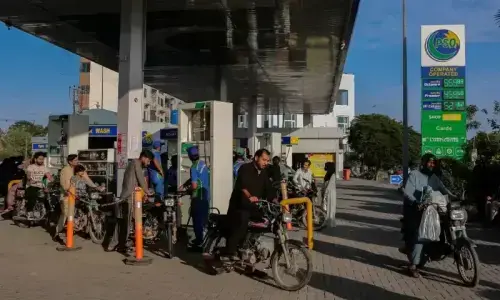
Prime Minister Shehbaz Sharif on Friday announced record cuts in fuel prices, reducing petrol by Rs74 per litre and high-speed diesel by Rs67 per litre for the week ending June 26.
The prime minister said the government was immediately passing on the benefits of improved regional conditions and lower oil prices to the public.
In doing so, the government took advantage of lower global prices while revising upward the rate of petroleum levy. The diesel price has come down from a peak of Rs520.35 recorded in the first week of April. It had started moving up from Rs275 per litre after the US-Israel attack on Iran on Feb 28. HSD is considered the most inf¬lationary fuel because of its extensive use in freight transportation.
Likewise, the ex-depot rate of petrol was set at Rs299.78 per litre for the next week, compared with Rs373.78 at present, showing a decrease of Rs74, or 20pc. The petroleum levy on petrol was reduced to Rs80 from Rs107.
This is the sixth consecutive weekly downward revision in the petrol rate, with a cumulative reduction of about Rs107 per litre.
The petrol price had touched a peak of Rs459 per litre in the first week of April after starting its upward journey from a pre-war rate of Rs258 per litre.
Published in Dawn, June 21st, 2026