Lebanon front remains unquiet despite ceasefire

• Truce brokered by US, Qatari negotiators with Iran’s help
• Iran-US meeting in Switzerland postponed
• Tehran ‘waives’ Strait of Hormuz transit fees for 60 days
• PM Shehbaz, Saudi crown prince discuss Islamabad peace deal
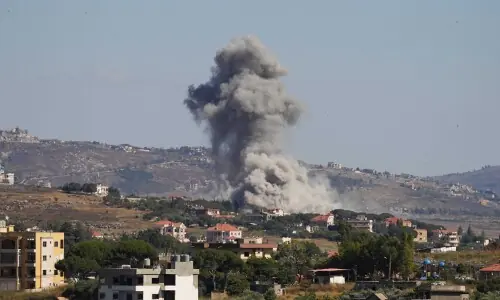
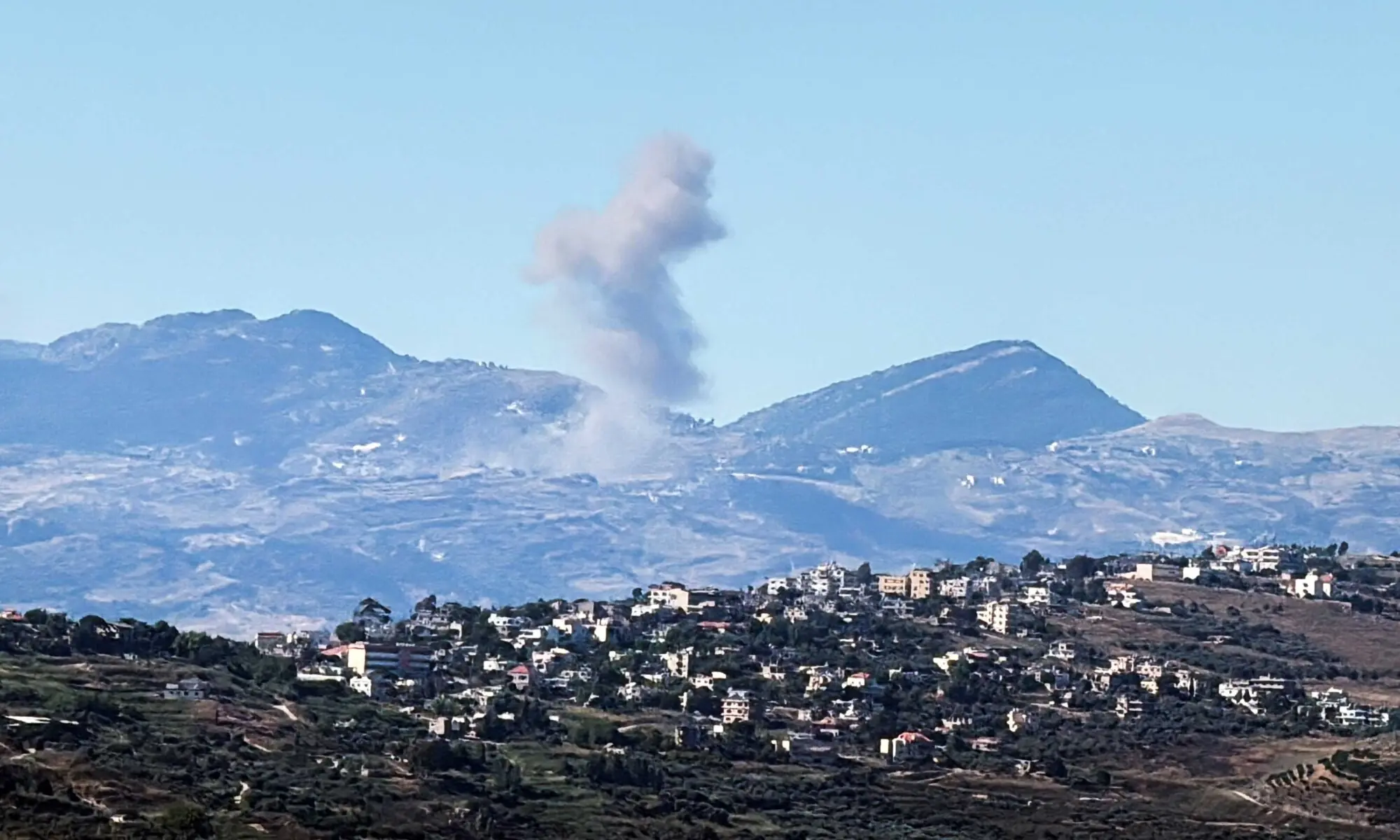
BEIRUT: Israel and Hezbollah agreed to a ceasefire on Friday, a US official said, after an escalation in hostilities in Lebanon sorely tested the US-Iranian interim deal to end the wider Middle East conflict.
A senior Israeli official and two Hezbollah sources confirmed the ceasefire to Reuters, which the US official said was due to begin at 1300 GMT. “If Hezbollah does not attack us, then for us it is not a time of war,” the Israeli official said, adding that Israeli forces would remain in southern Lebanon.
The Iran deal requires the United States, Iran and their allies to declare an immediate and permanent termination of military operations on all fronts, including Lebanon. Violence has picked up over the course of the week after initially abating when the agreement was first announced.
Hezbollah lawmaker Hassan Fadlallah earlier said that Iran had informed the group that talks with Washington could not continue without a comprehensive ceasefire.
The senior US official said that the ceasefire was worked out by negotiators for the US and Qataris with help from Iran.
“Hezbollah and Israel have agreed to a ceasefire,” the US official said. “We understand that after the exchange of fire earlier today, Israel and Hezbollah are now in a ceasefire.”
Israel, which was not consulted in the negotiations that led to this week’s US memorandum of understanding with Iran, has bristled at the apparent requirement that it halt its campaign in Lebanon, which it invaded after Hezbollah fired across the border in solidarity with Tehran on March 2.
The Israeli official said Israel had the freedom to act against emerging threats and threats to its forces and territory.
Earlier, Israeli Prime Minister Benjamin Netanyahu had vowed to “extract a very heavy price” from Hezbollah for the killing of the four soldiers.
Israeli officials have voiced anger at the US-Iran pact, saying it does not go far enough to address Israeli concerns over Iran’s nuclear programme.
Iran-US meeting postponed
Meanwhile, a planned meeting between Iranian and US officials in Switzerland on Friday has been postponed, with arrangements underway for talks in the coming days, Iran’s Foreign Ministry said on Friday.
The ministry said the meeting was no longer urgent because a memorandum of understanding on ending the war had already been signed digitally between the two sides.
The ministry spokesperson, Esmaeil Baghaei, added that negotiations on a final agreement would depend on the start and continued implementation of specified terms outlined in the memorandum.
Meanwhile, the head of the Iranian parliament’s national security committee says the Trump administration has shown a “failure to commit to the first clause” of the MoU with Tehran. That first clause states that both sides agree to “the immediate and permanent termination of military operations on all fronts, including in Lebanon”.
“America’s failure to commit to the first clause of the agreement demonstrates that America still lacks the will to gain the trust of the Iranian nation,” Ebrahim Azizi wrote on X.
Separately, Iran’s Strait of Hormuz body said on Friday it would waive planned fees to use the strait during a 60-day negotiation period under the memorandum of understanding signed with the United States this week.
Ships seeking passage through the strait while the interim agreement is in force must submit transit requests at least 48 hours before arrival, Iran’s Persian Gulf Strait Authority (PGSA) said in a notice.
Iran would waive fees for security, safety, environmental services and related insurance during the period, while requiring vessels to coordinate routes and transit times in advance due to areas affected by mines and to ensure safe navigation.
Shipping traffic through the Strait of Hormuz rose to its busiest in two months after a deal to halt the US-Iran war, maritime trackers said on Friday.
A total of 25 commercial vessels crossed the newly reopened strait on Thursday, the highest number since mid-April, according to data from tracking firm AXSMarine — more than three times the average of just over seven a day since early March.
In a sign of traffic picking up in the region, empty trucks queued for up to three kilometres outside the UAE port of Korfakkan just south of the strait, as at least four container ships unloaded there, an eyewitness told AFP.
Other ships could be seen on the hazy horizon, apparently waiting their turn to dock and unload, the eyewitness said, requesting anonymity.
PM-MBS call
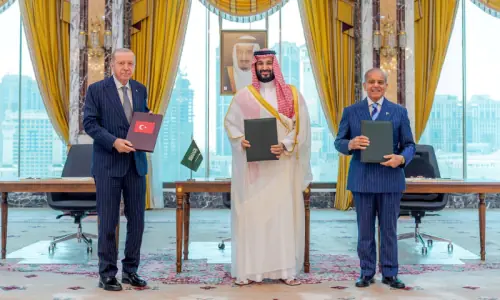
Prime Minister Shehbaz Sharif on Friday held a telephone conversation with Crown Prince Mohammed bin Salman of Saudi Arabia and congratulated him on the signing of the historic Islamabad Peace Deal.
According to the PM Office, the prime minister expressed deep appreciation to the crown prince for his steadfast and consistent support to Pakistan’s peace efforts and paid tribute to him for leading Saudi Arabia with great wisdom and sagacity throughout this crisis.
He said that it was only with the Kingdom of Saudi Arabia’s strong support, as well as the support of other Gulf states, that the peace deal between Iran and the US was signed within a few months.
On the occasion, Prince Mohammed bin Salman congratulated the premier and praised the untiring efforts of Field Marshal Asim Munir, that led to the successful signing of the peace deal.
The two leaders agreed that now, it would be vital to ensure that the next phase of negotiations between Iran and the US progresses smoothly, and the outstanding issues are resolved through dialogue and diplomacy.
Syed Irfan Raza in Islamabad also contributed to this report
Published in Dawn, June 20th, 2026