PM Shehbaz says 'significant' reduction to be announced in fuel prices amid global decline
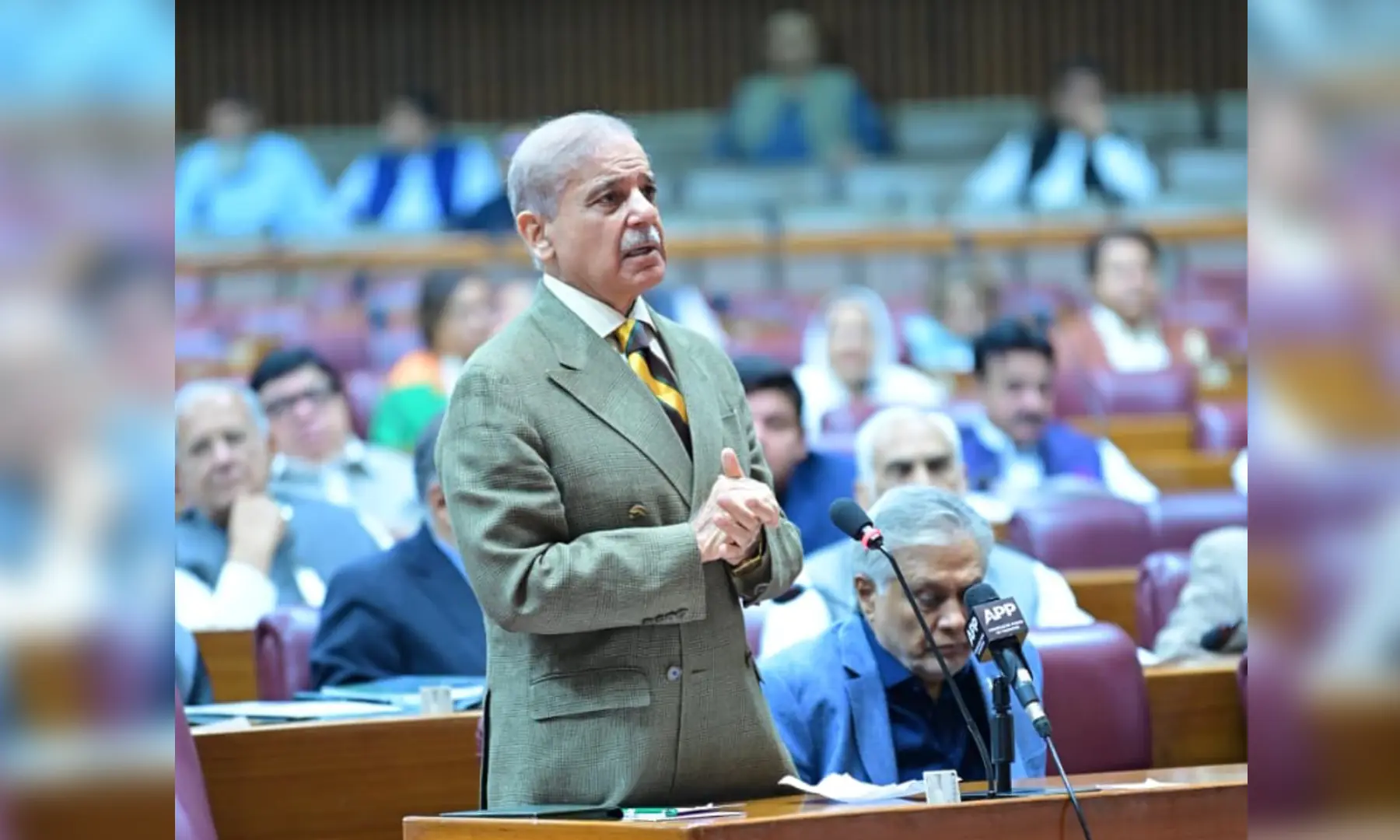
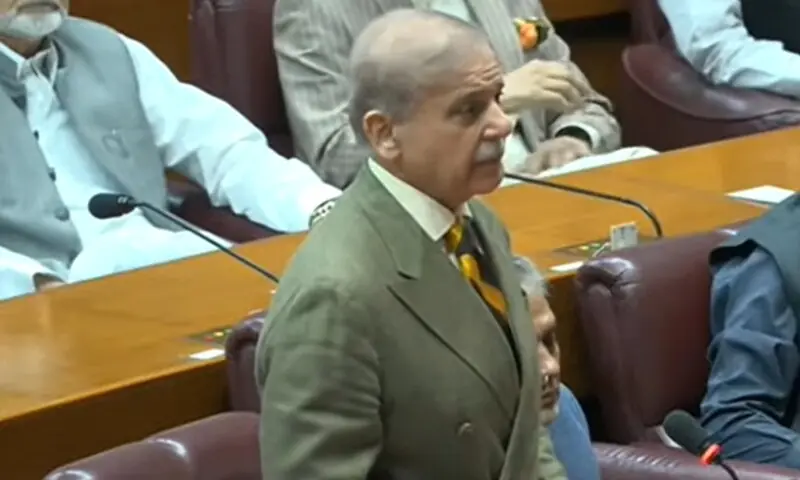


Prime Minister Shehbaz Sharif said on Friday that a “significant” reduction in fuel prices would be announced later in the day, following the swift decrease in global oil prices after the signing of a Pakistan-brokered memorandum of understanding (MoU) between the US and Iran to cease hostilities.
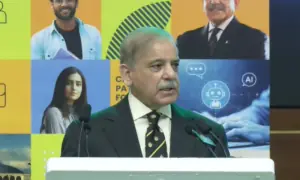
“Today, we have to announce the weekly revision in oil and petrol prices. And I will say just this much: as promised by the government to pass on the relief to the people after oil prices fall, a significant decrease in the prices will be announced today,” he said during an address to the National Assembly (NA).
He noted that global oil prices were swiftly falling after the recent agreement between the US and Iran. “Surely, they will decline further,” he added.
The premier then recounted that the prices had risen sharply after the US-Israeli war on Iran began, resulting in a “storm of inflation”.
“While the people of Pakistan made every humanly possible effort to save the economy, the federal government immediately spent Rs128 billion rupees to bring inflation down to the lowest possible level,” he recalled.
But now, he said, “the sun of progress and prosperity is about to rise”.
In this connection, he also thanked provincial governments for “extending their full support and leaving no stone unturned in providing relief to the people”.
He further thanked Petroleum Minister Ali Pervaiz Malik, Finance Minister Muhammad Aurangzeb, Federal Board of Revenue Chairman Rashid Mahmood Langrial and Planning Minister Ahsan Iqbal for their efforts to keep the economy on track as the world reeled from the financial impact of the US-Israeli war on Iran.
Pakistan, as well as the rest of the world, dealt with the economic impact of the US-Israeli war for months before the MoU was signed on Thursday.
The war, which began on February 28, resulted in a fuel crunch as Iran closed the Strait of Hormuz — a key maritime corridor that served as the passage for 20 per cent of the world’s oil and gas supply before the conflict — in retaliation of attacks by the US and Israel.
Consequently, oil prices spiralled, and to deal the impact. PM Shehbaz’s government initially hiked petrol and diesel prices by Rs55 per litre on March 6 and announced unprecedented austerity measures on March 9. The prices have been undergoing upward or downward weekly revisions since.
Meanwhile, Pakistan also continued to lead mediation efforts between the US and Iran and Thursday proved to be a red-letter day for the country, as it awoke to news of a long-awaited peace deal finally being signed between the US and Iran. Under the deal, the two sides have agreed on a framework to end the war, reopening of the Strait of Hormuz and a 60-day timeline for further talks.
Soon after the news of the deal, a major shift in oil prices was also witnessed, and they fell to their lowest since the start of the war.
Earlier, Petroleum Minister Ali Pervaiz Malik said PM Shehbaz had directed authorities to immediately pass on the benefit of declining international oil prices to consumers.
‘Great success’
In the NA, the prime minister began his address by noting that Pakistan had earned respect globally after mediating between the US and Iran.
“Several countries have sought such respect for centuries, but could not get the respect that God has blessed Pakistan with today. From Japan to Saudi Arabia, from Kuala Lumpur to Casablanca and from Mexico to India, if any country’s name is reverberating with respect and honour, it is Pakistan’s,” he said.
The premier said that if the National Assembly adopted a resolution in this regard, it would not just be an affirmation of Pakistan’s “great success” in its peace endeavour but would also send a message of unity and solidarity to the world.
He urged both sides of the aisle to collectively send a message to the world that, despite “our political differences, we will always be united” for national causes.
The premier said if he would not specifically name those who had worked day and night for peace between the US and Iran, even at the cost of repetition, “I will not be fair to myself, to yourself, to this honourable House and to the people of Pakistan”.
“It is an undeniable truth, whether we like it or not, that the most significant role in this is of Field Marshal Asim Munir, who worked tirelessly day and night, sacrificing his sleep for the last two to three months, to restore peace,” he said.
He also thanked Deputy Prime Minister and Foreign Minister Ishaq Dar for contributing to peace efforts and Interior Minister Mohsin Naqvi, whom PM Shehbaz said “played his part regarding Iran”.
He also congratulated Leader of the Opposition Mehmood Khan Achakzai and other opposition members, PPP Chairman Bilawal Bhutto-Zardari and other allies of the ruling PML-N.
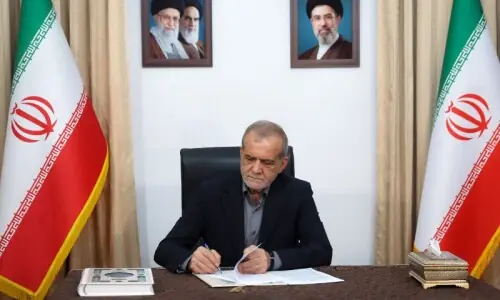
The premier then shared that he held a telephone call with Iranian President Masoud Pezeshkian on Thursday evening. During the call, he said, the Iranian president repeatedly expressed his gratitude to me and to the entire Pakistani nation for standing by them in difficult times.
“I invited him to Pakistan. I told him the entire nation is ready to give him a warm welcome and tell the world that Iran and Pakistan are not just neighbouring countries, but brother countries,” he said.
The prime minister said the Iranian president accepted his invitation and said he would come to Pakistan soon and thank Pakistanis.
Moreover, he said, the Iranian president asked him to attend the funeral of the assassinated supreme leader of Iran, Ayatollah Ali Khamenei, on July 3-4.
“I said, Pakistan’s delegation will be present there, so we can tell the world how much respect we have for him in our hearts, and that Pakistan and Iran will closely cooperate in the times to come and as a result of the ceasefire, economic prosperity will be witnessed in the region,” he said.
Concluding his address, he extended thanks to brotherly countries that contributed to peace efforts, particularly naming Qatar, Saudi Arabia, Turkiye and China.
The prime minister also mentioned that while Iran’s leadership participated in negotiations to end the conflict with “great dignity and seriousness”, the US leadership and President Donald Trump also played their part.
“It is said that nothing succeeds like success. Nations are unable to get this respect, this honour and status [that Pakistan has today] in centuries,” he said, adding that a message of national unity should be sent through the House. “Today’s great success demands that all of us unite.”
Pakistan leadership’s role lauded
Subsequently, the NA unanimously adopted a resolution that lauded the role of Pakistan’s leadership in the US-Iran agreement.
It was presented by Law Minister Azam Nazeer Tarar.
The draft of the resolution, seen by Dawn, stated: “Whereas the National Assembly of Pakistan notes with immense satisfaction and pride the landmark diplomatic breakthrough in the form of cessation of hostilities, and signing of an agreement on a framework for peace and stability between the United States of America and the Islamic Republic of Iran.
“Whereas the House recognises the negative fallout of the conflict for the regional peace and stability, as well as for the economic stability and energy security of the countries across the globe.”
Through the resolution, the NA recorded “its profound appreciation” for PM Shehbaz, DPM Dar, Interior Minister Naqvi, Chief of Defence Forces and Chief of Army Staff Field Marshal Asim Munir and the entire team engaged in the process of negotiations.
The House acknowledged that “their sincere and tireless efforts positioned Pakistan as a trusted neutral mediator on the global stage”.
The NA also congratulated and appreciated the leadership of Iran and the US on the “successful completion and signing of this historic peace deal”.