SOUNDSCAPE: THE POWER OF SPICE


 0
0
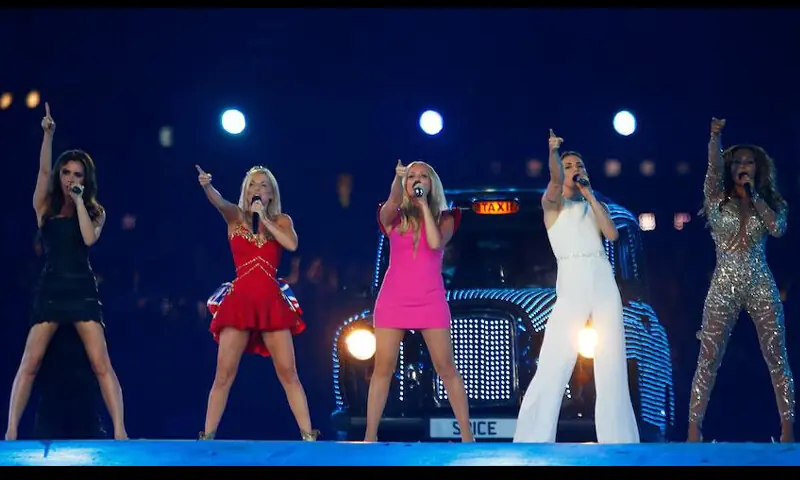

Thirty years ago, five young women from the UK redefined what a pop group could be. When the Spice Girls burst on to the scene in 1996 with their debut single Wannabe, they helped to reshape discussions around gender, sexuality, power and pop culture.
At first glance, their formula seemed straightforward; catchy music, bold personalities and an explicitly commercial brand. This helped the Spice Girls to dominate the pop charts of the 1990s and 2000s. But their approach was very rare for British female artists — most girlbands relied on matching outfits and a unified look, as opposed to the Spice Girls brand of individual personalities. The strategy resulted in huge success but also reflected, and arguably was the catalyst for, deeper shifts in the music industry and society at large.
The Spice Girls arrived at a moment when “girl power” (a phrase they popularised globally and which now features in the dictionary) tapped into a growing appetite for female autonomy and visibility.
Unlike many pop acts before them, each member of the Spice Girls had a distinct identity: Mel B (Melanie Brown) as Scary Spice, Melanie C (Melanie Chisholm) as Sporty Spice, Emma Bunton as Baby Spice, Geri Halliwell as Ginger Spice and Victoria Beckham as Posh Spice. These personas were often caricatured, but they provided a lens through which fans (particularly young girls) could see multiple versions of femininity represented in mainstream media.
The Spice Girls burst on to the scene 30 years ago and became the biggest selling girl band in history. But the band’s significance cannot be measured by sales alone
Another significant element of the Spice Girls’ audience is the LGBTQ+ community. The group has often pointed to the importance of this audience for their success. Many of their LGBTQ+ fans have pointed to the ‘loud and proud’ message of the band as an important part of their self-acceptance and positive self-esteem.
Later generations of female and LGBTQ+ artists have attributed Spice Girls as inspirational figures, including Adele, Billie Eilish, Olly Alexander, Charli XCX and Dua Lipa. These artists, in turn, continued to keep the Spice Girls legacy alive with younger audiences, helped by the easy access of legacy music catalogues on digital streaming platforms.
The Spice Girls legacy
The band’s debut album, Spice, is the best-selling album by a girl group in history. Their global reach helped solidify the late 1990s and early 2000s as a peak era of British pop culture exports. Throughout their career, the band had nine UK number one singles as a group and eight solo number ones. No other girl group comes close to that total.
But the band’s significance cannot be measured by sales alone. The Spice Girls helped normalise the idea that female acts could dominate the global market on their own terms, without conforming to male-defined industry expectations. For example, they sacked a male manager in the maelstrom of their success and managed themselves, while enjoying several more number-one singles, platinum album sales and sold-out tours.
The Spice Girls also exerted an unusual degree of control over their music; notably cowriting all of their songs and challenging the industry norms that often sidelined female artists in decision-making processes. In doing so, they anticipated later debates about authorship, authenticity and agency in pop — decades ahead of modern conversations about music ownership and power, such as Taylor Swift’s journey to owning her own master recordings.
However, the legacy of the Spice Girls is not without tension. “Girl power” has been both celebrated in that it made feminism accessible to young people and critiqued as a commodified slogan that reduced complex political ideas to marketable soundbites. At their last reunion tour in 2019, Geri repackaged “girl power” into “people power.”
Beyond the music, the Spice Girls have become an omnipresent element of British pop culture in recent years, with Royal Mail stamps, Royal Mint official British currency and a collaboration with the English female rugby team. This shows that the Spice Girls’ iconic imagery is well and truly canonified in the British pop culture vernacular, much like The Rolling Stones, Oasis and The Beatles.
Three decades on, the Spice Girls continue to be revisited in ways that alternate between celebration, nostalgia and critique, reflecting ongoing debates about gender, commerce and pop culture in the 1990s.
The writer is Associate Dean of Learning, Teaching and Student Success and Lecturer in Media, Art and Communication at Sheffield Hallam University in the UK
Republished from The Conversation
Published in Dawn, ICON, June 21st, 2026