Scorching Miami heat could push World Cup players to the brink, expert warns
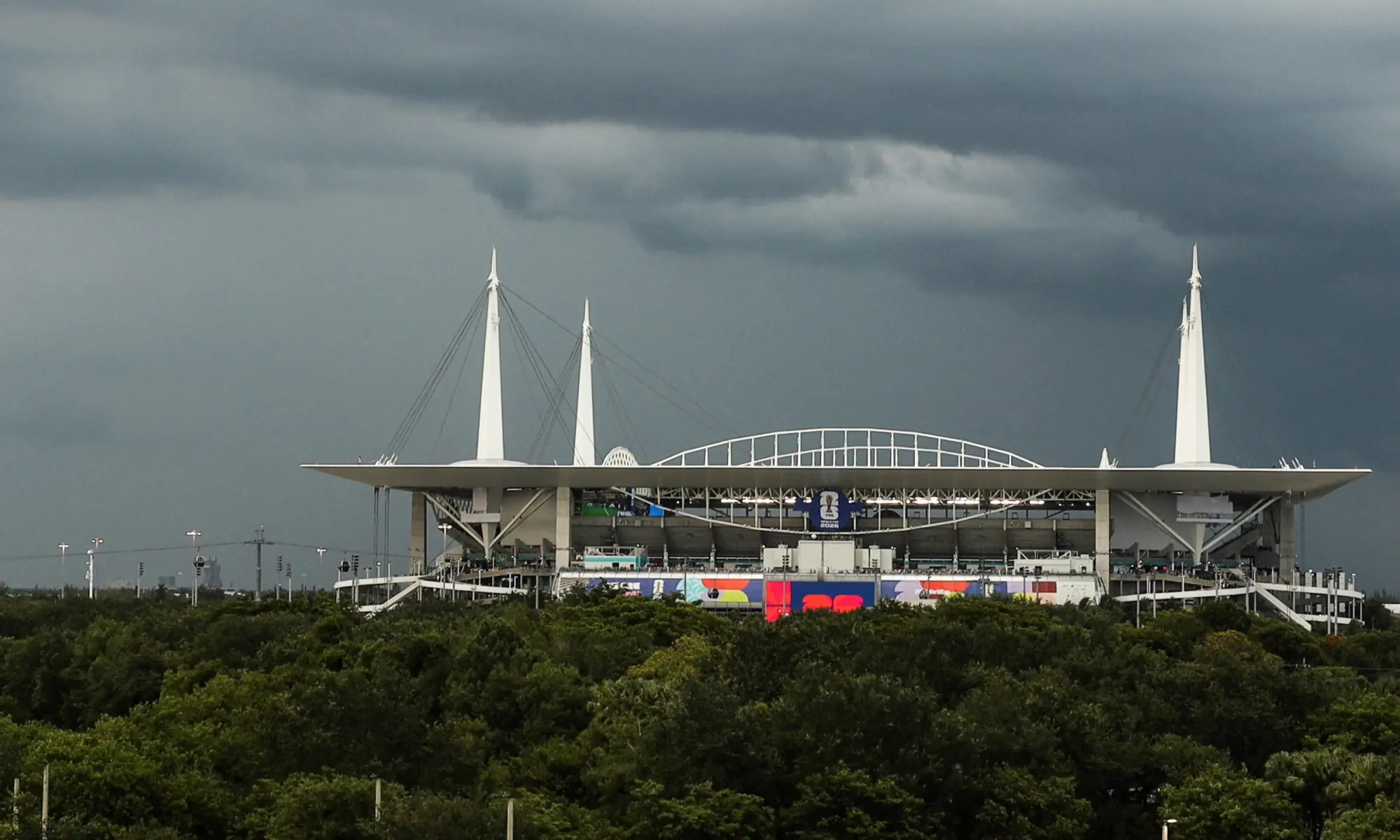
Players arriving in Miami for World Cup matches may find themselves battling more than just opposing teams, as sweltering heat and humidity threaten to turn the tournament into a test of endurance as much as skill.
Teams from cooler climates face particular risks if they have not had time to acclimatise to Miami’s punishing conditions, warned Dr Jason Kostrna, an assistant professor and graduate kinesiology program leader at Florida International University. Kinesiology is the study of movement, exercise, and physical performance.
“Unfortunately here in Miami, it’s very humid and so when you go and exercise, you start dripping sweat,” Kostrna said.
“That means that you are not evaporating it. It’s just rolling off you and you are not getting that heat loss.”
The physiological battle is intense. As players’ bodies struggle to cool down, their hearts work overtime pumping blood to the skin in a desperate attempt to release heat through evaporation – a process that fails in Miami’s sticky air.
“Then when it can’t, it starts to really try and increase that heart rate,” Kostrna explained.
Kostrna said the heat stress compounds the already enormous pressure of representing one’s country, creating an added burden that affects both physical performance and mental sharpness.
“You’ll start to see the pace of play maybe drop a little, you’ll start seeing that decision-making becomes a little more conservative. Whether that’s consciously or unconsciously, depends on the athlete,” he added.
The temperatures across World Cup host cities are already running a few degrees above historical averages.
Moreover, when measuring the Wet Bulb Globe Temperature – which factors in humidity, sunlight and wind speed alongside air temperature – Kostrna painted a sobering picture.
“Our wet bulb globe temperature for some of these games could be close to 120 degrees Fahrenheit (48.8C) when you factor in radiative heat, humidity, the ambient temperature and throw in a little bit of the plastic or concrete jungle effect,” he said.
“If we do not actively work to take care of everybody, that is enough to cause major heat illness.” Heat mitigation measures are also in place for fans at Miami Stadium, where Miami-Dade County said it was installing cooling stations, water trailers, hydration zones and misting areas for fans and workers during the tournament.
Although three-minute hydration breaks have been introduced for all games to give the players the chance to take in fluids, Kostrna suggested it is merely a band-aid solution if they have not hydrated themselves in the days building up to the fixture.
“If you’re behind on hydration, this is not magically going to fix it,” he said. “For the athletes, it can help bring their heart rate down, get some hydration. (The hydration breaks) can be a little bit longer, that would probably be better.” His advice for teams? Arrive early and acclimatise.
“My hope is that there are not any teams that are truly just showing up off the plane and they’re experiencing this for the first time,” Kostrna said.
“Hopefully they have been in town for weeks and have been practising in this (heat). That should be enough even if you are somebody who is coming from one of these colder regions, your body will adapt over those weeks.”