Budget ‘fails to address fiscal vulnerabilities’

KARACHI: The Policy Research and Advisory Council (PRAC) has expressed serious concern about the budget’s failure to address core fiscal vulnerabilities.
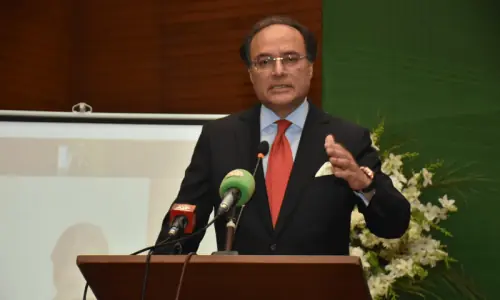
“Debt servicing obligations budgeted at Rs8,054 billion constitute 68.5 per cent of net federal revenues, while unfunded pension liabilities have reached Rs1,169bn. These fixed obligations critically constrain fiscal space for development and social spending,” said the PRAC Chairman Younus Dagha.
He stressed that sustainable consolidation requires expenditure rationalisation, tax base expansion, pension reform, and the restructuring of loss-making state-owned enterprises — none of which are substantively addressed in the budgetary proposals.
The Public Sector Development Programme, capped at Rs1,000bn, also drew concern.
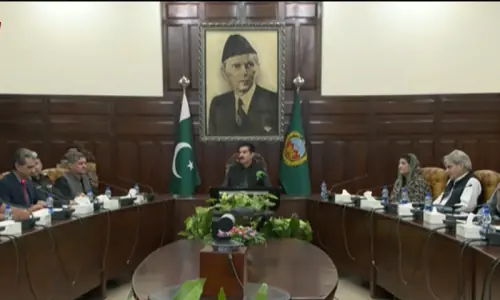
Younus Dagha says debt servicing consumes 68.5pc of revenue
“Adjusted for inflation, this represents a contraction in real development spending, risking further deterioration across transport, logistics, urban services, and climate resilience,” Mr Dagha said, stressing that public investment must be protected and directed toward high-impact projects advancing productivity, exports, and employment.
He cautioned against the sharp reduction in withholding tax on international card transactions from 5pc to 0.5pc, warning it could pressure foreign exchange reserves by encouraging non-essential dollar outflows.
On retail taxation, Mr Dagha warned that the Fixed Tax Asaan Scheme, without phased POS [point-of-sale] integration and robust verification, risks misuse by larger businesses seeking to circumvent effective compliance — undermining its documentation objectives.
He urged stronger measures supporting industrial growth, export competitiveness, and productive investment, emphasising that Pakistan’s economic policy must transition from short-term fiscal balancing to a sustainable growth model anchored in exports, investment, innovation, and institutional reform.
Published in Dawn, June 16th, 2026