

Pakistan faces annual deficit of 2.3 million blood donations: WHO
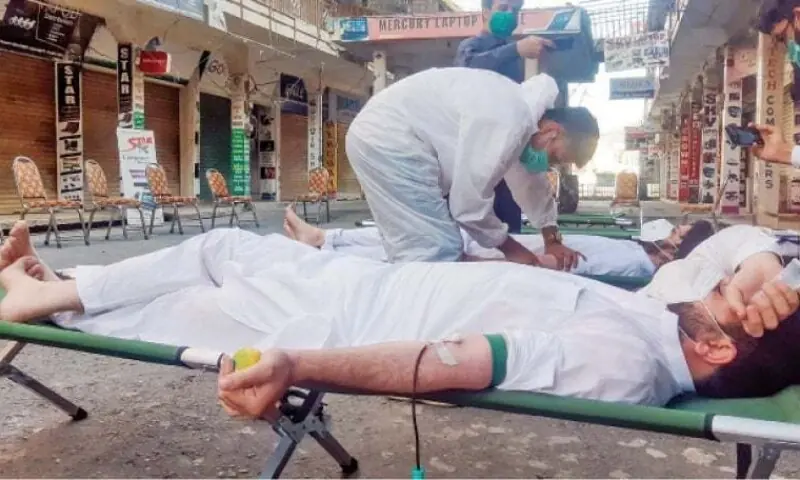
ISLAMABAD: On the occasion of World Blood Donor Day, the World Health Organisation (WHO) has urged voluntary donors across Pakistan to give blood to save lives, warning that the country has a deficit of 2.3 million donations a year that is severely limiting the ability of hospitals to save lives.
Under the slogan “One Drop of Humanity. Give Blood. Save Lives”, this year’s global campaign places humanity at the heart of every blood donation, reminding people that donating blood is much more than a medical act. Today, thanks to medical science, a single donation can save up to three lives.
WHO estimates that Pakistan’s medical facilities need over 5 million blood donations annually, but, as of today, they only receive around 2.7 million donations a year. Only 18pc of these donations are voluntary and non-remunerated, with 82pc coming from family or replacement donors.
“Voluntary blood donors are public health heroes. On World Blood Donor Day, WHO pays tribute to the millions of voluntary, unpaid blood donors whose generosity saves lives every day in Pakistan and across the world. No patient, no mother, no sister, no son or daughter should die because of a lack of access to blood.
Calls voluntary donors to give blood to save lives
“Today, medical science can save lives more than ever before, but without human solidarity and blood donations, hospitals and their health workers cannot do their job of saving lives. Every donation counts,” said WHO Representative in Pakistan Dr Luo Dapeng.
WHO has encouraged all governments and health authorities to invest in robust blood systems that support voluntary donation, equitable access and safe transfusion practices.
“Blood transfusions are essential for managing pregnancy related bleeding, treating severe childhood anemia, bleeding disorders, infectious diseases and various chronic conditions –including cancers –supporting complex medical and surgical procedures, and providing lifelong care for conditions such as sickle cell disease, thalassemia, haemophilia and immune disorders. They are also critical in emergencies, disasters and conflicts,” it stated.
“On World Blood Donor Day, and every day, WHO stands with Pakistan and its health workforce to reinforce the country’s blood banks and use standardised blood screening methods and protocols to ensure safe and adequate blood supplies for all, regardless of social or economic status, no matter where they live or who they are,” WHO stated.
Published in Dawn, June 15th, 2026



























