Balochistan and the new great game for critical minerals


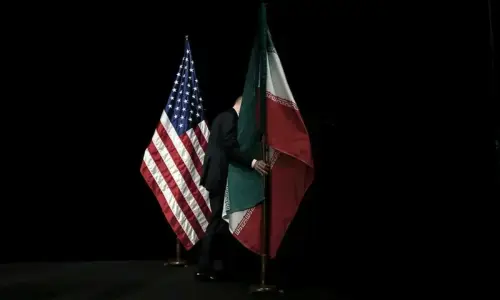
As tensions between Iran, Israel, and the United States continue to reshape regional geopolitics, Pakistan finds itself occupying an increasingly pivotal diplomatic position.
Beyond its traditional role as a security actor in South Asia, Islamabad has quietly positioned itself as a diplomatic bridge between competing regional and global powers. Maintaining working relations simultaneously with the United States, China, Iran, Saudi Arabia, and the Gulf states is no small feat, yet this tightrope walk has enhanced Pakistan’s strategic value in an era of growing geopolitical fragmentation. Recent efforts to facilitate communication and de-escalate friction between Washington and Tehran only underscore this relevance.
Yet, geopolitical relevance alone does not fill state coffers. The real challenge for Pakistan lies in converting diplomatic dividends into economic ones. Few opportunities offer greater potential to achieve this than the vast, untapped mineral wealth of Balochistan.
The global economy is undergoing a profound transformation driven by artificial intelligence, clean energy technologies, advanced manufacturing, and defence modernisation.
At the heart of this transition lies an insatiable demand for critical minerals like copper, lithium, cobalt, nickel, antimony, and rare earth elements.
These resources are the baseline fuel for electric vehicles, renewable energy systems, semiconductors, data centres, and telecommunications infrastructure. Furthermore, the ongoing conflicts in the Middle East and Ukraine demonstrate how rapidly the nature of warfare is evolving around drone swarms, AI-enabled targeting, precision-guided munitions, and hypersonic missiles, all systems that rely heavily on critical minerals and advanced semiconductor supply chains.
What makes these minerals strategically vital is not just their necessity, but the extreme concentration of their supply chains. According to the International Energy Agency, China is the dominant processor of most critical minerals, controlling approximately 85-90 per cent of global rare earth processing, 70pc of lithium and cobalt refining, nearly 90pc of graphite processing, and over 90pc of permanent magnet manufacturing. This chokehold has transformed critical minerals from a commercial asset into a matter of national security for major economies.
Consequently, capitals across North America, Europe, East Asia, and the Gulf are racing to diversify supply chains and reduce dependence on a single source. This is precisely why Pakistan’s mineral sector is attracting unprecedented international attention.
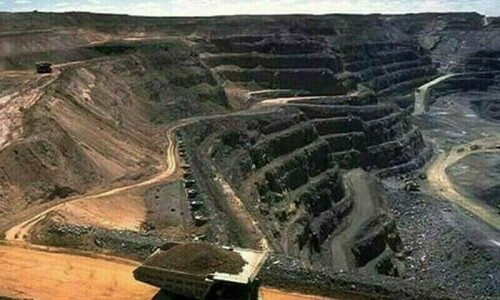
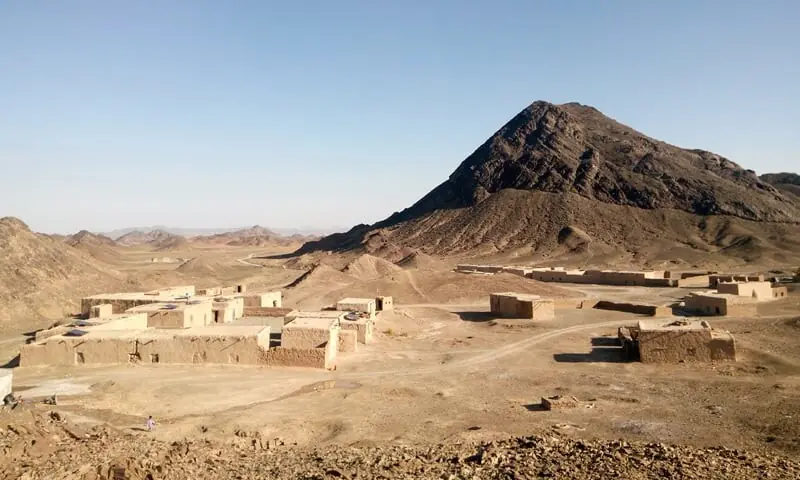
Balochistan possesses some of the world’s most promising undeveloped deposits of copper, gold, chromite, antimony, and potentially rare earth elements. The Reko Diq project alone stands as one of the largest undeveloped copper-gold deposits on earth. Because of this, Pakistan is suddenly a serious player in the emerging geopolitics of critical minerals.
The United States has emerged as one of the most visible stakeholders. Washington’s interest extends far beyond traditional security cooperation, pivoting sharply toward economic and strategic engagement in Pakistan’s mineral sector.
The US Export-Import Bank’s commitment of approximately $1.25 billion in financing support for Reko Diq represents one of the largest US-backed investments in Pakistan in recent history. American policymakers clearly view access to diversified mineral supply chains as a cornerstone of future economic competitiveness.
However, Washington is not playing on an empty field. China remains deeply embedded in the province’s mining sector through the Saindak copper-gold project and broader CPEC-linked infrastructure. Japan has extended financing support through the Japan Bank for International Cooperation. The European Union has also intensified its engagement through initiatives linked to its Critical Raw Materials Act, which seeks to secure Europe’s access to strategic resources.
During the EU-Pakistan Business Forum in April 2026, dedicated discussions focused heavily on responsible resource partnerships, ESG-compliant sourcing, and investment opportunities in Pakistani mining. Meanwhile, Gulf states, particularly Saudi Arabia, continue to actively explore stakes in both extraction and supporting infrastructure.
Taken together, these developments demonstrate that Balochistan is no longer a peripheral province. It has become a strategic crossroads where the interests of major global powers converge through geoeconomics rather than traditional geopolitics.
Yet beneath this massive opportunity lies a severe internal challenge.
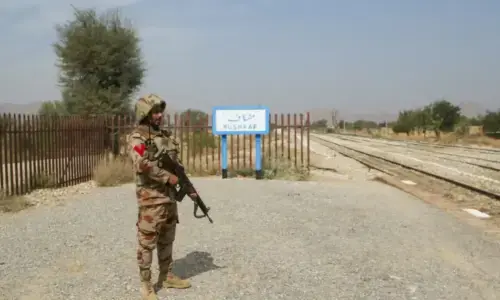
The exact districts hosting Pakistan’s most valuable mineral deposits happen to be among its most fragile. Decades of underdevelopment, weak governance, skeletal infrastructure, and deep-seated political grievances have created volatile conditions that militant groups exploit.
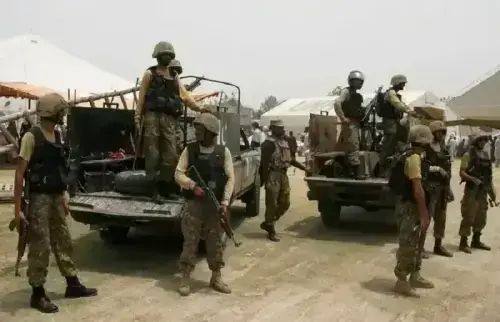
Organisations like the Balochistan Liberation Army (BLA) have repeatedly targeted infrastructure projects, transport networks, and foreign-linked investments to break investor confidence and internationalise the conflict.
At the same time, Pakistan has long maintained that hostile intelligence agencies and regional adversaries actively exploit these local grievances, backing destabilising networks to sabotage Pakistan’s economic progress and scare away foreign capital. In today’s hyper-competitive geopolitical environment, critical infrastructure, mineral corridors, and foreign-funded projects are no longer just economic assets, they are battlegrounds for regional influence, connectivity, and strategic leverage.
The implications extend far beyond local security. Every attack on a mine, a transport corridor, or foreign personnel spikes investment risk, delays timelines, and solidifies the perception that Pakistan is unstable. Capital is fluid, and in a competitive global market, investors have choices. If Pakistan cannot guarantee a predictable, secure environment, that capital will simply flow elsewhere.
While kinetic operations remain necessary to protect human lives and secure critical infrastructure, a purely security-centric approach is unlikely to provide a lasting solution.
The history of resource-rich conflict zones worldwide proves that mines cannot be secured by force alone. Sustainable security only emerges when local communities perceive themselves as stakeholders in economic development, rather than passive spectators. The real challenge in Balochistan is not just protecting the perimeter of an investment, but creating conditions where the local population actually wants that investment to succeed.
This requires an immediate shift toward non-kinetic approaches that target the root drivers of instability.
First, local workforce development must become the anchor of mineral policy. Technical and vocational training tied directly to mining, engineering, logistics, environmental management, and processing can ensure that local communities are the first to benefit from emerging opportunities.
Second, community benefit-sharing mechanisms must be institutionalised. International precedents show that local development funds, transparent revenue-sharing models, and community participation in decision-making drastically improve the social legitimacy of large-scale projects.
Third, Pakistan must move past a basic extraction-focused model. Currently, the real value of critical minerals is captured downstream in the processing, refining, and manufacturing stages, not at the dig site. Developing domestic processing capacity would not only generate high-value jobs but would also cement Pakistan’s strategic importance within global supply chains.
Finally, structural governance reforms are essential. Today’s investors prioritise regulatory predictability, transparency, and ESG standards just as much as physical security. The nations that benefit most from the global minerals race will not necessarily be those with the largest deposits, but those capable of building the institutions needed to manage them effectively.
Pakistan currently enjoys a rare alignment of geopolitical opportunity. Its growing diplomatic relevance, strategic location, and mineral wealth have caught the eye of global powers at the exact moment the world is desperately searching for alternative mineral sources. Balochistan sits at the absolute dead-centre of this convergence.
The critical question is whether Pakistan can translate this fleeting geopolitical moment into structural, long-term economic transformation. Managed wisely, Balochistan has the potential to become the cornerstone of Pakistan’s future prosperity and a vital link in global supply chains.
Mismanaged, it risks becoming yet another textbook case of how strategic resources can fuel competition and conflict rather than development.
Sheharyar Khan is a political economist working on governance, geopolitics and security affairs.