0
0

June in Pakistan is not merely the month when temperatures rise; it is also the month when expectations do. The federal budget arrives with the peculiar status of an annual national event: anticipated by households, negotiated by interest groups, defended by government, dissected by economists, and eventually endured by the common citizen.
To the salaried person, the budget is a question of whether a little more income will survive taxation. To the shopkeeper, it is the fear of higher costs and weaker demand. To industry, it is the price of energy, imports and credit. To the government, however, it is increasingly an exercise in keeping the books from falling apart.
This is not how a budget is supposed to be understood. In textbook economics, a public budget is not merely an account of what the state will collect and spend. It is the most important annual statement of a government’s economic purpose. It tells citizens whether the state intends to create jobs, protect vulnerable households, support productive investment, improve human capital, build infrastructure and distribute economic burdens fairly. A budget is not meant to be a calculator with a flag on it. It is meant to be a development strategy expressed in rupees.
Pakistan formally prepares its federal budget through an elaborate process. Ministries submit demands, expenditures are projected, revenue targets are developed, fiscal limits are identified, development projects are prioritised, and medium-term frameworks are prepared.
A budget is not meant to be a calculator with a flag on it; it is meant to be a development strategy expressed in rupees
On paper, this should connect public spending with national objectives. In practice, however, the budget often reaches the public after its developmental soul has already been crowded out by fiscal compulsions.
Debt servicing, defence, pensions, administrative costs, subsidies, transfers and unavoidable commitments occupy the commanding heights of expenditure. The remaining space for development is treated less as an engine of growth and more as a cushion to be reduced when the arithmetic becomes uncomfortable.
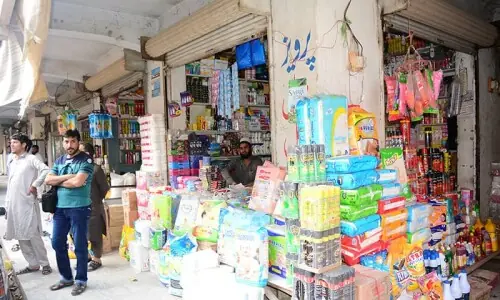
This is why the Pakistani public does not read a budget in the language of macroeconomics. It reads it through the monthly grocery bill, the electricity meter, the petrol pump, the school fee voucher and the deduction on the salary slip. For ordinary households, budget day is not about the primary balance or fiscal consolidation; it is about whether the state will make survival slightly easier or marginally more expensive.
People hope that taxes will come down, prices will stabilise and some breathing space will be restored. This expectation is not economically naïve. It arises because citizens experience the state most directly through taxes, tariffs and inflation, while the benefits of public expenditure often remain distant, uneven or invisible.
The government, meanwhile, receives the budget through a different lens. It is under pressure to mobilise revenue, contain deficits, satisfy creditors, manage debt sustainability and preserve external confidence. These are legitimate objectives. No country can spend without resources or borrow without consequences.
But a difficulty arises when balancing the books becomes the entire philosophy of budgeting. Fiscal discipline is a means to development, not a substitute for it. An economy cannot be permanently taxed into growth, nor can a society be stabilised by repeatedly asking the already documented, already billed and already compliant segments to contribute more.
Pakistan’s budget-making has gradually become an annual hunt for revenue rather than an annual design for productivity. The easiest taxpayers are pursued because they are visible: salaried individuals, formal businesses, electricity consumers, fuel users and import-linked activities.
Meanwhile, the more difficult questions of widening the tax base, documenting wealth, taxing unproductive rents, reforming state-owned enterprises, reducing wasteful expenditure and improving public service delivery are either deferred or diluted. The result is a budget that may raise revenue on paper but weakens confidence, investment and consumption in the economy that must generate tomorrow’s revenue.
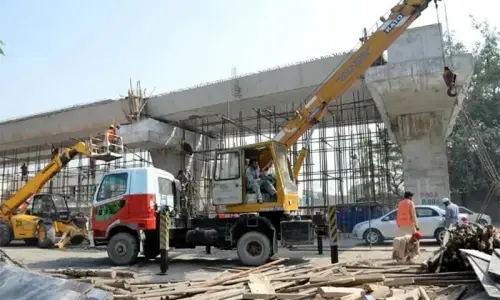
The development budget presents an equally troubling paradox. Public Sector Development Programme allocations are announced with ambition, often carrying the symbolism of progress. Yet during implementation, development spending is frequently compressed, delayed or reprioritised when fiscal pressures intensify.
A pro-growth and inclusive budget would begin with a different question. Instead of asking only how much revenue can be extracted, it would ask which expenditures and incentives can expand the productive base of the economy. Instead of placing the burden primarily on those already within the tax net, it would design fairness into revenue mobilisation. Instead of treating social protection as charity, it would treat it as economic resilience. Instead of financing inefficient structures indefinitely, it would invest in energy affordability, human capability, export competitiveness, climate adaptation and productive employment.
The real question, therefore, is not whether the federal government will present another budget. It will, and we will wait. The question is whether Pakistan will continue to produce a budget that records its constraints or finally begin to prepare one that releases its possibilities.
The writer has a doctorate in Energy Economics and serves as a research fellow at the Sustainable Development Policy Institute. Email: khalidwaleed@sdpi.org
Published in Dawn, The Business and Finance Weekly, June 8th, 2026