Making the budget relevant

The budget season is here again. It will be presented before Parliament, with all the usual cliches and platitudes, ‘debated’ under the haze of political speeches, and passed into law. This is the annual ritual. However, the question will remain: Is the budget now even relevant?
Beginning in the mid-1980s, the budget began to lose its sanctity, becoming more and more a public relations exercise, with numbers looking good all around. Actual implementation has become a different story. Revenue targets are almost never met, with the Federal Board of Revenue admitting regular shortfalls; current expenditures are almost invariably overrun, and development expenditure is always cut. One constant is a rise in taxation under various heads.
The people at large merely watch askance. They are less concerned with resource mobilisation, ‘revenue targets’, ‘budget deficits’, ‘tax-GDP ratios’, ‘tax compliance’, ‘current account deficits’, ‘balance of payments’, ‘austerity measures’, and so on.
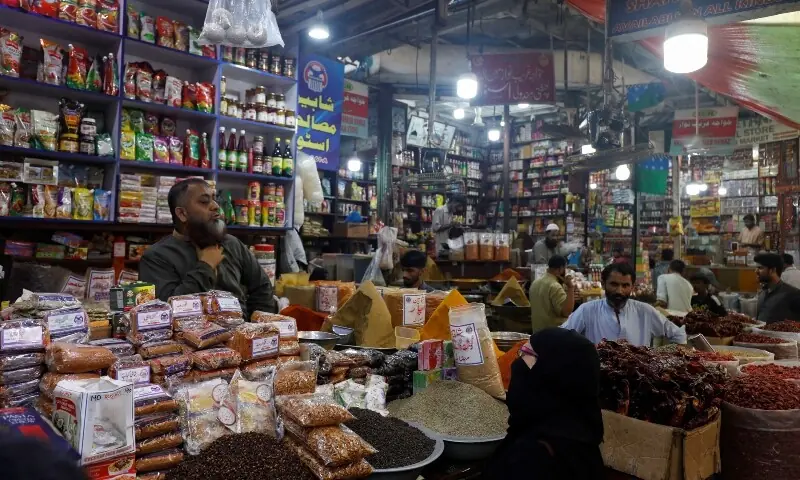
They are more concerned with employment, milk and grocery prices, and the costs of housing, water, public transport, school fees, medicines, and so on. As always, the budget caters materially to the former, with the traditional lip-service to the latter. Of course, whether the former is ever achieved is another matter.
For it to be meaningful, a fresh approach is called for that focuses on the people, rather than the metrics
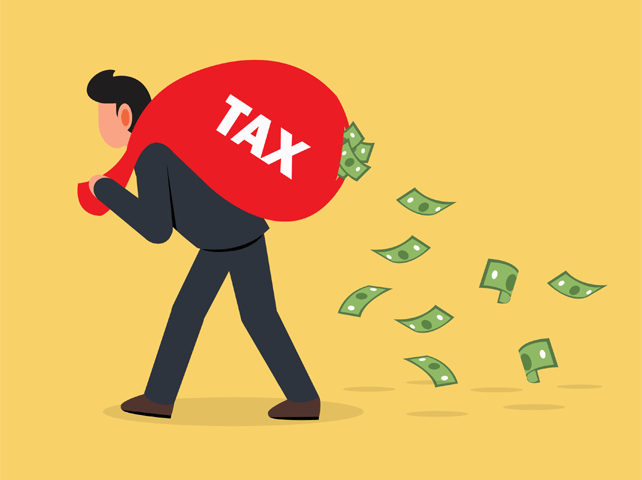
A budget is a statement of priorities. On the one hand, it is a technical primer for accountants, economists and public finance practitioners. On the other hand, and essentially so, it is a political document. It lays out who and what will be taxed and who and what will be subsidised, with taxpayer money.
More plainly, it ordains whose pockets the money will come from and into whose pockets it will go. Clearly, the money comes out of the pockets of the politically weak and goes into the pockets of the powerful in control of the decision-making apparatus and those close to it.
For the budget to be meaningful for the national economy and for the people, a fresh approach is called for, particularly in the present circumstances. The current phase of the economic crisis, festering for over two decades, centres around two deficits: the budget deficit and trade deficit.
The former depicts the difference between rupee expenditure and revenues; the latter, between dollar-denominated imports and exports. The former is also, and equally, critical; however, the Middle East war has exacerbated a long-standing weakness of the economy: import dependence. It is this part of the crisis that has called for attention all along, but has now acquired urgency. The import dependency that has reared its head concerns oil, food, and industrial raw materials. All three will need major policy shifts.
The budget is essentially a political document, laying out who and what will be taxed and who and what will be subsidised, with taxpayer money
Petroleum imports as a percentage of overall transport sector value added were 0.36 per cent in the year 2000, which tripled to 1.16pc in 2024-25; indicating that the transport sector has become more oil-intensive over the last quarter of a century. The oil intensity of the transport sector can be attributed to the fact that 95pc of inter-city goods transport is handled by road transport — a shift from rail since the early 1980s.
Comparative cost statistics show that rail transport utilises approximately one-third less fuel per kilometre. Accordingly, a policy shift to move goods transportation back to rail can likely yield significant savings in oil requirements and foreign exchange.
Essential food imports (grains and pulses, edible oils, sugar and tea) account for about 10pc of total commodity imports. Pakistan imports about 10pc or so of wheat, 90pc of pulses and 100pc of palm oil for cooking oil. Subjecting these essential basic food items to the vagaries of international market fluctuations and rupee devaluation means feeding into food inflation, impacting the poor.
Accordingly, a policy shift to achieve self-sufficiency in the production of these items by mandating minimum acreage for wheat, pulses, and sunflower can yield significant foreign exchange savings and protect the poor from food inflation.
Basic economic theory states that a country’s manufacturing foundation must be based on its raw material endowment. Pakistan has ignored this axiom, disregarding the country’s own agricultural and mineral resource base and rendering the manufacturing sector increasingly dependent on imported raw materials. The irony is that even raw cotton is now imported to feed the textile industry.
Other ironies include exporting rice and importing rice cereals; exporting baryte in raw rock form and importing barium, a pharmaceutical end product; and so on. The extent of import dependence on industrial raw materials has created a situation where any attempt at import compression to address a balance-of-payments crisis results in the shrinking of the manufacturing sector, which in turn further worsens the trade balance.
The above issues are critical to the stability of the national economy’s trade balance as well as to household budgets. They are important even for the budget to be taken seriously.
The writer is an economist and a
former advisor for planning and
development to the Sindh chief minister
Published in Dawn, The Business and Finance Weekly, June 8th, 2026