HOMESCHOOLING my daughter, Sitara, has been a fascinating and difficult experiment. We are still learning, still failing, still adjusting course. Perhaps that is precisely the point. Sitara spent her early years at a community school I run in her birth village, where learning revolved around play: blocks, puzzles, sports, music and art. Later, she started nursery at a school run by The Citizens Foundation in the same village.
She was naturally shy, but school made her even more withdrawn. After spending many afternoons with her, I realised why: she was being taught in Urdu, a language she had never encountered before and one that was not her mother tongue. She would return and say, “The teacher doesn’t talk like us. I don’t know what she says.” Her first experience of formal learning produced alienation rather than connection.
I was unwilling to view education through the narrow lens society usually offers us: grades, exams, milestones and standardised expectations. Children moving together in batches, expected to learn the same thing, in the same way, at the same pace. So I brought her home.
We began in Sindhi, her first language. We used no textbooks, only stories for reading and imagination for writing. Later, I introduced Urdu and then English. I taught math using coloured sticks, buckets and toothpicks to explain arithmetic and measurement. Something changed almost immediately. Once learning stopped feeling like pressure, she became curious again. Words, numbers and ideas no longer seemed like obstacles, but doors to walk through.
Why do we educate our children at all?
That experience forced me to confront a question many of us rarely ask: why do we educate children at all?
Too often, educational decisions are driven by achievement rather than experience. We ask which school will produce the best grades, university admissions and careers. Far less often do we ask whether children are actually enjoying the process of learning. I knew I did not want Sitara trapped in a robotic cycle of examinations, credentials and relentless competition. I worried about her waking exhausted, rushing from school to tuition to extracurricular activities, always trying to keep up.
I found myself asking simpler questions. Is my child sleeping enough? Does she have unstructured time to discover her own interests? Is she learning to think independently, or merely learning to perform?
For me, education is not simply about economic success. It is about nurturing a thoughtful, capable and ethical human being who fulfils her own potential while developing a sense of responsibility towards the world around her. The number of As matters far less to me than curiosity, compassion and the ability to keep learning throughout life.
Yet even within homeschooling, I discovered how difficult it is to escape conventional thinking. Tutors often arrived carrying the same anxieties embedded within formal schooling: this chapter should be completed by now, this grade level must be achieved immediately.
But children are not assembly-line products. One child may excel in mathematics and struggle with language. Another may absorb information through movement rather than memorisation. Some learn best through conversation, others through observation and silence. Why must all of them march uniformly towards identical outcomes?
Parents often worry that homeschooled children will lack socialisation. But socialisation does not happen only inside classrooms. It happens in parks, sports grounds, libraries, neighbourhoods and family gatherings.
The deeper question is this: what kind of human being is our education system producing? In a world overwhelmed by misinformation, should education not also teach children how to think independently? How to question what they see online? How to disagree respectfully? How to handle anger,
humiliation and rejection without collapsing into aggression or silence? Should education not include practical life skills: how to communicate respectfully, protect one’s privacy and navigate artificial intelligence without surrendering the ability to think for oneself?
And beyond practical skills, what about emotional and moral ones? Empathy. Compassion. Conflict resolution. Self-worth. Respect for diversity without abandoning one’s own culture. These shape lives far more profoundly than many chapters children are forced to memorise and quickly forget.
Homeschooling seems like the only way to explore these concepts even though there are plenty of days filled with doubt.
But perhaps education itself should contain more room for uncertainty and experimentation. Perhaps we need to stop asking how children can fit into systems, and begin asking how systems can better serve the complexity of children.
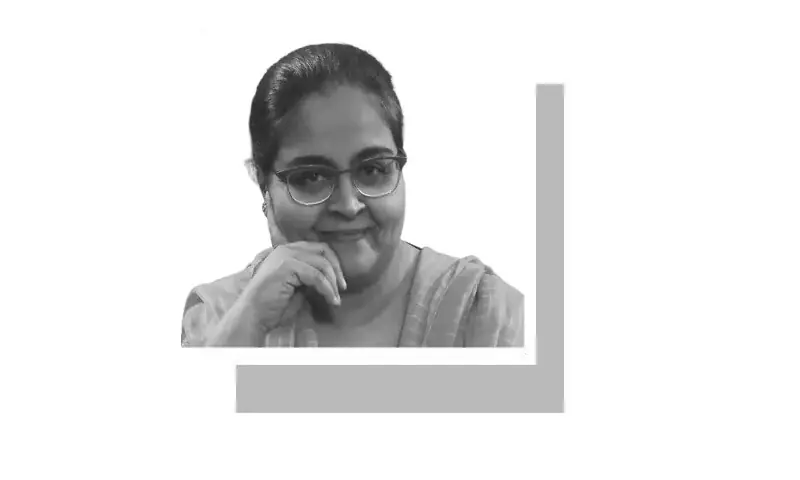
The writer is a rural development specialist and social entrepreneur.
Published in Dawn, June 8th, 2026