Setting priorities right for agriculture

As the government prepares to present the FY27 budget, Pakistan’s agriculture sector is passing through one of its most difficult periods in recent history. A sharp rise in input costs, declining crop yields due to climate change and inadequate use of expensive fertilisers and pesticides, combined with depressed crop prices, mainly due to policy paralysis and a decrease in agri-exports — particularly after the closure of the Afghanistan border — have turned farming into a loss-making business.
Against this backdrop, uncertainty has reached such alarming levels that many now view agriculture — the backbone of the economy — as a risky gamble rather than a viable economic activity.
The roots of this crisis lie in a policy paradox. On the one hand, the government has moved to withdraw subsidies under the banner of deregulation and the International Monetary Fund framework. Input prices are left at the mercy of market forces — and often cartels and mafias. On the other hand, it seeks to suppress produce prices, directly or indirectly, through administrative measures or by influencing crop-processor associations in an effort to contain inflation and pre-empt social unrest.
In other words, farmers are expected to supply cheap food to all segments of society, including affluent consumers, while bearing the full burden of rising production costs.
Unless agriculture is restored to the centre of fiscal planning, Pakistan risks undermining its food security as well as its economic future
The taxation regime has further aggravated the situation. For instance, the imposition of a 20 per cent Federal Excise Duty (FED), in addition to an 18pc sales tax on fruit juices, substantially reduced their sales. Ultimately, fruit growers have borne the cost of this excessive taxation. Not surprisingly, fruit production in the country has been steadily declining, with the exception of bananas, melons, and watermelons.
A similar policy distortion has affected the cotton sector. The imposition of an 18pc sales tax on locally produced cotton depressed farm gate prices and eroded farmers’ profitability. As a result, both the cultivated area and cotton production have declined sharply.
Given these circumstances, the agriculture sector is increasingly facing an existential crisis as farmers lose both confidence and the financial capacity to invest. The warning signs are already visible. The offtake of primary crop nutrients (fertilisers) has decreased from five million tonnes to 4.35m tonnes between FY21 and FY25, while annual tractor sales fell from 58,947 units to 29,192 units over the same period.
As policymakers finalise the FY27 budget, it is imperative that they accord due priority to the agriculture sector, given its immense potential for job creation and its unique ability to generate economic returns within a single cropping season, only six months.
In the short term, the budget should focus on rising productivity — crop yields — by improving farmers’ access to high-yielding seeds, fertilisers and pesticides through expanded agricultural financing at subsidised rates.
However, such support should not remain limited to a few hundred thousand farmers. Meaningful change will occur only when the vast majority of smallholders — those owning less than 12 acres and accounting for nearly 97pc of the country’s 11.7m farms — are financially empowered to procure essential inputs.
Equally important, the government should review and rationalise taxes and duties on industries and products that directly or indirectly discourage crop production. Similarly, the tax burden on agricultural machinery and inputs should be reduced to increase sales and lower production costs to levels comparable to those in neighbouring countries.
Beyond immediate relief measures, the budget must address two structural issues that continue to undermine agricultural growth and are gradually becoming binding constraints for the country’s agriculture sector.
First, agricultural research remains severely neglected. As a result, Pakistan’s dependence on imported seeds — often prohibitively expensive for smallholders — has been increasing steadily. Meanwhile, the country cannot effectively sustain over 200 public-sector research centres with meagre funding currently available.
Therefore, to minimise duplication of efforts and maximise the return, there is a strong case for rationalising the number of research centres and concentrating allocated resources on a limited number of well-functioning centres. Their primary focus must be the development of high-yielding, climate-resilient seed varieties. Only such varieties can help farmers withstand rising input costs and market shocks.
Moreover, research funding should also be directed towards crop diversification, particularly for crops with strong export potential or that can reduce import dependence through import substitution. Greater choices for farmers would help reduce the recurring gluts that occur almost every year, though in different crops each time.
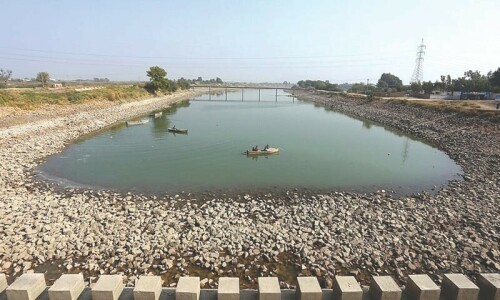
The second major challenge is water. River flows are becoming increasingly unpredictable, a concern that has intensified following India’s suspension of the Indus Waters Treaty. At the same time, per capita water availability continues to fall, pushing Pakistan deeper into water stress. This reality demands substantially greater investment in water storage, conservation and efficient irrigation systems to ensure the country’s food and water security.
Yet in the previous budget, allocations for the Water Resources Division were reduced from Rs185 billion (in FY25) to Rs133bn (in FY26), while funding for the National Highway Authority increased from Rs161bn to Rs227bn. Such allocations clearly indicate where government priorities currently lie.
Given these realities, farmers have little reason for optimism. The prevailing policy mindset continues to treat agriculture in isolation, rather than recognising it as a critical driver of industrial growth, exports, employment and overall economic development. Although fiscal space is limited, the central question remains one of how priorities are set. Unless agriculture is restored to the centre of fiscal planning, Pakistan risks undermining its food security as well as its economic future.
Khalid Wattoo is a development professional and a farmer. Dr Waqar Ahmad is a former Associate Professor at the University of Agriculture, Faisalabad.
Published in Dawn, The Business and Finance Weekly, June 8th, 2026