Blast in rebel-held Myanmar kills 55


 0
0
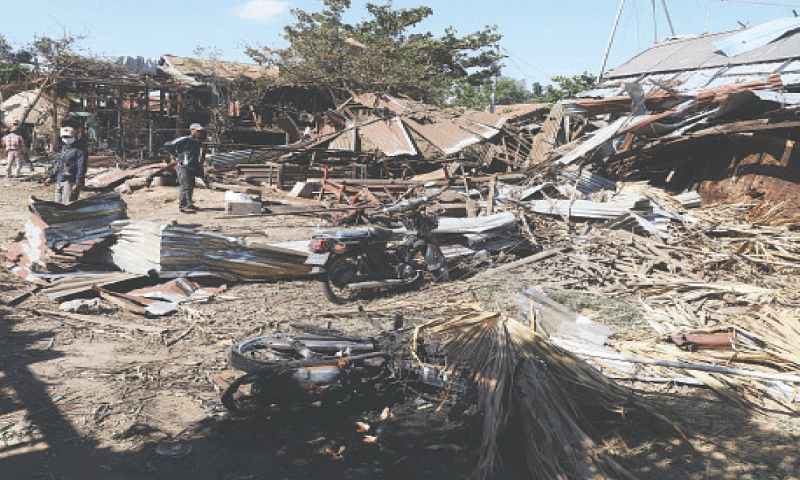

YANGON: At least 55 people were reportedly killed in a blast in Myanmar’s Kaung Tat village, which a rebel army said was caused by the accidental explosion of material stored for use in mining.
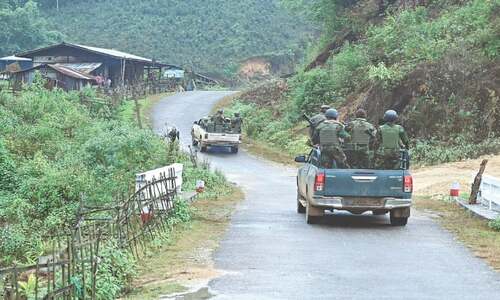
The Ta’ang National Liberation Army, which has been engaged in bitter fighting with Myanmar’s military junta and controls the village near the Chinese border, said there had been fatalities, without saying how many.
The BBC and local news outlet Shwe Phee Myay News Agency said at least 55 people had died, including 25 women and 30 men, and that dozens more were wounded.
“The Palaung State Liberation Front/TNLA expresses its deepest condolences to the families of those who lost their lives, were injured, and suffered damage as a result of the explosion,” the group said in a statement.
It said the explosion that took place at noon local time, was being investigated and that anyone found responsible would be held accountable. It added relief, healthcare, and rehabilitation for the families affected by the blast would be provided as soon as possible.
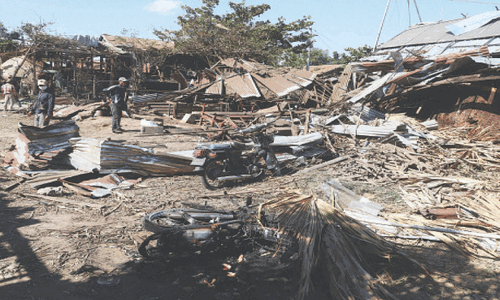
The massive explosion destroyed many houses and injured people were transported to a local hospital, said the emergency worker. “There could be more dead people under their destroyed houses,” he added. Another rescuer, who also asked not to be named, said the death toll was higher, at 59 killed, and bodies were collected by emergency personnel for cremation.
Myanmar has been mired in a civil war since the military grabbed power in a 2021 coup, with the armed forces fighting an array of pro-democracy guerrillas and powerful ethnic minority armed groups.
The Ta’ang National Liberation Army (TNLA), one of the country’s most powerful ethnic minority factions, said the “accidental explosion” of stored explosives used in mining and stone quarrying detonated at around 12pm on Sunday in Namhkam.
“Because of this explosion, many local villagers lost their lives and suffered injuries and damage to their homes,” the TNLA said in a statement, without giving a specific toll.
The explosives belonged to its economic department, and the exact cause of the blast was under investigation, the group said.
Many rebel groups in Myanmar rely on mining of precious minerals to fund their campaigns against the military, with lax safety measures making mine collapses and other accidents common.
The country’s borderlands are home to a myriad of ethnic minority armed groups, many of which have battled the military since independence from Britain in 1948 over autonomy and control of lucrative resources.
The so-called “Three Brotherhood Alliance” of ethnic minority armed groups — made up of the TNLA, the Arakan Army (AA) and the Myanmar National Democratic Alliance Army (MNDAA) — agreed to a China-brokered ceasefire with the military in early 2024.
But in June that year, the TNLA launched fresh attacks in Shan state and the neighbouring Mandalay region. That summer the rebels captured the northern ruby-mining town of Mogok, with the TNLA driving the opposition offensive.
Then in October last year, the TNLA said it had agreed to a withdrawal from Mogok, which was mediated by China.
Published in Dawn, June 1st, 2026