Dear Junaid Hafeez,
We are writing to reassure you that, although we sentenced you to death nearly seven years ago, you should take some solace in the fact that we have never hanged anyone convicted of blasphemy.
You might ask, if we don’t intend to carry out the sentence, why for the past six years are we not listening to your appeal? Why are we denying you your day in the court? A day on which a judge can overturn your sentence and release you. Or go through the evidence against you and confirm your punishment, so that you can file another appeal and then another and, finally, when your death sentence is confirmed by the highest court in the land, you can file a last mercy petition.
You have been waiting for 13 years to find out what it is that we intend to do with you. You might argue that, if you had committed second degree murder, got caught and convicted, with some good behaviour, you would be nearing the end of your sentence now.
But you didn’t kill anyone, you didn’t commit treason, you hatched no plans to overthrow the government, you didn’t challenge the authority of any institution. Instead, you read books, you talked about books, you wanted to live a bookish life, you went to a classroom, you were accused of blasphemy, you were sentenced to death. There may be a tacit promise by the state that you’ll not see the gallows, but we’ll also deny you the opportunity to prove your innocence and go home.
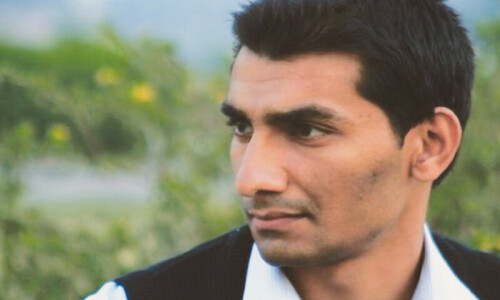
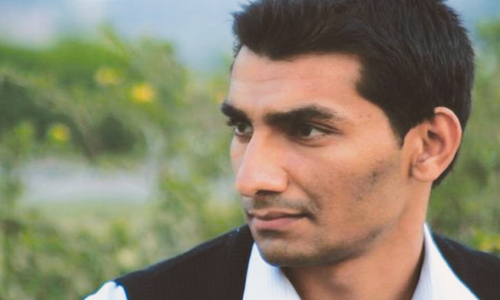
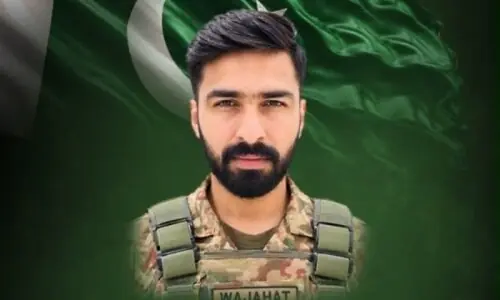
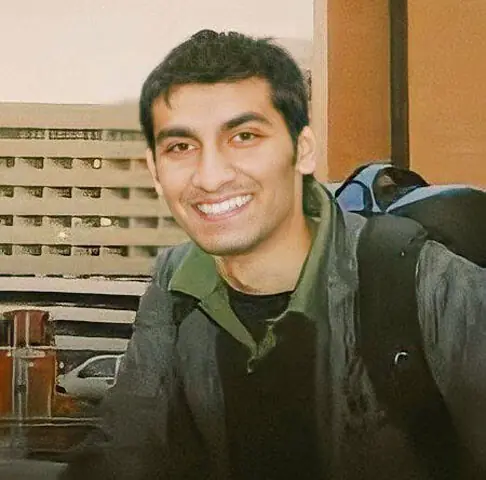
Junaid Hafeez has been in jail on blasphemy charges since 2013. His appeal against his 2019 death sentence is pending in the Lahore High Court since 2020. May 18 was supposed to be yet another date for his hearing, which passed by without his appeal being heard
You might think that in the 13 years (do you still count days or are you counting years now?) you have been behind bars, the world has forgotten you. But your name does appear on human rights organisations’ annual reports, your picture does come up on our social media memories.
It has even been suggested that Junaid Hafeez gets more attention than hundreds of other victims of our slow justice, because it’s easy to identify with him. He is every working class parent’s dream boy, who tops every board exam, gets into Pakistan’s top medical college and, midway through his medical education, decides to pursue a life of letters, gets a Fulbright fellowship, returns home and continues to teach and learn. Here’s the kind of boy we always say is the bright future of this country.
There are many others who get far less attention than you. There are hundreds waiting trials, more than 50 who have been sentenced to death, their appeals not heard for years, sometimes for 10 sometimes for 20 years. In order to give you some hope, we might have given you Zafar Bhatti’s example, a medicine salesman who spent 14 years in jail on blasphemy charges. Last year, he finally had his day in court, and he was freed.
Freed. After keeping him in jail for 14 years, we declared that he was innocent. He went home. He died after three days. Three days of freedom after 14 years of captivity for a crime that never happened.
Our judicial system is often blamed for being an impossibly slow grind, and for being extremely reluctant to take up the appeals of those convicted on blasphemy charges. It seems as if opening the case file of a blasphemy convict will constitute blasphemy itself.
We can’t judge our judges too harshly for not wanting to listen to these appeals. Let’s not name names but lawyers, a judge, a minister and a governor have been assassinated trying to get the likes of you out of prison.
Since judges have to deal with murderers and terrorists, they are promised life-time police protection. Although they are courageous enough to convict and then preside over the appeals of dangerous criminals, they are wary of having a blasphemy convict in their court.
“They know our society, they know our system, why would they trust it?” says your lawyer Asad Jamal. He also points out that the door to a hall on the premises of Lahore High Court Bar Association is named Baab-i-Khatm-i-Nabuwwat [Door of the Seal of the Prophets]. “Here’s a daily reminder to the judges of the times and places we live in.”
We can assure you though that times are changing. In the past one year, there’s been a spate of bails, acquittals and people have got what we call ‘relief’. A woman who was snared into a blasphemy trap after playing a game of PUBG was acquitted after five years of imprisonment. Last year, Anwar Kenneth, accused of blasphemy and sentenced to death, was acquitted after spending 23 years in jail.
After keeping him in jail all this time, we realised that he wasn’t mentally fit to stand a trial. Lawyers remind us that many of those accused of blasphemy have mental health issues. It’s difficult to prove in the court, as the psychiatrists who can testify for them are scared and either wouldn’t appear or want to remain anonymous.
Since we insist on keeping you alive and locked, we must give you some hope, however flimsy. Those who made blasphemy the central plank of their politics, and threatened generals and judges and politicians, have been silenced for now. We sometimes fear that your acquittal might poke those monsters we have put to sleep. Or people who decide such things still suspect that these monsters might be unshackled to liven up our political circus.
In 2013, the year you went to jail, in India, they hanged Afzal Guru, a Kashmiri citizen accused of terrorism in India. The Indian Supreme Court said in its judgment that “the collective conscience of society will only be satisfied if capital punishment is awarded to the offender.”
There’s no collective conscience here that needs to be satisfied. There are no hordes baying for your blood, only occasional voices pleading mercy, invoking your lost youth, your talent, your promise. You are a minor speck on our conscience because some of us are allowed to read books and write them and pursue our PhDs, but we can’t grant you the same privileges.
Many political analysts tell us that, if you are released tomorrow, no roads will be blocked in protest, no rallies will be held, the country will not burn, nobody will set fire to a tyre even. You are not being kept in a jail to satisfy our nation’s conscience. You are not allowed your day in the court because then we’ll have to face that conscience and decide.
Your current lawyer, Mr Saiful Malook, obviously frustrated at not getting your appeal heard, reminds us of the constitutional guarantee that citizens shall not be discriminated against on the basis of caste or colour or religion. But he is not naïve and knows that this is not how our society and justice system works. He simply pleads for equality of the condemned.
“The courts are listening to appeals filed in 2023 by those accused of multiple murders and even sentenced to death,” he says. “Junaid’s appeal is from 2020 — why isn’t his appeal being heard? Even if we can’t treat all citizens equally, at least those sentenced to death should be treated equally.”
What if judges are not scared for their safety but reluctant because of their faith? What if they don’t even want to touch a case file containing blasphemies, even if fabricated?
Islamabad-based lawyer Talha Rehman, who represents more than 60 people accused of blasphemy, says that if the judges are of the view that blasphemy laws are effective, then why are they reluctant to help implement them?
“The least they can do is hear the appeals,” he says, “and, if they feel the punishment is justified, they should confirm it, so that the accused can move to the next appeal.”
Dear Junaid, as you count your days and years and wait for your day in court, we reiterate that we have never hanged anyone accused of and convicted of blasphemy. But we’ll fit a noose around your neck every morning and take it off every night. So that our conscience doesn’t bother us in our sleep.
The writer is a novelist, essayist and journalist. His latest novel is Rebel English Academy
Published in Dawn, EOS, May 31st, 2026