In 1953, the Dutch-American artist Willem de Kooning agreed to give his fellow artist, Robert Rauschenberg, a drawing to erase. Rauschenberg worked on the drawing for over a month using a variety of erasers. Despite all efforts, traces of the original drawing remained. In 2010, digital imaging revealed much of the original drawing. This act of erasure symbolises attempts to erase histories, whether individual or collective.
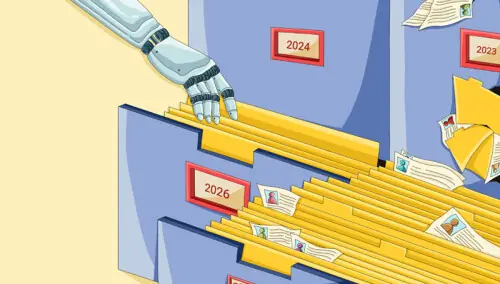
India-born neuroscientist Charan Ranganath finds that, within 20 minutes, people forget 40 percent of what they learn and, after a few days, only 20 percent is remembered. Since the past is over, why should we remember? It helps in making sense of the present and making better choices for the future.
Daniel Kahneman, psychologist and author of Thinking Fast and Slow, says memories are all we get to keep from our experience of living. In reality, memory is selective and may be far from accurate. Some memories are preserved in diaries and letters, or in autobiographies, but even the most meticulous accounts are from a personal perspective. Siblings remember their shared childhood differently. Ranganath suggests memory is less like a photograph and more like a painting, what British psychologist Frederic Bartlett calls an imaginative reconstruction.
What of consciously erasing the past? A successful businessman may hide his humble origins. Migrants may change their names to blend in, or to hide their identity. While the tabloid press, which thrives on celebrity gossip, reveals too much, mainstream press is accused of hiding the true facts.
From censored newspapers to rewritten textbooks and renamed cities, individuals, states and empires reshape the past to control identity, power and the future
Editorial policy, often under political pressure, dictates which stories to go with, and which to ignore — language may show racial or gender bias, or vilify political opposition. In Pakistan, editors with a conscience were known to leave blank columns to draw attention to censorship.
Dr Ramzy Baroud, journalist, author and editor of The Palestine Chronicle, calls independent journalism “a battle for history.” Recently, The Guardian newspaper carried a story of the successful efforts of the United Nations Relief and Works Agency for Palestine Refugees in the Near East (UNRWA) to smuggle out of Gaza 30 million documents and original registration cards of Palestinian refugees who had sought safety in Gaza in 1948, including birth, marriage and death certificates dating back generations. This counters the efforts of Israel to erase the historic presence of Palestinians.
One of the ways Empire exerted dominance was through changing the names of conquered places. Many reverted to their original names, such as Mumbai, Attock and Kolkatta. African countries created new names for countries created by colonisers. In India, Mughal cities such as Allahabad have been changed to erase Muslim history.
As Christianity spread westwards, Christ became blond and blue-eyed instead of looking Middle Eastern. John Wycliffe, the English philosopher and Christian reformer, anglicised the names of Matityahu, Markos, Yohanan and Loukas into Matthew, Mark, John and Luke, when he wrote the first English translation of the Bible in the 14th century.
Perhaps the most systematic managing of histories is in history books themselves. Educational boards of countries ensure that history curriculums follow the national narrative. As the Russian President Vladimir Putin declared in 2023, “Wars are won by teachers.” However, independent scholars across the ages have also been guilty of deliberate omission of historic facts. The Renaissance in Europe erased its debt to Muslim scholarship, creating a direct Greece to Europe legacy, laying the foundations of a Eurocentric ‘world’ history.
Frantz Fanon and Edward Said were early intellectuals who challenged Western scholarship, from African and Arab perspectives. More recently, the Afghan-American Tamim Ansary’s Destiny Disrupted and The Invention of Yesterday and British-Croatian Peter Frankopan’s The Silk Roads: A New History Of The World have presented compelling new perspectives. The travelling exhibition ‘1001 Inventions’, curated by Iraqi born Professor Salim Al-Hassani, presents the intellectual contributions of Muslims.
Post-colonial nations struggle with reclaiming their histories, as archives are dispersed, and state boundaries often cut across shared histories. Pakistan and India are deeply insecure about writing objective histories. India seeks to erase the contribution of Muslims, and A.R. Siddiqui’s poetic book, An Emperor’s Dream, ruminates upon the confusion arising from dividing cultural heritage.
George Orwell wrote in his novel 1984, “Who controls the past controls the future. Who controls the present controls the past.” Today, social media controls the present, with opportunities for new scholarship to bypass the gatekeepers and to present a counter-narrative for every narrative.
Durriya Kazi is a Karachi-based artist.
She may be reached at
durriyakazi1918@gmail.com
Published in Dawn, EOS, May 24th, 2026