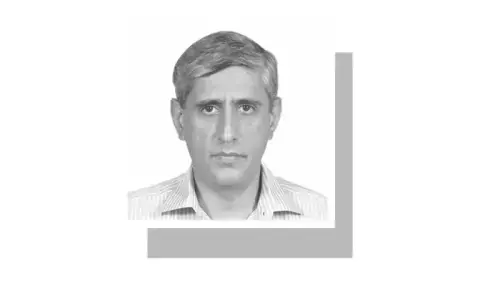
PESHAWAR: Peshawar High Court on Wednesday granted pre-arrest transit bail to a former bureaucrat till June 1, directing National Accountability Bureau not to arrest him till then.
A single-member bench of PHC Chief Justice S M Attique Shah directed the petitioner, Dr Tashfeen Khan, to approach relevant court till then, failing which the present order would be considered revoked.
The petitioner, a former additional chief secretary (Fata), had requested the bench to permit him to approach the competent court for appropriate legal remedy without fear of arrest or coercive action.
Advocate Babar Khan Yousafzai appeared for the petitioner whereas NAB was represented by its deputy prosecutor general Mohammad Ali.
Advocate Yousafzai stated that his client was a former bureaucrat, who had served on various key positions.
He stated that throughout his career, the petitioner acted in accordance with law and was never involved in any criminal activity.
He said that an inquiry was initiated against the petitioner by NAB under Section 9 of National Accountability Ordinance, 1999, read with Section 3 of Anti-Money Laundering Act, 2010.
The counsel said that the petitioner challenged the inquiry before Islamabad High Court, which on June 4, 2025, set aside the said inquiry as well as its conversion into investigation.
He contended that despite the clear order of IHC, the respondents including NAB issued a provisional attachment order on June 20, 2025, under Anti-Money Laundering Act (AMLA).
He added through the said order several properties belonging to the petitioner and his family members were provisionally attached.
Mr Yousafzai stated that the action was challenged before IHC, which on July 16, 2025, directed the bureau not to take any coercive measure against the petitioner pursuant to the said attachment order.
The counsel stated that on May 7, 2026, officials of NAB conducted a raid at the residence of the petitioner in Islamabad.
He added that at the relevant time his client was present in Peshawar in connection with personal engagements.
He stated that the petitioner apprehended that he might be arrested anytime despite pendency of proceedings before superior courts.
He contended that the actions of the respondents were without lawful authority, tainted with mala fide and violative of the fundamental rights guaranteed under the Constitution.
Published in Dawn, May 14th, 2026