Textile sector eyes $5bn boost

ISLAMABAD: Amid an evolving geopolitical landscape and shifting global supply chains, textile exporters have proposed a series of measures for inclusion in the upcoming budget to boost exports by an additional $5 billion, without seeking subsidies or direct government financial support.
To seize opportunities arising from the Middle East conflict, major textile associations have come together with a unified approach, pledging to utilise their available export surplus and capacity to capitalise on shifting demand, provided supportive policy measures are in place.
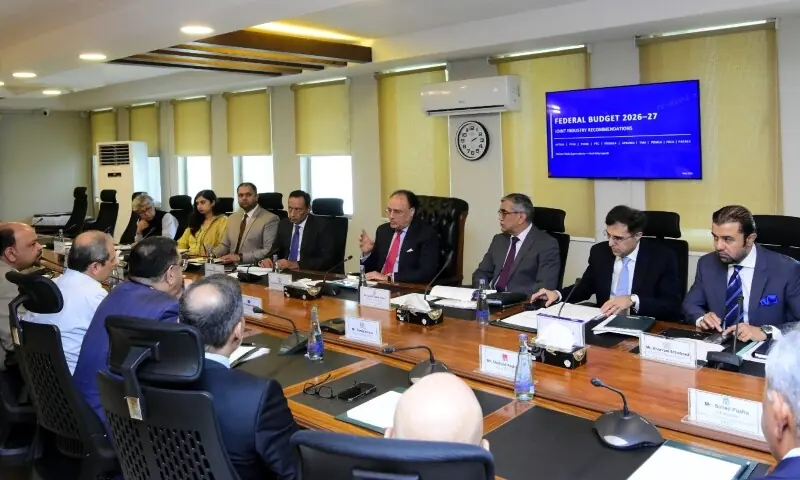
Leading textile and clothing exporters, including Khurram Mukhtar, Javed Bilwani, Fawad Anwar, Rehman Naseem, Shahzad Asghar, Amer Abdullah, Kamran Arshad, Shahzad Saleem, Sohail Pasha and Khawaja Masood, met Finance Minister Muhammad Aurangzeb at the finance ministry on Tuesday.
A joint industry presentation was submitted as part of the textile sector’s unified recommendations for the federal budget 2026-27.
“We had a very positive meeting with the Ministry of Finance and FBR officials”, one of the leading exporters told Dawn after the meeting. “We highlighted that, due to the evolving geopolitical situation and shifting global supply chains, Pakistan’s textile sector has a strong opportunity to grow exports by an additional $5bn,” he said.
All the associations also conveyed that the industry has an available export surplus and the capacity to capitalise on this opportunity with the right policy support, he added. “We were encouraged to hear that the government intends to facilitate export-oriented sectors and support measures aimed at enhancing competitiveness, liquidity, and growth,” the exporter further said.
An official announcement of the finance ministry said Mr Aurangzeb discussed the government’s ongoing efforts to promote transparency, documentation and improved compliance through digital monitoring systems across key sectors of the economy.
He noted that digital monitoring mechanisms had already been introduced in several major sectors, including sugar, cement, beverages and tobacco.
Published in Dawn, May 13th, 2026