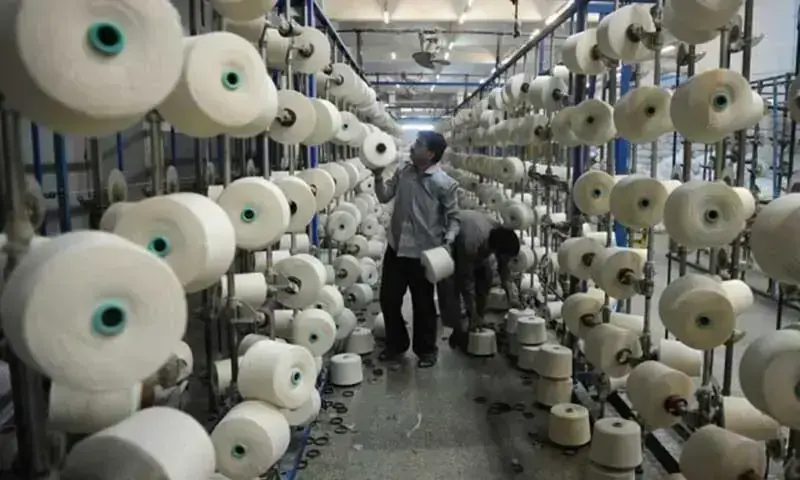

ISLAMABAD: Leading textile exporters met commerce ministry officials on Friday, highlighting challenges behind consecutive declines in value-added textile exports.
Commerce Minister Jam Kamal Khan, along with senior officials, heard stakeholders’ concerns about high business costs and meeting international buyer demands.
The industry representatives delivered a detailed presentation outlining the key challenges hindering export growth, particularly the heavy burden of upfront taxes, elevated energy tariffs, infrastructure constraints, and persistent liquidity pressures stemming from pending refunds.
The meeting was also informed about the limitations of the Temporary Importation Scheme, including reduced utilisation periods, inadequate credit limits under the Export Finance Scheme that restrict access to essential working capital, and frequent policy changes that significantly limit the sector’s potential for export expansion.
High costs, energy tariffs choke growth
Chairmen and representatives of Pakistan Hosiery Manufacturers and Exporters Association (PHMA), Pakistan Readymade Garments Manufacturers and Exporters Association (PRGMEA), Pakistan Textile Council (PTC), Pakistan Textile Exporters Association (PTEA), All Pakistan Bedsheets and Upholstery Manufacturers Association (APBUMA), and Towel Manufacturers Association (TMA) attended the meeting.
The representatives briefed the minister to thoroughly examine the key challenges facing the value-added apparel and textile sector and to devise strategic measures to strengthen its global competitiveness and substantially accelerate export growth.
An official announcement said that Mr Kamal reaffirmed the government’s support, recognising the value-added apparel and textile sector as a cornerstone of Pakistan’s exports and employment generation.
The minister stated that a dedicated technical committee has already been constituted to review the issue of limited utilisation period under the Export Facilitation Scheme and submit its recommendations for the immediate resolution of these constraints.
Representatives of Micro, Small and Medium Enterprises (MSMEs) suggested that the State Bank of Pakistan and Exim Bank issue clear and explicit regulatory guidelines to ensure the uniform acceptance of foreign master Letters of Credit (LCs) by commercial banks as collateral for opening Back-to-Back LCs, thereby enhancing exporters’ access to working capital and enabling them to further untap global business opportunities.
Published in Dawn, February 28th, 2026