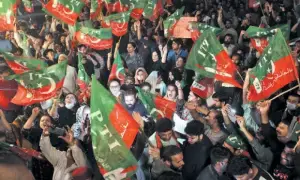
THE acquittal of as many as 74 PTI activists by a Peshawar court in a case pertaining to the May 2023 violence is a generous and welcome step. The judge said that the prosecution’s case relied on “bald and unsubstantiated allegations”. While the events of May 9 and subsequent days are highly condemnable, releasing political prisoners can go a long way in not only initiating the process of reconciliation but also fostering amity in a polarised society. Meanwhile, with Pakistan shining on the world stage as a peacemaker, the government needs to align actions at home with its positive image abroad. In a show of good faith, a sympathetic stance towards PTI prisoners as well as some other segments should not be delayed. Each one of them is reliant on the state for their welfare.
Leniency is both easy and beneficial. Undoubtedly, the PTI’s conduct set a sad precedent. Yet three years later, using it as a justification for prolonged mass incarcerations — often without trial — including of its top leadership, appears unkind and excessive. This age-old cycle of vindictive politics only shows that there is little difference among our major political parties when it come to the abuse of power. To prevent today’s rulers from becoming future victims, public trust in the country’s judicial and administrative system has to be restored. Justice is not a political indulgence. The current state of human rights, including the condition and number of political detainees, reflects poorly on the country. Moreover, long-term captivity underscores the perception that making prisoners invisible is meant to perpetuate fear and control. The government’s restrictions are uncalled for and counterproductive. Take the women political activists who, away from their families, are morphing into portraits of injustice. Rights and transparency must be espoused to preserve the moral integrity of both justice and democracy.
Published in Dawn, May 13th, 2026