Backlash as EU invites Taliban for migrant return talks
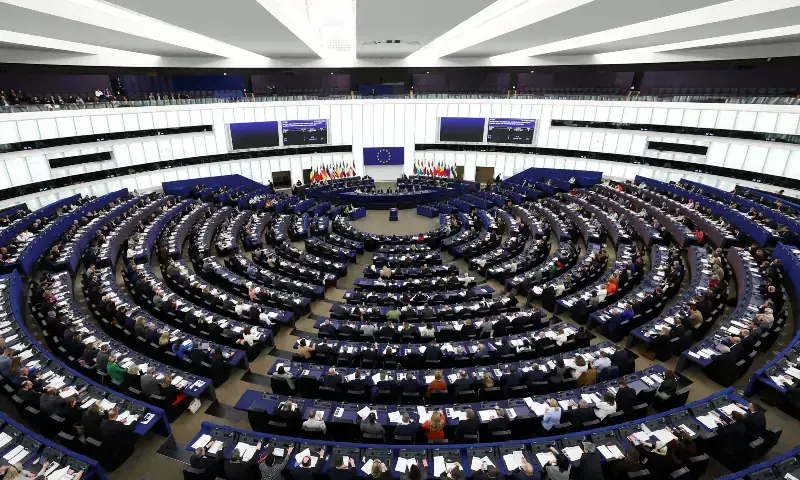
BRUSSELS: The European Commission said on Tuesday it has invited Taliban officials to Brussels for talks on returning migrants to Afghanistan — pushing back at criticism of a move fraught with practical and ethical concerns.
EU migration officials, in coordination with member state Sweden, sent a letter to Taliban authorities to seek to set a date for a meeting in the Belgian capital.
The 27-nation bloc does not formally recognise the Taliban administration, which has been largely isolated on the global stage since it imposed a strict version of law upon returning to power in 2021.
“This does not by any means constitute a recognition,” said commission spokesman Markus Lammert, who characterised the meeting as a “follow-up” to two rounds of “technical” talks by EU and Taliban officials in Afghanistan. But the move drew swift pushback from migrant advocates and the political left, with Green EU lawmaker Melissa Camara warning the commission “not to cross this red line”.
Lawmaker Melissa Camara warns commission ‘not to cross this red line’
Hosting Taliban officials in Brussels, Camara said, would amount to “abandoning the values and rights on which the European Union is founded.”
Humanitarian crisis
As part of a broader tightening of immigration policies, around 20 of the EU’s 27 member states are exploring how to return migrants — particularly those with criminal convictions — to Afghanistan.
In a letter in October, several urged the EU to find diplomatic and practical ways to move the issue forward. “We’re speaking here about persons who pose a security threat. These are the persons that member states want to return,” Lammert said.
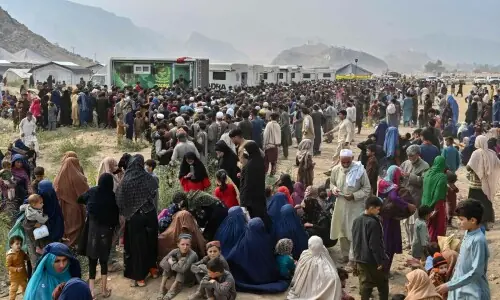
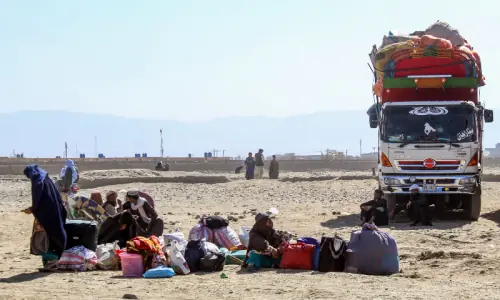
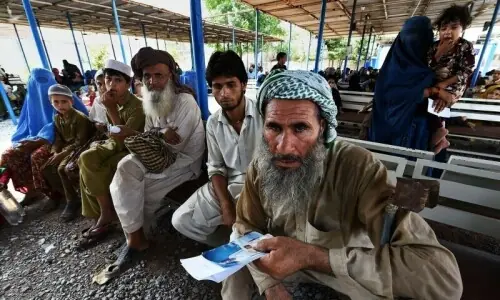
Migrant advocates say the returns push raises serious ethical questions, coming as Afghanistan confronts a severe humanitarian crisis. Since 2023, more than five million Afghans have returned from Iran and Pakistan, often forcibly. According to international organisations, most live in extreme hardship, without stable housing or employment.
“Deporting Afghans back to a country where almost half of the population cannot feed themselves is not a migration policy; it is a decision that could cost lives,” says Lisa Owen, the International Rescue Committee’s country director for Afghanistan.
There are also practical questions: to travel to Brussels, Taliban officials would need to be granted an exceptional visa. Belgium’s foreign ministry said it would in principle be ready to do so, in its capacity as host country to the European institutions. The commission declined to say who, specifically, would be invited on the Taliban side, and who would foot the bill.
Germany leads charge
EU countries received about a million asylum applications filed by Afghans between 2013 and 2024, according to the bloc’s data agency. About half as many were approved over the period. In 2025, Afghans still — by far — accounted for the largest share of asylum applicants in the EU.
Published in Dawn, May 13th, 2026