Pakistan pushes diplomatic track as US, Iran hit ‘stall’-mate

• Trump says ceasefire is on ‘life support’; hints at restarting Hormuz operation
• Dar meets US attache, UN chief’s envoy; phones Saudi counterpart
• Iranian foreign ministry says many concerned states have reached out; spox says Islamabad still ‘official mediator’
ISLAMABAD: Despite signs that negotiations between the United States and Iran have stalled after President Donald Trump rejected Tehran’s latest response to a proposed settlement framework, diplomatic activity across the region continued intensively on Monday, with Pakistan remaining engaged in mediation efforts even as military pressure and fears of renewed confrontation continued to shape the crisis.
A series of diplomatic contacts since Trump rejected Iranian response suggested that regional and international actors are still attempting to prevent the situation from sliding back toward open hostilities.
The dismissal of Iran’s response as “totally unacceptable” by President Trump has only reinforced the growing perception that the two sides remain far apart, not only in terms of a possible agreement, but also on the broader political logic underpinning the negotiations.
While Washington appears to believe sustained military and economic pressure can still force Tehran into major concessions, Iranian officials are seeing the confrontation differently and believe they have already weathered the most dangerous phase of escalation without suffering decisive strategic defeat.
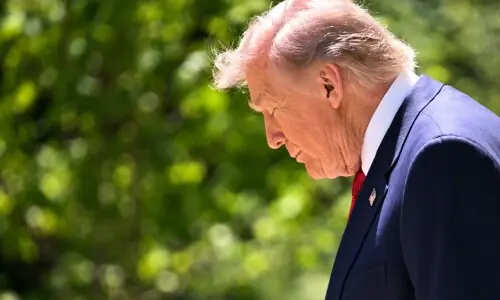
On Monday morning, Trump followed up his remarks about the Iranian proposal by saying that the ceasefire is on “massive life support”.
“The ceasefire is on massive life support, where the doctor walks in and says, ‘Sir, your loved one has approximately a one per cent chance of living,’” he told reporters during an event at the White House.
Trump also told Fox News that he was considering reviving a short-lived US operation to escort oil and other commercial shipping through the Strait of Hormuz, but that he had not yet taken a final decision.
“It’s a stupid proposal and nobody would take it — although Obama would have taken it, Biden would have taken it. What they took was far worse,” he said.
“They had 159 ships, and right now they have zero, other than the little speedboats they go around that got taken out eight a day by us,” he said, adding that Iran also had “no air force”.
Diplomatic efforts
Against this backdrop, Pakistan’s diplomatic engagement has continued despite a far more complicated scenario.
According to the Foreign Office, US Chargé d’Affaires Natalie Baker met with Deputy Prime Minister and Foreign Minister Ishaq Dar to discuss the evolving regional situation.
Dar, according to the FO, hoped that ongoing diplomatic efforts would contribute to peace and stability in the region and beyond.
Pakistan’s contacts with Gulf and international actors have also continued in parallel.
The FO said Mr Dar spoke with his Saudi counterpart, Faisal bin Farhan Al Saud, regarding the regional situation and ongoing diplomatic engagement between Iran and the US.
According to Islamabad, the Saudi foreign minister appreciated Pakistan’s “constructive role” and reiterated support for efforts aimed at promoting regional peace and stability, particularly in the context of the continuing Iran - US engagement.
Both sides also discussed the importance of maritime security in the Strait of Hormuz and agreed to remain in close contact over regional developments, reflecting broader concerns among Gulf states that any renewed escalation could threaten global energy flows and deepen regional instability.
Meanwhile, UN Secretary General’s Personal Envoy for the Middle East Conflict Jean Arnault also met Mr Dar, who briefed him on recent developments and Pakistan’s continuing engagement with the concerned parties.
Iran’s ‘legitimate demands’
On the Iranian front, diplomatic activity suggested that Tehran is simultaneously strengthening consultations with regional powers while keeping indirect communication channels with Washington open through Pakistani mediation.
Tehran’s Foreign Minister Abbas Araghchi held a second telephone conversation with Saudi FM Faisal bin Farhan within 24 hours to discuss the diplomatic process between Tehran and Washington, which Iranian officials explicitly described as being mediated by Pakistan.
Officials also confirmed that Araghchi had separately spoken with the foreign ministers of the Netherlands and Egypt regarding the evolving regional situation and ongoing diplomatic contacts linked to the crisis.
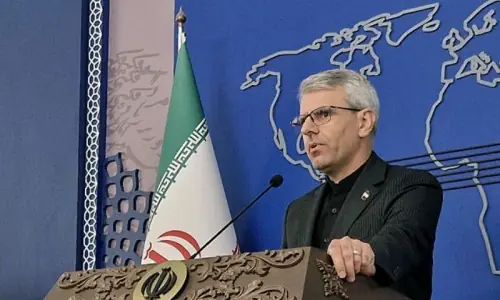
Meanwhile, Iranian Foreign Ministry spokesman Esmaeil Baqaei, in his weekly press briefing, said they had made “legitimate” demands in their latest formal response to the United States, which was rejected by the US president out of hand.
Foreign Ministry Spokesperson Esmaeil Baqaei said Tehran had called for an end to the war across the region, the lifting of the US blockade of Iranian ports, and the release of frozen assets abroad in its response.
“We did not demand any concessions. The only thing we demanded was Iran’s legitimate rights,” said Baqaei in a weekly press briefing. He said many countries, particularly regional states, were contacting Tehran because of concerns over rising tensions.
“Our mediator is still Pakistan, which continues its work as the official mediator between Iran and the United States,” he clarified.
Diplomatic sources and analysts increasingly view the current phase of the crisis as one in which negotiations and coercive pressure are unfolding simultaneously rather than sequentially.
Published in Dawn, May 12th, 2026