Iran says made 'legitimate' demands in peace proposal rejected by Trump as 'totally unacceptable'
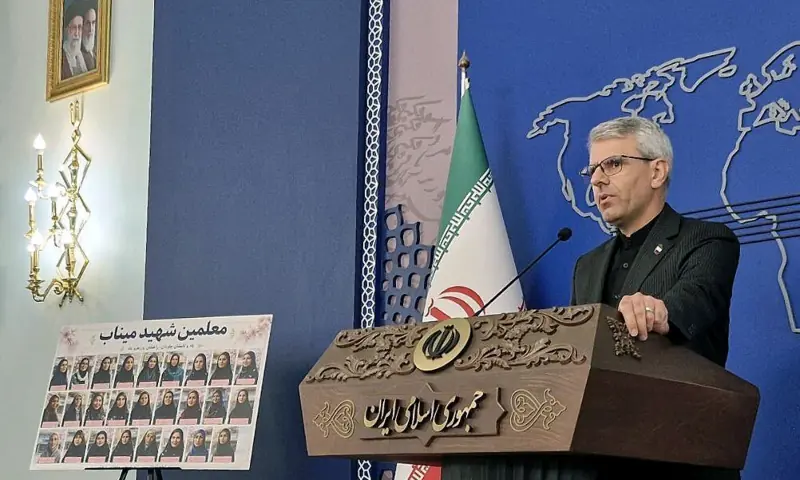


Iran on Monday asserted that it made “legitimate” demands in its latest formal response to the United States’ peace proposal, after US President Donald Trump rejected the reply as “totally unacceptable”.
Foreign Ministry Spokesperson Esmaeil Baqaei said Tehran had called for an end to the war across the region, the lifting of the US blockade of Iranian ports, and the release of frozen assets abroad in its response.
“We did not demand any concessions. The only thing we demanded was Iran’s legitimate rights,” said Baqaei in a weekly press briefing.
He said Iran’s demands included “an end to the war in the region”, lifting the US blockade and “piracy”, and the “release of assets belonging to the Iranian people, which have for years been unjustly trapped in foreign banks”.
“Safe passage through the Strait of Hormuz and establishing security in the region and Lebanon were other demands of Iran, which are considered a generous and responsible offer for regional security.”
Baqaei said Washington continued to uphold “unreasonable” and one-sided demands.
According to remarks reported by Iran’s semi-official Tasnim News Agency, the Iranian official cautioned that any intervention in the affairs of the Strait of Hormuz will further “complicate” the matter, stressing that the issue was the “aggressive actions” of the US and Israel.
“We have conveyed this very clearly to European countries that they should not allow the temptations of the United States and the Zionist regime in regional issues to cause them to be unintentionally drawn into a crisis that will not benefit them,” Iran’s semi-official outlet ISNA quoted Baqaei as saying.
The Iranian official, according to ISNA, affirmed that Pakistan remained the mediator in US-Iran negotiations.
“The mediator in the negotiations is still Pakistan, and Islamabad will continue its activities in this regard as an official mediator. Other countries, including Qatar, also have relations with both sides and have ideas and opinions that they will present whenever they deem necessary,” he said.
Baqaei further said, “The very presence of the US in the region is an example of creating a cycle of violence and bullying in the region.”
He emphasised that “regional security must be ensured by the countries of the region by strengthening collective trust” between them.
“Recent events have shown that security that relies on the presence of foreign forces in the region will only exacerbate insecurity and will not bring stability to our region,” he highlighted.
‘Totally unacceptable’
Iran’s defence of its response, conveyed through Pakistan on Sunday, came hours after Trump rejected it.
“I have just read the response from Iran’s so-called ‘Representatives.’ I don’t like it TOTALLY UNACCEPTABLE,” Trump posted on his Truth Social platform, without providing details of the response.
Trump’s swift rejection of Iran’s response sent oil prices surging on Monday amid concerns the 10-week-old conflict will drag on, keeping shipping through the Strait of Hormuz paralysed.
Days after the US floated an offer in the hopes of reopening negotiations, Iran on Sunday released a response focused on ending the war on all fronts, especially Lebanon, where Israel continues its bombardment despite a ceasefire.
Tehran also included a demand for compensation for war damage and emphasised Iranian sovereignty over the Strait of Hormuz, Iranian state TV said.
According to Iranian officials, Tehran proposed that the current phase of negotiations may focus primarily on ending hostilities in the region, while more contentious matters, including sanctions relief and the nuclear issue, could be addressed at later stages.
Another Iranian source said that Tehran’s response was positive and the ball was now in Washington’s court. He hoped that the reply could pave the way for the resumption of dialogue in the coming days.
The official said that the response is backed by political consensus within Iran.