Galvanised by repression, fearless women speak out at Aurat March


 0
0

• Organisers receive NOC for the event with ‘restrictions’ on speech and attire
• Sheema Kermani calls Aurat March an organic movement with no foreign funding
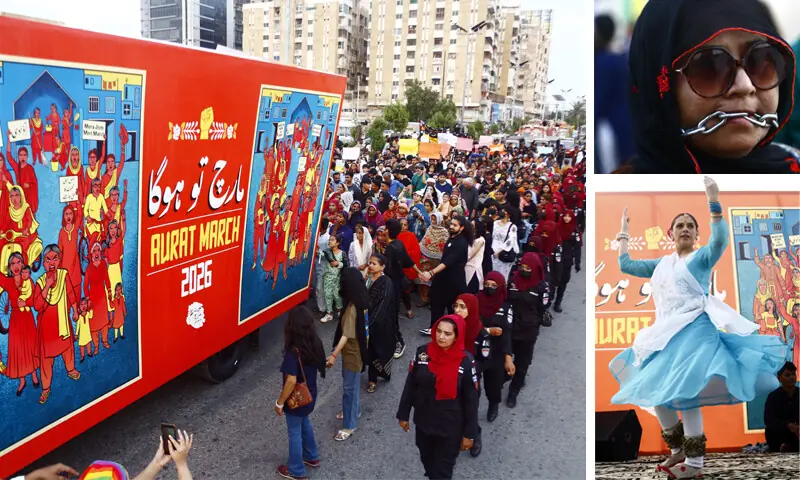
KARACHI: It may not have been a very big ground with lush grass and tall shady trees. But Clifton’s Beach View Park with its dried prickly grass and hard grounds was a place to gather. As the dark shadows cast on the ground multiplied, there were positions to be taken by the fearless, strong and determined women in black with many stories to tell, stories that may not have had happy endings, but stories that must be told as they carried important lessons. That was the Aurat March 2026 which happened on Sunday despite all hurdles.
The story of this year’s Aurat March started one-and-a-half month ago when the organisers of the March were made to run for pillar to post for a No Objection Certificate (NOC) for holding the annual gathering, which demands women be given their due rights, on Mothers’ Day this year.
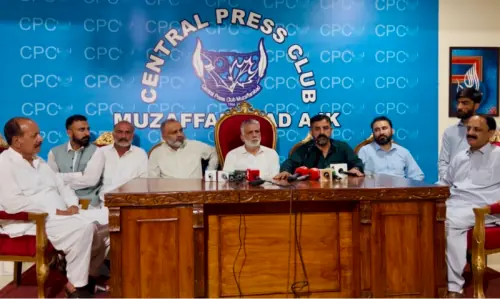
With the NOC not yet in sight, but still expected to come by at the last minute, the organisers called a press conference at the Karachi Press Club on May 5 to share their demands for this year’s Aurat March with the media. But all the organisers were not permitted to even enter the KPC for the press conference. They were arrested from outside the club gate.
An uproar over the incident saw them released within one hour of their arrests but the NOC, which finally came, was not without conditions and restrictions on what to wear, what to say or write on banners and placards.
There were just too many conditions, which made the organisers think again about holding the Aurat March.
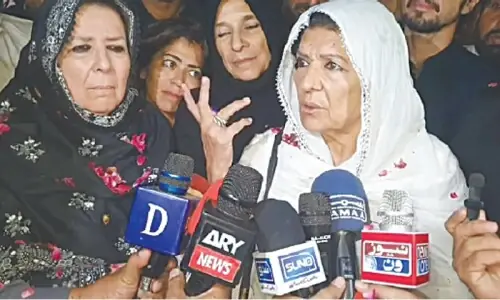
“We thought of not holding the Aurat March after all. But then we thought why not?”, said Sheema Kermani from the Aurat March stage on Sunday. Behind her was written in big bold Urdu ‘March Tau Hoga’.
“Every human being in a democracy deserves to demand his or her rights and this is exactly what we have been doing for the last eight years,” she said. “We the women of this country will march on roads and wear what we fancy. We are half of Pakistan’s population, gathering to speak about our rights is our right,” Sheema added.
“All the negative narratives about us and the Aurat March are lies. We are not a registered NGO; we are an organic movement. We don’t receive any foreign funding,” she said, before demanding a public apology from the state and the government for harassing the Aurat March organisers.
Zoha Alvi, one of the organisers of the march read out this year’s demands, which included safety and security for women and an end to marital rape.
Najma Maheshwari, activist, came up on the stage to share the story of young Shanti, who was violently raped by her husband only two days after her wedding. Shanti died a horrible death.
“On Mothers’ Day, today, I want to bring up the line Mera jism, meri marzi, which caused so much misunderstanding among the ignorant. But if what we do with our bodies is not our decision, then whose decision is it?” Zoha Alvi continued.
Another demand read out was about students’ rights. “Students in our country are no longer expected to raise their voice or ask for anything. Girls are told that they are not to pursue higher education and if they do, they are harassed, so much so that young women like the medical student Fehmida Leghari can even commit suicide,” Zoha pointed out.
Zoha also questioned why women cannot move about freely, why the Pink Bus has so few buses and routes and why the Pink Scooty, given away to working women and students by the government, is hardly seen on the roads.
Khanzadi Kapri from Mirpurkhas discussed several cases about honour killings taking place in the rural areas. “The women of interior Sindh are not aware of their rights. We will tell them about their rights by taking the Aurat March to them,” she said.
Transgender Zehrish Khanzadi spoke about the hardships faced by her community. “We have no education quota, no job quota and no acceptance at home. But we only want respect and equality,” she said. “The Social Welfare Department of the government is said to be working on empowering us for the last 14 years. Yet they have not managed to empower even one Khawajasira. There is not a single ward for our community members in any hospital. Please, we need a sensitisation programme that will teach people how to treat us because we too are human beings,” she said.
Irfana from Hyderabad spoke about the rights of home-based workers, especially those from minority communities, 25 of whom had come to attend the Aurat March while spending from their own pockets.
Farieha Aziz spoke about the complexities and injustices of the PECA law that she and her team have been fighting against for over 10 years now.
Qazi Khizar of Human Rights Commission of Pakistan said that the difficulties faced by the organisers of the Aurat March this time shows that the state is threatened by them. “In our country, 9,800 women died during pregnancy during the last year, there were 470 cases of honour killings, 1,924 minor girls were abused, 3,815 women were raped, and in Sindh alone, there were 200 cases of women getting abducted. The Aurat March raises a voice for them all. Their demands are completely logical and just,” he said.
In between the speeches, there were uplifting and inspirational music and songs played, which many women, children and transgender people danced to such as ‘Darya ki kasam, maujoan ki qasam ye tana bana badle ga [Let the river and its flow be witness that times will change]’ ‘Ayee ayee aurat ayee [She will come to bring about change]’ and so many others. Classical dancer Maha Ali Kazmi also performed kathak dance.
And as the harshness of the sun softened somewhat and the shadows blended in with the ground, the participants of the Aurat March took to the main road from where they turned to the soft sands of the Clifton beach to cool their tired feet in the gentle tides of the sea and walk into the sunset with their heads held high.
Published in Dawn, May 11th, 2026