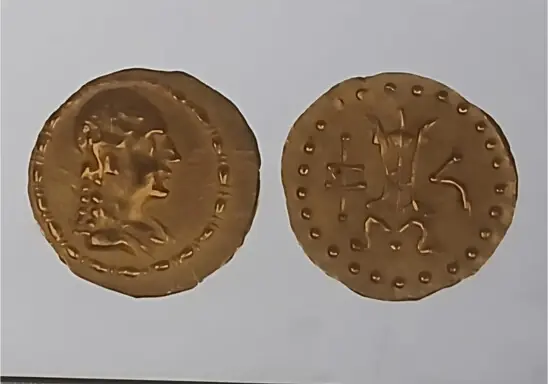
The Department of Archaeology and Museums is set to inaugurate a new gallery showcasing a fascinating collection of ancient artifacts repatriated from the United States, including an extremely rare gold coin engraved with the portrait of the first woman who ruled the Gandhara region.
“There are only two coins in the world bearing the impression of Queen Agathokleia. One is believed to be in a private collection. The second is now proudly owned by the Department of Archaeology and Museums,” Deputy Director Museums, Department of Archaeology and Museums (DOAM), Dr Abdul Ghafoor Lone, told Dawn.
“It is unique because of the portrait of the first woman who ever ruled the region,” the senior official added.
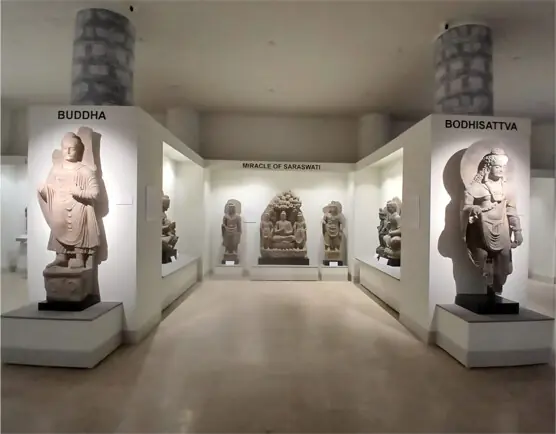
Some 170 items, including several rare treasures, have been selected for display in the new gallery titled “Legacy Returns Home”. All the artifacts were repatriated through diplomatic channels under the 1970 UNESCO Convention in four shipments between August 2021 and August 2025.
According to the US mission in Islamabad, over the last 10 years, the Antiquities Trafficking Unit of the Manhattan District Attorney’s Office, assisted by the US Department of Homeland Security, seized and returned 514 antiquities collectively valued at nearly $23 million to the people of Pakistan.
“Many of these artifacts are truly unique, and all were seized pursuant to criminal investigations into multiple trafficking networks that involved, among others, convicted traffickers Tatsuzo Kaku, Nayef Homsi, Richard Beale, as well as Subhash Kapoor, who was indicted by the Antiquities Trafficking Unit in 2019 and is awaiting trial pending his extradition,” the mission stated.
“It is still not clear how Subhash Kapoor spirited these treasures out of Pakistan. He was recently sentenced to 10 years in prison in India for stealing artifacts from temples,” said Dr Ghafoor Lone.
The official referred to a report published by the international Art Newspaper on charges stemming from a massive smuggling ring allegedly run by American national Subhash Kapoor through his gallery, Art of the Past, from 1986 to 2016. The network allegedly brought thousands of looted artifacts from Afghanistan, Cambodia, India, Pakistan and other countries, worth more than $145 million combined, into the United States for sale.
Dr Ghafoor Lone invited the public to visit the gallery when it opens on May 13, promising visitors an epic journey through hundreds of years of Gandhara history.
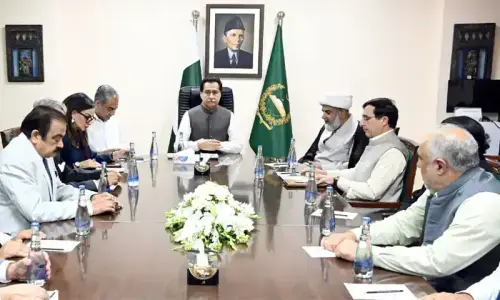
Minister for National Heritage and Culture Aurangzeb Khan Khichi, the Charge d’Affaires of the US mission in Islamabad and other senior American officials are expected to inaugurate the gallery.
The stunning Gold Strato I Coin of Queen Agathokleia, roughly the size of a fingernail, was minted around 105-85 Before Common Era (BCE) during the reign of King Strato I, who ruled parts of the Indo-Greek Empire, including Gandhara, in what is now northern Pakistan.
The Antiquities Trafficking Unit seized the coin in 2023 when British coin dealer Richard Beale attempted to smuggle it into the United States. The investigation led to the conviction of both Beale and his co-conspirator, Italo Vecchi, for antiquities trafficking in 2023.
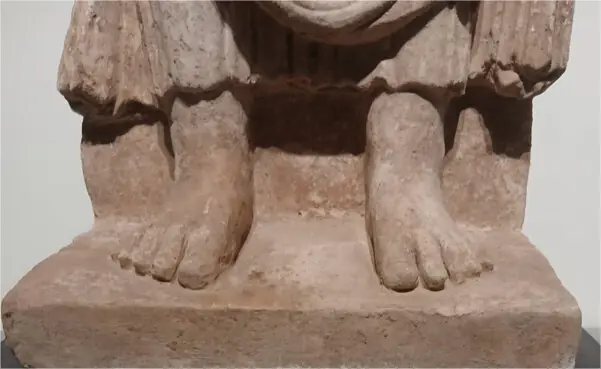
Among the other star attractions is a 2nd to 3rd Century Common Era (CE) stucco Buddha in immaculate condition. Sculptures made in stucco are found only in the Taxila Valley and Afghanistan.
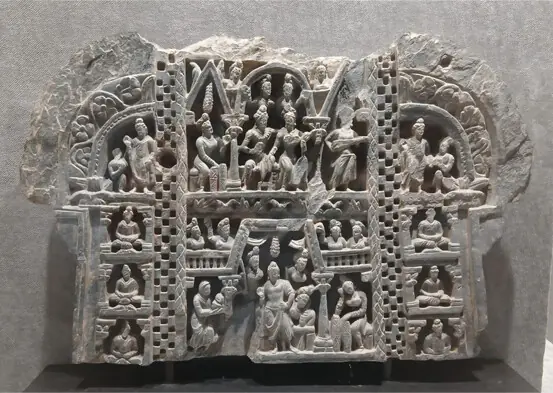
Also on display is a grey schist stone panel from the 2nd to 3rd century CE depicting the Palace Life of Prince Siddharta (Buddha) and the Great Renunciation. The upper panel portrays the luxurious and isolated palace life of Prince Siddharta before his enlightenment. On the left of Yasodhara, female musicians are shown playing music while four heavenly figures stand in the background.
Equally fascinating are the stories behind the 1st to 10th century artifacts, including figures of a female devotee, Durga, Hariti, Bodhisattva Avalokiteshvara and a Deity Couple, all of which were saved from being auctioned in New York.
“These would probably have been lost forever had they not been confiscated by authorities,” Dr Ghafoor Lone said.
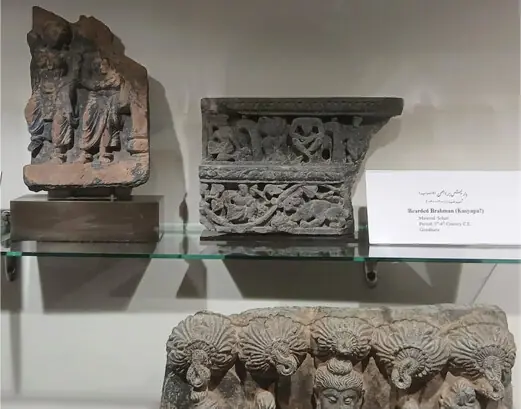
Other items likely to attract visitors include an exceptional schist stone frieze carved in relief depicting seven incarnations of the Buddha standing to the right of Bodhisattva Maitreya.
The frieze dates back to the 2nd-3rd century and is a typical example of art from ancient Gandhara, a region in present-day northwestern Pakistan.
The gallery also features a stunning collection of terracotta figurines dating from 3500-2600 BCE from Mehrgarh, a Neolithic archaeological site in Pakistan. Among the earliest human-crafted figurines in the world, these terracotta artifacts are believed to represent a mother goddess or another cultic figure used for worship.
Published in Dawn, May 11th, 2026