Govt directed to bring back deported woman, her family from Afghanistan
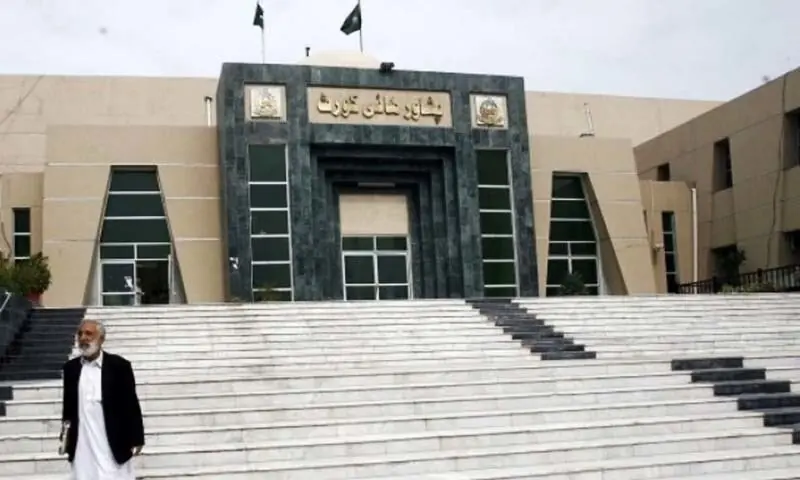

PESHAWAR: Peshawar High Court has ordered the federal government to bring back from Afghanistan a deported Pakistani woman and her family including her husband and five children.
A bench consisting of Justice Wiqar Ahmad and Justice Babar Sattar, while taking exception to deportation of the family, directed the federal interior secretary to explain as to what mechanism was put in place for verifying and ensuring that no Pakistani citizen was deported to Afghanistan during the ongoing deportation drive.
“He shall also take immediate steps to ensure that the petitioners are brought back to Pakistan and shall make all necessary arrangements for their return in collaboration with Ministry of Foreign Affairs,” the bench directed the interior secretary in its order.
The bench ordered that the family should be produced before the court on June 1, the next date fixed for hearing the petition filed jointly by a man, Zafar Khan, her Pakistani wife Rozina and five children.
PHC asks interior secy to explain mechanism about deportations
The bench directed the interior secretary to personally look into the matter and submit a report regarding deportation of the petitioners to Afghanistan.
The bench directed the assistant attorney general, Barrister Rahat Ali Khan, to convey directions of the court to interior secretary.
Advocate Kahlilullah appeared for the petitioners and stated that they had been deported to Afghanistan despite the fact that the woman was a Pakistani citizen having been issued a valid Computerised National identity Card (CNIC), while the male petitioner was her husband, whereas rest of the five petitioners were the offspring born out of their wedlock.
He also referred to birth certificates of the five children.
The bench observed that as per National database and Registration Authority (Nadra) record, CNIC of the man had been placed under the verification category, while CNIC of his wife had been cleared, with no adverse report against her.
The instant petition was filed last year by the family, when it was still in Pakistan, seeking multiple directives from the court.
During pendency of the petition, the petitioners were reportedly deported to Afghanistan in the ongoing implementation of Illegal Foreigners Repatriation Plan (IFRP).
Advocate Khalilullah stated that he received information that his clients had been deported and kept at a camp in Afghanistan.
The husband of the Pakistani woman sought declaration of the court that the act of Nadra refusing issuance of CNIC to him was illegal and he was entitled to Pakistani CNIC and passport.
The petitioners also sought directives of the court for the respondents including Nadra to issue Form-B and other documents to the five children of the couple.
The petitioner claimed in the petition that he was born in a Pakistani family and had been residing in Charsadda. He claimed that he was also admitted to a school in Bara, Khyber Agency on April 8, 1975, which was evident from his school leaving certificate.
He stated that his marriage with petitioner Rozina, who was a Pakistani citizen having valid CNIC, was solemnised in 2002. He claimed that he had applied to Nadra several times for issuance of CNIC to him, but it refused to process his case.
He said that his wife had also filed a civil suit before a civil court in Charsadda, which was returned with the direction to approach the proper forum. He added that appeal against the said order was also turned down by the district court.
The petitioner contended that he had never applied for citizenship of any other country and had never surrendered his Pakistani citizenship, therefore he was entitled to issuance of CNIC.
The petitioners had also sought interim relief, requesting the court to restrain the government and its agencies from taking any adverse action against them till final disposal of their petition.
However, the court had not granted them interim relief.
Published in Dawn, May 11th, 2026