0
0

Pakistan’s labour landscape remains mostly grey, with over 80 per cent of workers outside the documented economy. Even those in the formal sector, despite relatively better conditions, often struggle to make ends meet as wages fail to keep pace with inflation. Living on the edge, workers are hit hardest during crises, while weak implementation renders existing legal protections largely ineffective.
According to the Labour Force Survey 2024-25, Pakistan’s labour force stands at 83.1 million, with higher participation largely driven by the expanding service sector. Agriculture now employs 33-35pc of workers, industry around 15pc, while nearly half are engaged in services.
Unionisation remains extremely low, at just 2.2pc of the employed workforce. The average wage of paid employees ranges between Rs39,000 and Rs40,000, less than half of the approximate living wage of Rs90,000 for a family of seven, with the vast majority working without formal contracts.
Since the Eighteenth Constitutional Amendment in 2010 devolved labour to the provinces, efforts have been underway to modernise legislation. Meanwhile, laws such as the Sindh Factories Act 2015, Punjab Domestic Workers Act 2019, and the recent Punjab Labour Code 2026 seek to safeguard workers’ basic rights, including working hours, wages and unionisation.
‘There remains a significant gap between legal coverage and actual enforcement, with overall compliance still weak’
While broadly aligned with key International Labour Organisation conventions on minimum wage, working conditions, pay equity, and forced labour, effective compliance remains weak, particularly in the large informal sector, due to limited enforcement capacity, especially at the provincial level.
Experts largely blame both tiers of the government for the situation. Workers’ groups hold employers accountable for flouting labour laws and using financial clout to influence court cases, while corporate leaders point to economic mismanagement, government interventions, policy uncertainty and a hostile business environment as the root causes of workers’ distress in Pakistan. The government boasts of consistently improving the legal framework and, in the process, improving implementation, though no timeline was shared by the provincial departments approached.
“This is not a matter of omission but of commission by the government. It effectively allows enterprises to exploit labour. It is unrealistic to expect business owners to prioritise employees’ rights when their primary objective is profit-maximisation. In the absence of strong oversight and an effective legal framework, firms tend to suppress wage bills to offset inefficiency costs and remain competitive in domestic and international markets.
“It is no coincidence that many businesses have expanded and multiplied their wealth many times over the past 25 years, yet remain reluctant to pay even the minimum wage, far below a living wage in Pakistan. I see a nexus between segments of the state, business and the judiciary that, in practice, enables the exploitation of workers and accumulation of unearned gains,” a former senior official in the labour ministry said privately.
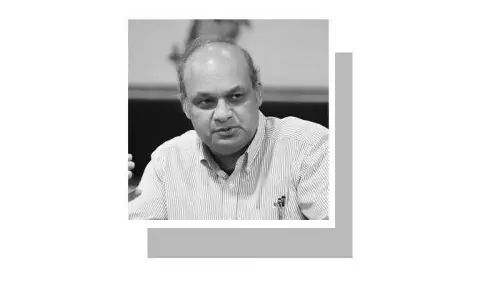
Dr Aliya Khan, a key labour economist, acknowledged efforts by federal and provincial governments to extend legal protection to segments of the informal workforce, but said urgency is lacking. “Passing worker-friendly laws is only the first step. It must be followed by rule-making, notification, registration of beneficiaries and building administrative capacity for implementation,” she said.
She cited home-based worker laws enacted across provinces, as well as legislation for domestic workers in Punjab and Islamabad, where follow-up action remains pending. Sindh’s law recognising female agricultural workers has recently had its rules notified, but the implementation timeline remains uncertain. “The track record has not been encouraging,” she noted.
Dr Khan added that only about 18 pc of Pakistan’s employed workforce — around 14.4m workers — is theoretically covered by labour laws. “There remains a significant gap between legal coverage and actual enforcement, with overall compliance still weak,” she said.
“A section of the business lobby, with backing from parts of the establishment, views labour laws as ‘a baggage of the past’. It advocates unrestricted hiring and firing and sees minimum wage floors as state intervention that limits the flexibility required to compete in the market,” an expert said, requesting anonymity.
Commenting, Iftikhar Ahmad, Founder of the Centre for Labour Research, said bridging the gap between labour laws and their implementation requires stronger enforcement, simpler compliance and greater worker empowerment.
He noted that labour inspectorates must be strengthened with adequate resources and operational independence to ensure regular, unbiased inspections. With fewer than 600 inspectors for a workforce of 85.6m — roughly one per 142,000 workers — digitisation of employment records, wage payments and inspections is essential to enable risk-based enforcement and improve transparency.
Moreover, converting complex provisions into clear compliance checklists can ease adoption, particularly for small enterprises. The Punjab Labour Code 2026, which consolidates 26 laws into a single framework covering around 48m workers, is a step in this direction.
He stressed that workers must be able to claim rights without fear. This requires accessible grievance mechanisms, protection from retaliation, legal aid and support for freedom of association. Penalties should be strong enough to deter violations. The new code introduces a “penalty unit” linked to the minimum wage, ensuring fines adjust automatically with wage revisions and remain effective over time.
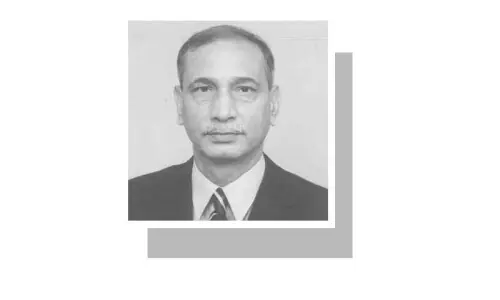
Majyd Aziz, President, Employers Federation of Pakistan (EFP), said that in December 2017, during his earlier tenure, the three social partners — employers, workers and government — held extensive consultations and reached consensus on six key principles, later endorsed at the first Sindh Tripartite Labour Conference. In February 2018, EFP drafted a 60-point Sindh Labour Policy, which was approved without any amendment.
Despite a relatively progressive framework, he noted, implementation remains uneven. Political interference and bureaucratic hurdles persist, particularly in the composition of bodies such as the Minimum Wage Board, Sindh Employees’ Social Security Institution, Employees’ Old-Age Benefits Institution and the Workers Welfare Fund, where agreed mechanisms have often been bypassed, leading to allegations of mismanagement.
Workers cite cumbersome union registration processes, while employers complain of excessive inspections. Tripartite forums, meant to resolve disputes, are rarely convened, forcing reliance on bilateral engagement. Mr Aziz also flagged concerns over labour disputes being escalated internationally, which can harm Pakistan’s image and export sector.
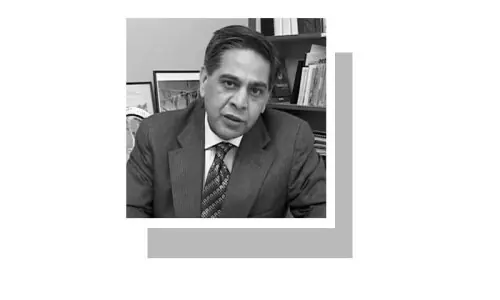
Gulfam Memon, a former Sindh Labour Department officer and consultant, said the province has a relatively strong legal framework but faces persistent implementation gaps. He attributed this to weak enforcement capacity, corruption, political interference, judicial delays, low worker awareness, inadequate and untrained inspection staff, overlapping agencies, complex laws and cost pressures that push businesses to suppress wages. n
Published in Dawn, The Business and Finance Weekly, May 11th, 2026