Battle of Truth


 0
0


A YEAR after the four-day military confrontation between India and Pakistan, it is time for introspection to develop a better understanding of what led India to commit this blatant act of aggression and to draw lessons that can be applied to handling future crises of this sort. First, let’s figure out why India attacked several non-military sites in Pakistan on May 7, killing 31 civilians. Prima facie, it wanted to avenge the April 22 terrorist attack on tourists in Pahalgam in Indian-occupied Kashmir.
In a knee-jerk reaction, India blamed Pakistan. The latter condemned the incident and called for an impartial investigation. India expected the world to accept its allegations against Pakistan, with no questions asked. But to its surprise, not one country endorsed its allegations. For over two decades since 9/11, India has sold a flawed narrative to the world that Pakistan was the epicentre of terrorism. That lie now stood exposed.
Another plausible reason for the May 7 aggression, codenamed Operation Sindoor, was to establish a new normal that India could use force against Pakistan unilaterally and pre-emptively if it suspected a Pakistani link to terrorism in India. Little did it know that Pakistan was well prepared to beat back its aggression and defend itself. Responding swiftly, the Pakistan Air Force brought down seven Indian aircraft, including the pricey Rafale, which were flying beyond visual range. Instead of backing off, India sent in armed drones to destroy Pakistan’s air defences and radar installations and later its missiles struck three Pakistani bases.
When it became evident that neither international law nor diplomatic efforts would check India’s aggression, Pakistan struck back on May 10, now observed as Youm-i-Marka-i-Haq (Day of the Battle of Truth). Pakistan’s network-based, integrated, and multi-domain counter attack, employing missiles, drones, electronic warfare and cyberattacks, was so emphatic that India ended up asking the US to help secure a ceasefire.
The myth of India’s conventional dominance has been broken.
Some analysts believe that the Indian attack represented its regional assertiveness, with the Hindutva-driven BJP government voicing its ambition to create ‘Akhand Bharat’. This hegemonic agenda is flawed; the Indian subcontinent was never ruled by a single political entity until the British brought administrative unity. In fact, India’s hegemonic attitude towards its own region has hindered its desire for a higher global profile.
Following the Pahalgam attack, India suspended the Indus Waters Treaty, threatening the lives and livelihoods of millions of Pakistanis. This breach of international obligations was triggered, in part, by the hostile anti-Pakistan, anti-Muslim rhetoric that Narendra Modi’s government had indulged in for years, particularly during poll campaigns. Indian threats to disrupt or divert Pakistan’s share of waters are a high-risk strategy because Pakistan will see it as an act of war. New Delhi’s hostile rhetoric and hubris, accentuated by the media, may have compelled India to attack Pakistan. Within days, India received a rude reality check.
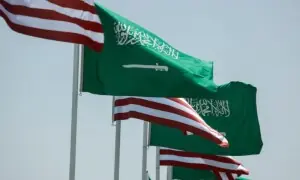
Pakistan’s response to Indian aggression has broken the myth of India’s conventional dominance and demolished its narrative that links Pakistan to terrorism. Pakistan’s diplomatic space also expanded as its success resonated with world leaders, including the US president. Saudi Arabia signed a Strategic Mutual Defence Agreement with Pakistan. Later, Pakistan contributed to efforts for an end to Israel’s genocidal war in Gaza and mediated a ceasefire between Iran and the US. Since it all started with Pakistan’s sterling performance last May, Marka-i-Haq has become a turning point in regional geopolitics.
Will India resume its paused Operation Sindoor? It appears that while its armed forces address their shortcomings, Sindoor is continuing through proxies such as the TTP and BLA. Knowing that the current global environment won’t accept its politicisation of terrorism, India might not embark on a kinetic misadventure for now. However, given the hubris of its government, irrationality can resurge. Pakistan must, therefore, be prepared for any Indian decision to launch Sindoor 2.
How should Pakistan leverage its high military and diplomatic profile to convert geopolitical dividends into geo-economic gains? A good starting point is ensuring the ease of doing business, joint ventures under CPEC, developing economic zones and boosting investor confidence. The government should also find ways to reduce input costs for industries, such as pursuing solar solutions. Importantly, it must muster the political will to undertake much-awaited structural reforms in institutional and bureaucratic governance, which are essential for our economic and human security.
The writer is chairman Sanober Institute and former foreign secretary of Pakistan.
Published in Dawn, May 10th, 2026