0
0

KARACHI: When it comes to the world of theatre — or any other form of expression, for that matter — only a handful of subjects can match the enigma and beauty of the man-woman relationship. If one analyses closely, many of Shakespeare’s multi-character plays have the man-woman equation, in various forms and manifestations, as their central themes — Othello, Romeo & Juliet, Macbeth, Much Ado About Nothing etc.
Sharr White’s play Annapurna, which has all the modern-day trappings of the same idea, also falls into that category. An Urdu translation of the script by Noreen Gulwani, directed by Moazim Malik, began for a two-day run on Friday evening as the opening act for the National Academy of Performing Arts (Napa) Repertory Festival.
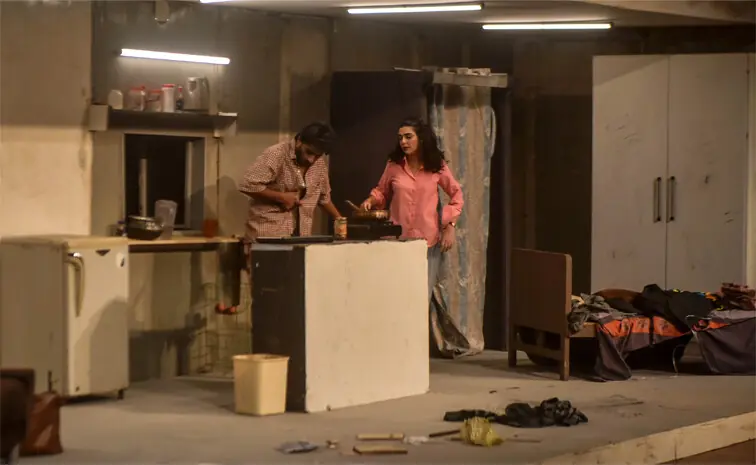
Annapurna starts with the scene of a poorly kept trailer (read: house) in which an equally unkempt man Amir (Husnain Falak) is seen trying to cook food. In comes Ayra (Gulwani), diametrically opposed to her male counterpart — nicely dressed and seemingly well-mannered. It turns out that two decades back, the man and the woman were together as a married couple, and had a son. Then things went sour between them and Ayra ran away from him with the child. Now Amir, a writer/poet has let himself go. His health has deteriorated, his daily routines are all over the place and his churlish disposition has damaged him in more ways than one. Ayra’s return is the result of her getting to know about his failing health and life of Amir. She’s come back to salvage whatever is left of his life and between the two of them.
For some reason, two-handers have become quite popular for Karachi’s theatre practitioners. [For example, a play Mulaqat, which is going to be staged at the same festival a few days later, has already been produced twice in recent times.] The major challenge with a two-hander is that both actors need to be in tune with each other’s body language, that is, when they converse with one another, it shouldn’t sound like they reacting only to the spoken lines — the reaction should also be to the personality traits they’re dealing with.
Annapurna means well. It’s a nice attempt and the director must be commended for picking a sensitive story. Sadly, intention alone doesn’t go very far. Sometimes tiny things matter, too. For example, the attention to production value. Amir is seen in a poor economic situation, and yet the apron (or some such piece of clothing) that he wears looks new and well-ironed.
Then sitting in the Zia Mohyeddin Theatre hall (named after the great Zia Mohyeddin who was extremely particular about diction and pronunciation), it doesn’t feel okay to hear an actor say ‘gareeb’ on stage instead of ‘ghareeb’.
The festival will conclude on May 23.
Published in Dawn, May 10th, 2026