Sindh to provide cash assistance to caregivers of children up to five
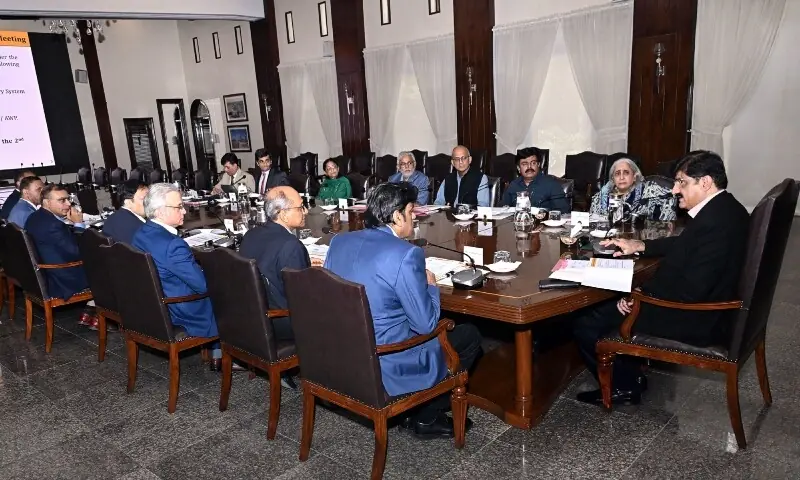

KARACHI: Caregivers of children up to five years of age in Sindh will receive Rs3,000 every quarter for growth monitoring, nutrition counselling and school readiness, as the provincial government rolls out a Rs14 billion Early Childhood Development (ECD) programme.
The decision was taken on Wednesday at the third board meeting of the Sindh Social Protection Authority (SSPA), chaired by Chief Minister Syed Murad Ali Shah.
The board approved a package of initiatives to expand the province’s social safety net, strengthen maternal and child welfare, and provide seasonal income support to rural women.
The ECD project, funded by KfW, a German state-owned investment and development bank, will target 885,000 children aged between one month and five years.
Murad approves Rs14bn early childhood development initiative; quarterly payment of Rs3,000 each to benefit over 885,000 kids, meeting told
According to a statement issued by the CM House, the meeting was attended, among others, by provincial ministers Dr Azra Fazal, Saeed Ghani and Syed Sardar Shah, Chief Secretary Asif Hyder Shah, board members Haris Gazdar, Sono Khan, Shireen Narejo, Amar Habib Khan, Planning and Development chairman Najam Shah, Finance Secretary Fayaz Jatoi, Social Protection Secretary Khadim Channa and SSPA CEO Irshad Sodhar.
The initiative is part of a broader push to improve nutrition, reduce poverty and strengthen long-term human development.
The meeting also approved upgrades to the Mamta maternal health cash transfer programme.
The programme is currently operational in 22 districts with a Rs56bn budget, covering more than one million registered beneficiaries.
To improve predictability for poor households, the board adopted a Hybrid Predictable Payment Model that will ensure fixed-schedule cash disbursements even if a health visit is slightly delayed.
In a pro-poor adjustment, mothers will receive full payments for pregnancy or for their youngest child, plus 75 per cent of the conditional cash transfer for an older child under two, ensuring no vulnerable child is excluded.
Rural women to receive seasonal income assistance
The board approved a new Women Agricultural Workers Programme to provide monthly cash transfers during lean seasons for two to four months a year.
The chief minister said that the measure was aimed at helping rural women cope with seasonal income loss, reduce debt and improve food security in farming households.
The meeting was informed that to extend Mamta’s reach, a feasibility study would be carried out with the Gates Foundation for expansion into underserved urban union councils and high-risk areas of Karachi and Hyderabad.
For governance, specialised committees on audit, human resources, legal affairs and research were authorised, alongside a Rs2.29bn budget for fiscal year 2026-27.
“Our goal is to create a predictable and reliable safety net that empowers the most vulnerable women and children of Sindh,” the CM said, adding that by integrating health, nutrition and financial stability, the government was investing in the future of the province.
He said that protecting mothers, supporting young children and assisting rural women during difficult seasons meant strengthening families and building a healthier, more resilient Sindh.
Murad attends 165th reunion of St. Patrick’s School
Later in the evening, the CM attended the 165th Reunion (centennial sapphire) of his alma mater St. Patrick’s High School, marking a nostalgic homecoming at one of Karachi’s most prestigious educational institutions.
The event celebrated over a century (165 year) of academic excellence and nation-building contributions.
Upon arrival, the CM was warmly received by Archbishop Benny Travas, Chairman of the institution, and Fr. Mario A. Rodrigues, along with others.
Addressing the gathering, he highlighted the pivotal role the institution has played in shaping generations of Pakistanis, emphasising the enduring values of discipline, humility, integrity, and service instilled within its walls.
The ceremony concluded with cake cutting and launching of school logo by the chief minister and a renewed commitment to uphold the rich legacy of the institution.
Published in Dawn, May 7th, 2026