Peshawar High Court moved for establishment of ‘Ulema Protection Cell’ by police
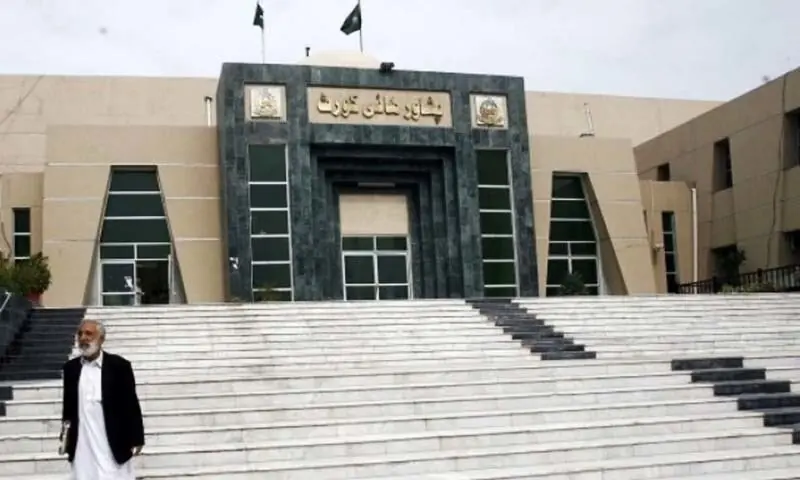

PESHAWAR: Following the assassination of cleric Maulana Mohammad Idrees, a citizen on Wednesday moved the Peshawar High Court seeking the establishment of a special ‘Ulema Protection Cell’ at the Central Police Office here for providing security to vulnerable religious leaders.
Noor Zaib, a resident of Peshawar, petitioned the court for directing the provincial police officer (PPO) to “establish that cell, conduct threat assessment and provide reasonable security to vulnerable scholars.”
He also sought the court’s orders for the government to provide ‘Shuhada Package’ to the legal heirs of religious scholars martyred in acts of terrorism and offer government jobs to one of their legal heirs.
The petition, filed through lawyer Mohammad Hamdan, included the provincial government through its chief secretary, PPO, additional inspector general of police (counter- terrorism department) and home secretary as respondents.
The petitioner said that the assassination of religious scholars including that of Maulana Idrees violated Article 20 of the Constitution that dealt with the freedom to profess religion as well as Article 22 that safeguarded religious educational institutions.
He claimed that during the last many years, several religious scholars were assassinated in targeted attacks in the province as well as in the country, for which formal FIRs were registered but conviction rate was almost nil.
The petitioner said that the assassination of prominent religious figure Maulana Idrees in broad daylight in Charsadda was within the territorial limits of the high court.
He contended that the right to life, as provided in the Constitution, included the right to live in peace, free and without any fear.
The petitioner said that it was the constitutional responsibility of the respondents to protect citizens from target-killing.
He, however, insisted that the respondents had failed to provide special protection to vulnerable classes of people, including ulema, which was a violation to Article 9 of the Constitution that guaranteed protection to public life.
The petitioner contended that the respondents were duty bound and under obligation to act within the framework of law and constitution of the state to redress grievances of the public at large, who had suffered mentally and physically due to unabated targeted killings.
Published in Dawn, May 7th, 2026