Media bodies, civil society raise alarm over press curbs


• Say journalists face harassment, arrests, violence, editorial interference
• Open letter to PM warns of intimidation, legal, economic pressures
• President, premier renew resolve to protect press freedom, stress credible reporting
• Info minister hails media’s role in shaping Pakistan’s global narrative
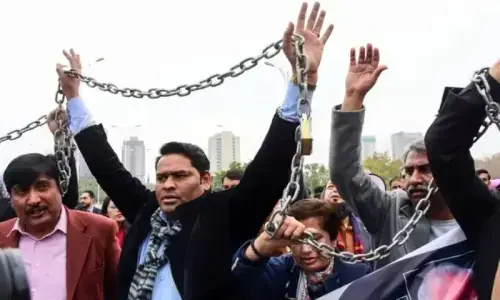
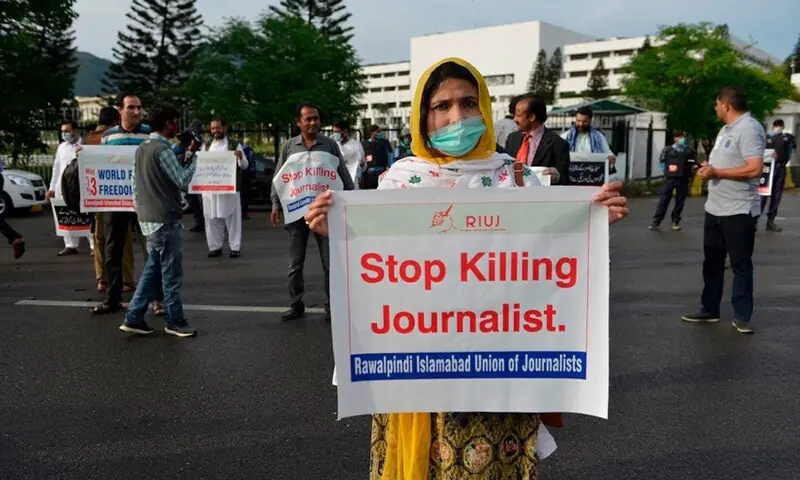
ISLAMABAD: Media bodies and civil society organisations on Saturday raised alarm over growing curbs on press freedom and rising risks to journalists in Pakistan, as the country marked World Press Freedom Day with calls for stronger protections and institutional reforms.
In a joint statement, the Joint Action Committee — comprising the Pakistan Broadcasters Association (PBA), All Pakistan Newspapers Society (APNS), Council of Pakistan Newspaper Editors (CPNE), Association of Electronic Media Editors and News Directors (AMEND) and Pakistan Federal Union of Journalists (PFUJ) — said the past year had been particularly challenging for journalism, with increasing restrictions worldwide.
It said that in Pakistan, the state of freedom of expression has not been satisfactory. Journalists face harassment, arrests, violence and mounting pressure from state institutions, while media outlets encounter censorship and editorial interference, the statement said, highlighting how outlets are being controlled at various levels and tactics such as the use of government advertisements to gain editorial control, restricting the right to information through declared and undeclared censorship, and taking dissenting voices off air are being employed.
The statement also highlighted risks faced by journalists in conflict zones, including Gaza and Ukraine. Despite these challenges, the committee reaffirmed its commitment to defending free expression and public access to information.
Civil society letter
Separately, civil society representatives issued an open letter to Prime Minister Shehbaz Sharif, warning that Pakistan’s media landscape was increasingly marked by intimidation, legal pressure and economic vulnerability.
The signatories said World Press Freedom Day, meant to celebrate the role of a free press, instead served as a stark reminder of the risks faced by journalists. They stressed that a functioning democracy depended on strong institutions, particularly an independent media committed to factual reporting and accountability.
The letter highlighted a growing pattern of harassment under the Prevention of Electronic Crimes Act (Peca), which it said was often used to silence dissent rather than secure convictions. Several cases were cited in which journalists were booked under the law but later released due to a lack of evidence.
Among them were Islamabad-based journalist Asad Toor, who faced multiple legal actions over social media posts, and Farhan Mallick, founder of a digital news platform, who was arrested in 2025 on allegations of anti-state activity before being acquitted earlier this year. The acquittals, the letter noted, underscored concerns that such prosecutions were often “fishing expeditions” aimed at intimidation.
Civil society groups also pointed to arrests without formal charges, followed by the use of vague legal provisions, warning that such practices had fostered fear within the media community, leading to self-censorship and limiting public access to critical information.
According to data cited from Freedom Network, at least 58 legal cases were filed against journalists between April 2025 and March 2026, most under Peca. The letter argued that loosely defined terms, particularly around “fake” content, were being used to target both journalists and citizens.
Concerns were also raised about informal methods of control, including alleged “WhatsApp censorship”, where media owners were pressured on whom to feature or exclude. Journalists reportedly faced threats of job loss or blacklisting over personal social media activity.
The letter also highlighted economic challenges facing the media industry, including delayed salaries and layoffs, adding that the withdrawal of government advertising had weakened established outlets and increased financial vulnerability.
President, PM reaffirm resolve
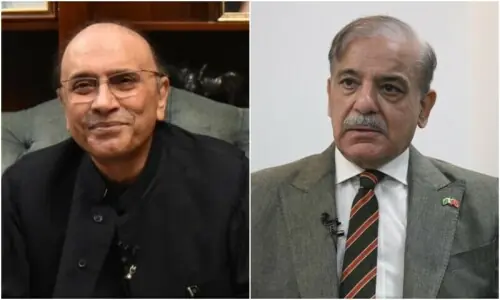
President Asif Ali Zardari and Prime Minister Shehbaz Sharif, in separate messages, reiterated the government’s commitment to protecting press freedom and emphasised the importance of credible journalism.
President Zardari said this year’s theme, “Shaping a Future at Peace”, underscored that peace could not be secured without truth. Referring to Article 19 of the Constitution, he said a free, independent and diverse media was “not a threat to a confident nation, but proof of one”.
PM Shehbaz said the timely dissemination of accurate, impartial and unbiased information remained the cornerstone of credible journalism.
Information Minister Attaullah Tarar acknowledged the media’s crucial role in shaping Pakistan’s global narrative, reaffirming the government’s commitment to a “free, responsible, and vibrant media” in the country.
Published in Dawn, May 4th, 2026