SOUNDSCAPE: REIMAGINING PAKISTAN’S SOUND


 0
0
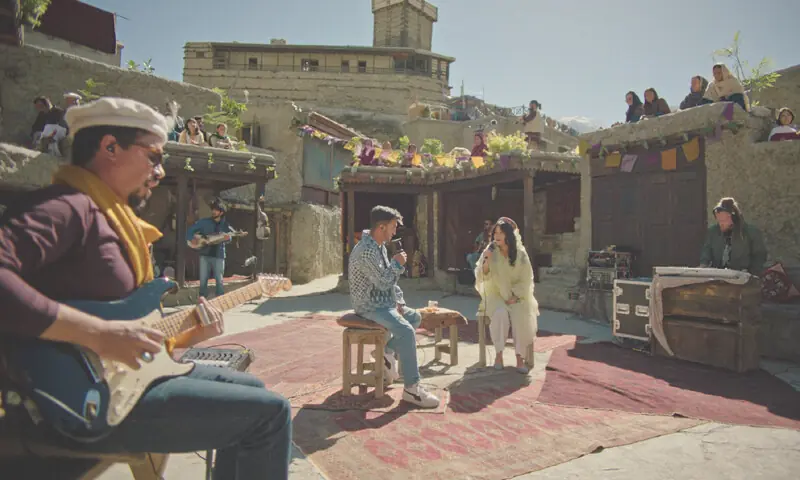

There’s something quietly radical happening in the mountains of Hunza, and it doesn’t arrive with the usual fanfare of a “season drop” or an algorithm-chasing single.
It arrives slower. Colder. Thinner in the air. And somehow fuller in intent. That something is Humnava, which means ‘having the same thought’ or ‘speaking in unison’ in Urdu. It is a music project, yes, but also a proposition: what if Pakistani sound didn’t just travel outward, but invited the world inward?
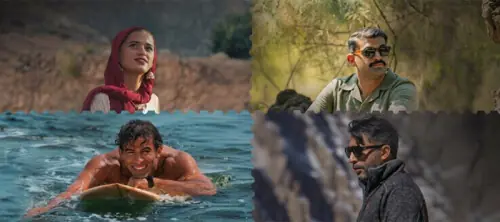
Co-founded by Zulfiqar ‘Xulfi’ Jabbar Khan and Muhammad Ibrahim, Humnava is built as a residency rather than a label or platform. Over the course of roughly 30 to 40 days, more than 30 musicians from Pakistan and countries such as France, Germany, Algeria and Zambia lived and created music together in Hunza, turning the landscape into a collaborator. And you can hear that geography. Not just in the instruments used… but also in the silences.
The first thing that stands out about Humnava’s latest releases is that they resist urgency. In an industry addicted to speed, these songs feel lived-in. The debut track, ‘Hairan Amanam’ is sung in Burushaski — a language spoken in the north but rarely heard in mainstream media — and loosely translates to “I’m in awe.”
Zulfiqar ‘Xulfi’ Jabbar Khan’s latest project, Humnava, brings together musical artists from Pakistan and abroad in Hunza to create something far bigger than just music
Lyrically and emotionally, it leans into themes of humility, connection and surrender… to nature, to love, to something larger than yourself. There’s a sense of being overwhelmed, but in a way that’s grounding rather than chaotic. The use of Burushaski is important here — it anchors the song in a specific cultural and geographic reality, while also allowing it to feel universal. You don’t need to understand every word to feel what it’s reaching for.
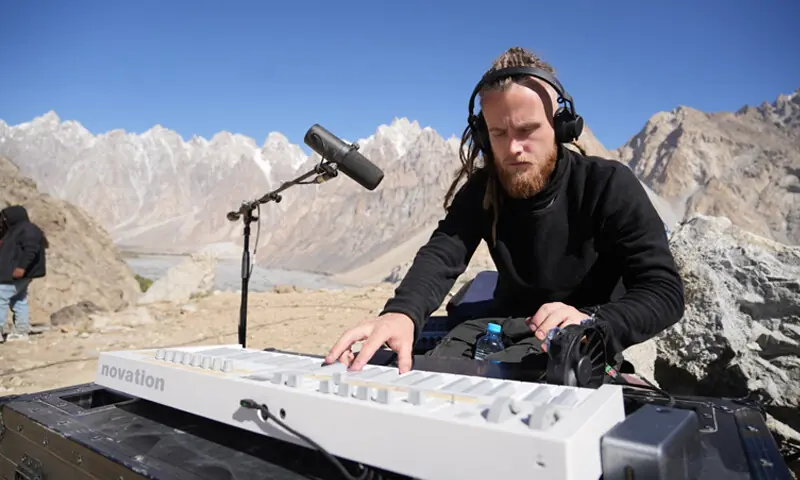
That sense of awe isn’t just lyrical — it’s structural. The track moves like a conversation between worlds: rubab and flute brushing up against synth textures, acoustic intimacy layered with something almost cinematic. It’s not fusion for the sake of aesthetics… It communicates co-existence.
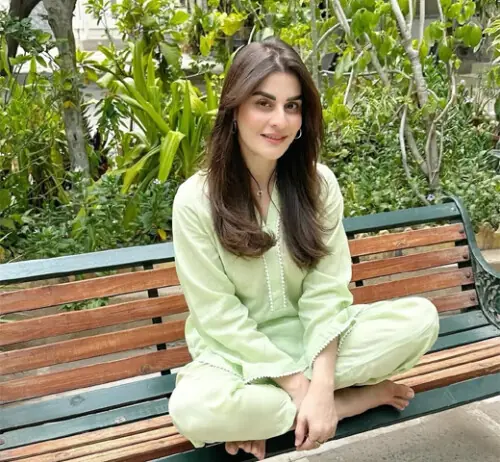
What’s particularly striking is how young voices are introduced. Artists such as Rizwan Abbas and Maheen Sattar don’t feel like “features” but like anchors. And that might be Humnava’s biggest strength: that it doesn’t extract from local culture, it roots itself in it.
Nowhere is this more evident than in ‘Qataghani’ [a traditional, fast-paced dance and music style originating from the former Afghan province of Qataghan], where Moroccan vocalist Bakrin Timlfati’s textured delivery meets the compositional instincts of Germany’s Dorian Jonas Goetsch and a powerful collective that includes Mujeeb Ur Rehman, Ali Habib, Ilhan Karim, Muhammad Hunaid, Blaise Merlin and Adnan Karim.
At the core of the track is a striking dialogue between Dorian and a Hunzai rubab quartet, their interplay forming the spine of a sound that stretches across Central and South Asia. Around them, electric violin, chant, percussion, synth bass and keys move in and out, not as embellishments but as equal participants.
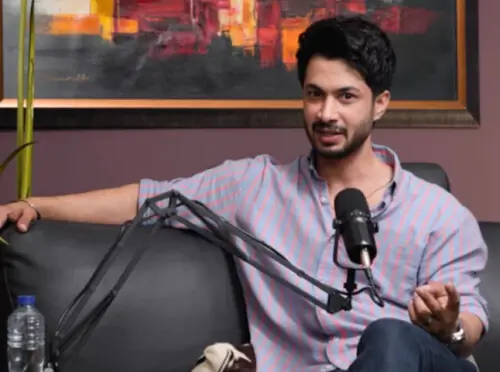
At the heart of Humnava is Xulfi. For years, through music platforms such as Nescafé Basement and Coke Studio, he has been investing in discovering and mentoring new talent, often reshaping how Pakistani music is produced and consumed. With Humnava, that instinct evolves into something more immersive: instead of curating songs, he curates a space for artists to come together and create something magical.
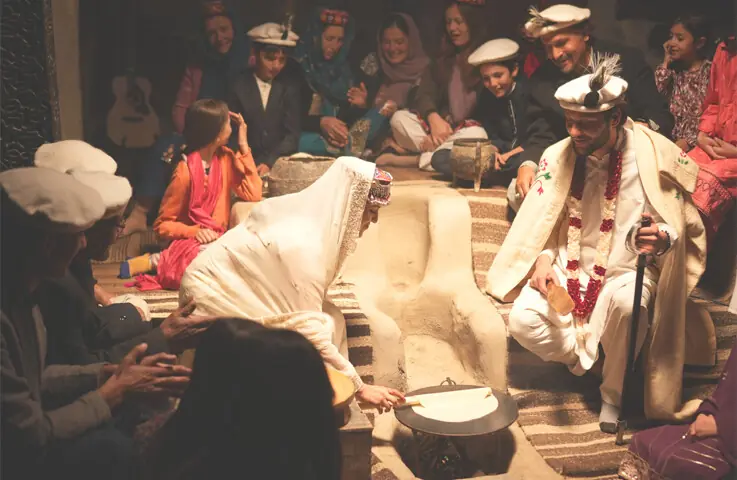
Fun fact: this track wasn’t recorded in a studio (at least not in the traditional sense). In fact, Humnava’s Season 1 music wasn’t assembled in isolated sessions and then stitched together. It was created in a shared, immersive environment, at a camp where artists lived, wrote and recorded collectively. The project has already produced eight original soundtracks, multiple music videos and even a documentary component — positioning it less as an album cycle and more as a multimedia archive of a moment.
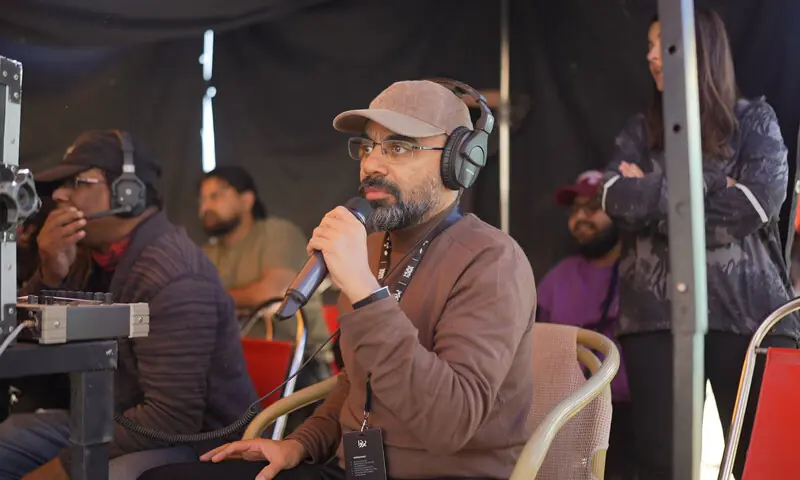
Every few weeks, the team behind Humnava plans to invite a select group of friends, families, collaborators and industry professionals into intimate live previews and conversations, so they can get a deeper insight into the show and the ethos behind it. Yours truly is a part of that group. The first session, held over Zoom, even had Goher Mumtaz from the iconic Pakistani band, Jal. Xulfi, the producer of Humnava, also produced Jal’s debut album. They shared some heartwarming anecdotes from working together back in the day.
At the heart of Humnava is Xulfi. For years, through music platforms such as Nescafé Basement and Coke Studio, he has been investing in discovering and mentoring new talent, often reshaping how Pakistani music is produced and consumed. With Humnava, that instinct evolves into something more immersive: instead of curating songs, he curates a space for artists to come together and create something magical.
His direction gives the music a certain cohesion, but it never feels controlled. If anything, Xulfi’s role here is to loosen the edges, to let the chaos of culture, geography and personality settle into something organic.
Alongside him is Sheheryar ‘Sherry’ Khattak, a longtime collaborator and a key creative force within the project. Known for his work with Xulfi across multiple platforms, Sherry brings a kind of quiet musical intelligence to Humnava — less visible, perhaps, but deeply felt in arrangement, tone and the emotional pacing of the tracks. It’s telling that many artists who participated in the residency describe working with Xulfi and Sherry as a “masterclass in creativity” rather than a typical production experience.
What emerges from this team dynamic is something rare: a project that feels guided, but never imposed upon. Xulfi and Sherry don’t just shape the sound — they shape the conditions for it to exist. And, in doing so, they’ve created not just a body of work, but a way of working that feels, in its own quiet way, revolutionary.
The sound of “global” without losing the local
There’s a temptation, when Pakistani music goes “global” for it to flatten itself — to become more palatable, more export-friendly. Humnava pushes in the opposite direction. It leans into specificity.
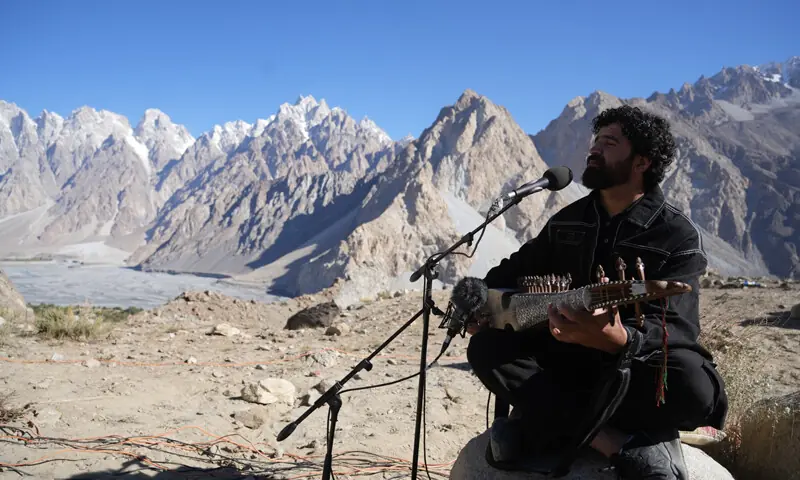
Tracks such as ‘Noor-i-Nazar’ [Light of the Eyes], ‘Qataghani’ and ‘Hairan Amanam’ promise a range of influences, but the ethos remains consistent: local languages, regional instrumentation and stories that don’t need translation to resonate. Many of them can be heard online on platforms such as Spotify and YouTube.
And yet, the global collaborators aren’t ornamental. You can hear their fingerprints in arrangement choices, in subtle genre shifts, in the way certain tracks stretch beyond what we typically categorise as “Pakistani music.” It’s less about East-meets-West and more about dissolving the binary altogether.
A soft kind of activism
What makes Humnava feel important is that the project openly positions itself as part of a larger cultural and even ecological conversation, using art as a bridge across borders and ideologies.
That can sound lofty but, in practice, it’s surprisingly grounded. There’s something quietly political about choosing Burushaski and about recording in Hunza instead of a metropolitan studio.
It’s not protest music. It’s something softer and arguably more enduring: a reimagining of how music gets made, and who gets to be part of that process.
The writer is a former member of staff. She can be reached at syed.madeeha@gmail.com
Published in Dawn, ICON, May 3rd, 2026