PRIME TIME: PURITY AND THE PEOPLE

In the Pakistani TV drama landscape, the recently concluded Aik Aur Pakeezah, a Kashf Foundation drama created in partnership with Geo Entertainment, would be categorised as social commentary. It could be described as one of those dramas that reflect society.
But these descriptions, one feels, do not do justice to the way the narrative challenged troubling, deep-rooted societal norms and upended notions of honour in 27 riveting episodes.
MIRROR TO SOCIETY
If Aik Aur Pakeezah can be likened to the metaphorical ‘mirror to society’, then the image it reflects is a multi-layered one, shrouded in colours that are gloomy, with some spurts of brightness.
Peer deeper into the reflection, and you see shadows that conceal secrets; bright nooks that look appealing from afar but have deep cracks running through them; dark, painful corners; and then, in the far distance, a ray of light for those who choose to fight for what is right.
In a fleeting glance, you could say that the drama exposes the debilitating consequences of cybercrime and society’s inclination to victim-blame. But delve deeper into the story’s architecture, and you find so many more points of conversation, so many norms being challenged, and so much that is disturbing and yet entirely relatable.
Extremely nuanced, tightly woven and intensely thought-provoking, yet widely entertaining, the recently concluded drama serial Aik Aur Pakeezah managed to get some very pertinent messages about cybercrime and the victimisation of women across to audiences
Masterfully written by Bee Gul and directed by Kashif Nisar, this isn’t just an ordinary drama with a linear story that culminates in a happy, romantic ending. The plot weaves through different tracks, designed to make the audience think, to fall in love with the characters and empathise with them.
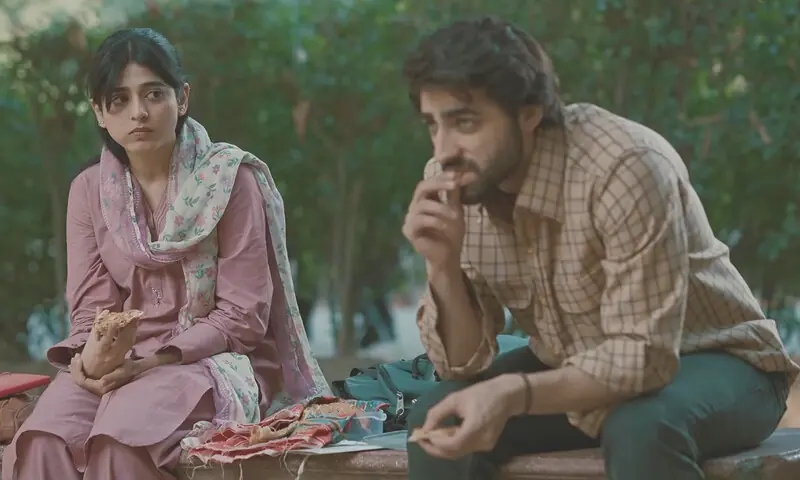
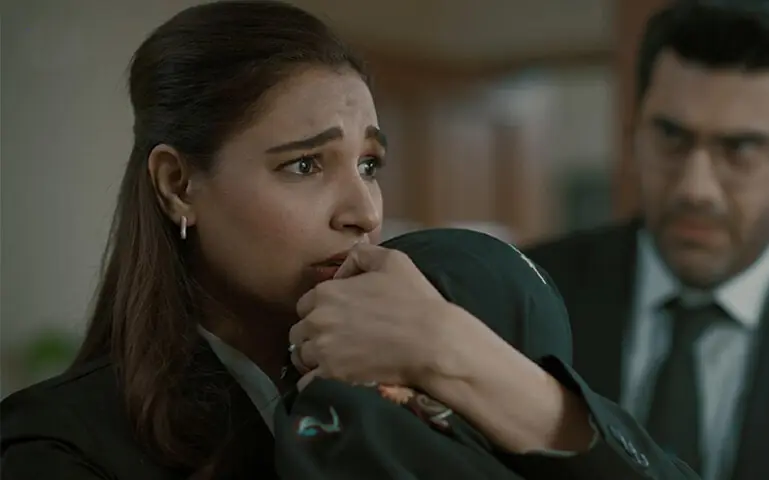
The story swings between Pakeezah (Sehar Khan) and Faraz (Nameer Khan) — whose lives fall to pieces when they are filmed at gunpoint and then their video is released on the internet — to the home of Mummy (Hina Bayat), who is caustic but well-meaning and has a mysterious, murky past, and the lives of Saman (Amna Ilyas) and Zubair (Gohar Rasheed), two newlywed lawyers confronted by a moral dilemma.
Other pivotal characters take their places, like the perfectly fitting pieces of a puzzle: the family, grappling with their sanity now that their ‘honour’ has been sullied; the village woman who lost her youth and her wealth to the family of her deceased husband; the criminal, bolstered by his ego and a twisted sense of morality; and members of the legal system, varying from those who encourage fighting against injustice to others who cringe at the shame attached to the crime.
BEE GUL ON EMOTIONAL EXHAUSTION
I ask Bee Gul, who can be credited for writing some of Pakistan’s finest TV drama scripts over the years, if this is the best script that she has written? She laughs.
“The finest is yet to come!” she says. “I can’t really look at my scripts from that perspective, because I get so engrossed in the world that I have created that I am unable to distance myself and look at the story from an objective point of view.
“Writing Aik Aur Pakeezah was emotionally exhausting and painful and, in my mind, all that was unfolding on paper was real. It was after I wrote it, when I would read out scenes to the director or the cast, that my ears would process the scenes and there were times when I would break down.”
Time and again, dialogues tug at the heart. The titular Pakeezah, tearfully taunts Faraz, highlighting how men are forgiven by their families and not blamed, while women are deserted completely: “Tu apne baap ke saath shaljam gosht kha sakta hai, jo teri maan ne pakaya hai. Main apnay ghar mein tau kya apni gali mein bhi paer nahin rakh sakti [While you’re free to enjoy a meal with your father that your mother has cooked, I’m not even allowed to set foot in my street, let alone my home].”
At another point, Pakeezah’s tone-deaf mother reasons that it was because her daughter had been overdressed and had slapped a man in her neighbourhood when he had tried to grab her hand, that that man took revenge on her with a viral digital video: “Aurat zaat ko dheema ho ke, neecha ho ke chalna hota hai gali mein… jawan larrka hai… machine thorri hai… larrkay se ho jati hain aisi ghalatiyaan jawani mein…. [Women should walk softly and shrink themselves while walking in the street… he is a hot-blooded youth… not a machine… young men do make such mistakes in their youth].”
In the final, groundbreaking episode, Mummy makes an observation when the women in the family of a newborn girl, whose mother had been murdered, refuse to adopt her because she is ‘larrki zaat’ [female]:“Abhi jayega na ghar, tau bitha kar maan, taayi, chaachi ko poochhna woh kaun zaat hain? [When you go home, make your mother and aunts sit down and explain to you what gender they belong to].”
Writing Aik Aur Pakeezah was emotionally exhausting and painful and, in my mind, all that was unfolding on paper was real. It was after I wrote it, when I would read out scenes to the director or the cast, that my ears would process the scenes and there were times when I would break down,” says writer Bee Gul
There are the conversations in Pakeezah’s home, where her elder brother, Akbar (Umer Darr), who once doted on her, wishes that she were dead now that she has stained the family’s honour. In one unnerving episode, he gets so enraged that he tries to kill Pakeezah. Then there are her parents, who initially abandoned their daughter, blaming her for bringing shame to the family, and later become her staunch supporters.
And then there is Faraz, Pakeezah’s husband, who stands by her side even when she recoils from him, standing his ground when his family tells him to leave her, disturbed by the scandal but insistent that the two of them would be able to weather the storm together.
There is, of course, the contradiction lying within Pakeezah’s name itself. The Urdu word implies ‘purity’ and yet, Pakeezah, a young girl with dreams and ambitions, is labelled ‘impure’ because of someone’s heartless crime.
PAKEEZAH AND FARAZ
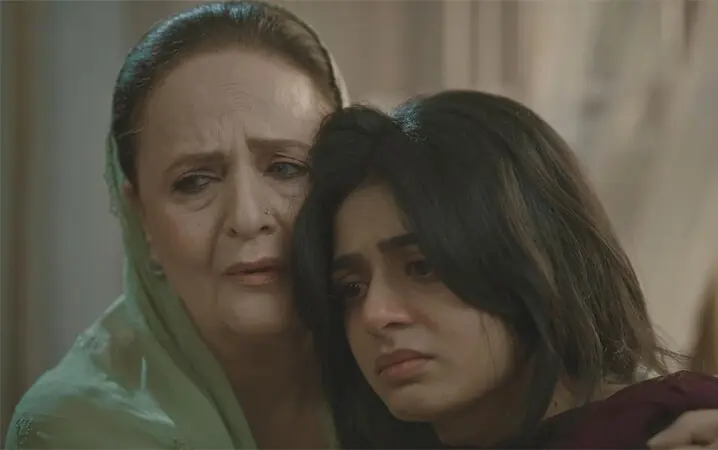
The performances are uniformly brilliant but, of course, the ones that really stand out are the leads.
“I didn’t premeditate my role,” says Sehar Khan, who proved her mettle as one of the country’s finest young actresses with her enactment of Pakeezah. “I just thought, how would I have reacted if this had happened to me? And this is how I performed every scene. The pain on screen was my own pain and I hope that people have seen the drama as if it is their own pain.”
What was the most painful scene for her to enact?
“There were so many,” she says. “One of them was when Pakeezah finds Saman, the lawyer who finally helps her out. This is the
first time that she feels that there is someone who can help get her justice, and understands how she has been violated. For the first time, she breaks down, and I was actually crying uncontrollably in that scene.
“And then the scene in the final episode, where Pakeezah’s mother, in her own way, tells her that it would be an injustice if she forgave her brother, who had tried to murder her. It was a very nuanced, emotional moment.”
Sehar continues: “I actually had to take some time off after playing Pakeezah because the character had drained me emotionally. My main reason for signing on to the drama was that the script had been written by Bee Gul, and Kashif Nisar was directing it. It was only after working in the drama that I could see why Kashif Nisar is respected the way he is.”
For actor Nameer Khan, the drama marks his first time as a male lead.
“I learnt a lot and improved immensely as an actor,” he says. “For me, the biggest challenge was that Faraz’s family was not shown on screen, and yet he would talk about them constantly.
“I had to believably depict Faraz’s struggles and the pain inflicted upon him by the people around him, without the audience being able to see these people physically. I think, to some extent, I was able to do this.”
KASHIF NISAR ON DIRECTING DISCOMFORT
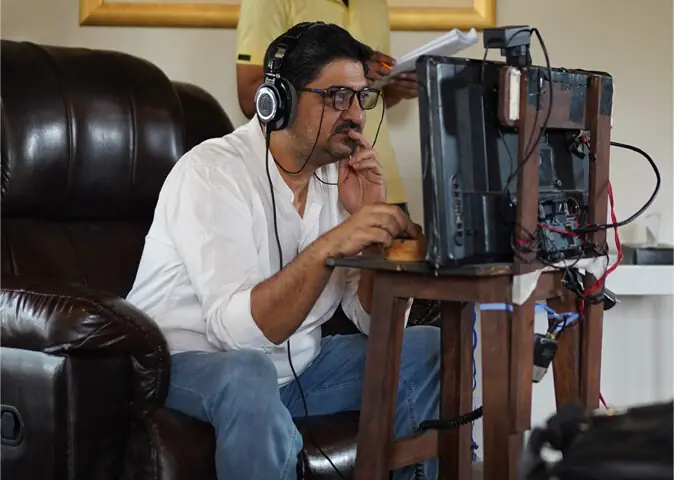
Director Kashif Nisar observes that he had come across such an intelligent script after a long time. “It was very contemporary, very current, very grounded in reality. Bee Gul is an amazing writer.”
Is it relatively tricky tackling a drama centred around certain issues?
“Yes, it is tricky,” says the director. “If four people sitting in a lounge are watching the drama and even two of them begin to get uncomfortable, they are likely to switch the channel and just watch something where pleasant music is playing. It is difficult to grip the audience with a hard watch, but we have tried.”
Aik Aur Pakeezah’s beginning is particularly harrowing, giving glimpses of how a terror-struck Pakeezah and Faraz are held at gunpoint while they are filmed.
“The incident that took place was not our topic — it was what happened before and after the incident,” explains Kashif. “We did not want to deliver breaking news. We were not glamorising or sensationalising the incident. It is a story about ordinary people, a boy- and a girl-next-door you can relate to. I give credit to Bee Gul for writing the story this way. It is brilliant.”
There are certain lead actors and actresses one usually associates with Kashif Nisar but, in Aik Aur Pakeezah, he opted to work with Sehar Khan and Nameer Khan for the first time. Why?
“Bee Gul, myself and Roshaneh Zafar, founder and managing director of Kashf Foundation, collectively decided on the cast,” he says. “I am glad that I worked with these two new actors. They have refreshing perspectives on their roles and they surprised me with some truly outstanding work.”
Aik Aur Pakeezah’s entire cast, in fact, is in a league of its own. The ensemble also includes Noor ul Hassan, Nadia Afgan, Saqib Sameer, Ali Jan, Ali Aftab Saeed, Davar Mahfooz and Namra Shahid, who mastered the Seraiki language in order to slip into the skin of the village-dwelling Noor Bhari.
‘MUMMY’ AS A MORAL COMPASS
Hina Khawaja Bayat, as the incisive Mummy, was the moral compass of the drama.
“She was definitely one of the best characters that I have played,” says Hina. “Bee Gul had thought out the layers of the character so well, and while she was no one’s biological mother, she acted as a maternal figure to so many. She was the writer’s voice, a voice of reason, making comments that would nudge people around her in a particular direction, and make them think about what to do.”
She continues: “Through her own experiences, Mummy was able to relate with and give valuable advice to the women around them. From her stepdaughter becoming a second wife, to Noor Bhari getting abandoned, and Pakeezah getting rejected by her family, Mummy could connect it all with painful episodes of her own life.”
“The power of drama is extensive in Pakistan,” says Kashif Nisar. “If dramas can influence people into changing their wardrobes and styling their hair a certain way, then why not introduce a topic to them as well?”
MAKING MESSAGING WATCHABLE
For Kashf Foundation’s Roshaneh Zafar, the drama has managed to get some very pertinent messages across to a mass audience.
“Hopefully, we have managed to start off multiple conversations,” she says. “Firstly, the drama focuses on victim-blaming, where a certain morality is enforced on a victim and the public becomes judge and jury. And if it is a woman, instead of commiserating with her, the first few questions that people ask are, why did she go there in the first place, or why was she wearing what she was wearing?
“Then, we wanted to raise awareness regarding cybercrime and depict how society looks differently at male and female victims. We wanted the audience to gain more knowledge on what the law says about different issues, such as honour killings, violence against women, divorce and second marriages.”
She adds: “As an organisation committed to women’s empowerment, we want to highlight the importance of having access to justice. At one particular point, Barrister Saman says that, while there are laws to protect women, they are often not implemented because women don’t speak out, silenced by their families or because they associate the crime with shame.”
The Kashf Foundation has now delved into using television dramas to communicate its messages a number of times. Roshaneh explains the process Kashf Foundation adopts in such projects.
“When developing a drama, we always pay very close attention to the script. We work with actual victims and we refer to their real-life stories when we are coming up with concepts for dramas. Once the script is finalised, 80 percent of our work is done.
“Bee Gul, Kashif Nisar and I worked for a long period, just developing the story, and still, when I saw it on screen, even knowing what was going to happen next, the scenes wrung my heart. This drama really turned out to be very special and I feel a sense of internal competition: how are we going to do better than Aik Aur Pakeezah with our next drama?”
Now that, truly, is a challenge. A drama so nuanced, so well-knit, so thought-provoking and yet, in its own way, entertaining, is hard to come by.
The writer is a fashion and entertainment journalist with over two decades of experience. She can be reached at maliharehman1@gmail.com
Published in Dawn, ICON, May 3rd, 2026