0
0
A RECENT incident at Kinnaird College for Women University, an institution known for its legacy of women’s education in Lahore, has raised troubling questions about how we value women and their social role. A teacher in the Genetics Department reportedly mocked a student by belittling her mother for being a housewife, asking whether she had “done something in life” or was “just a housewife”. Such a remark, particularly within an all-women university, is deeply disheartening.
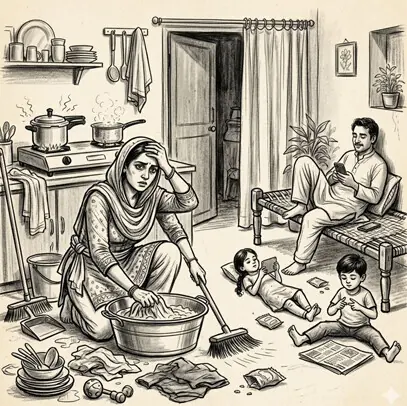
Homemaking is neither idleness nor lack of ambition. It is continuous, unpaid labour that sustains families and, by extension, society itself. Managing a household, raising children and providing emotional stability demand commitment, endurance and skill. To reduce this contribution to ‘nothing’ reflects a narrow understanding of work that recognises only salaried employment, while ignoring the invisible labour that makes such employment possible. Equally concerning is the public humiliation of a student over her family background. Classrooms must remain spaces of dignity and intellectual growth. Educators carry not only academic authority, but also moral responsibility; their words shape confidence, self-worth and a sense of belonging.
Progress for women should not mean replacing one hierarchy with another. Professional achievement should not come at the cost of demeaning those whose contributions lie within the home. True empowerment acknowledges that women’s choices, whether in laboratories or living rooms, deserve equal respect. Universities must uphold a culture of empathy and inclusivity. Respect for all forms of women’s work is not merely a courtesy; it is a principle essential to a just society.
Afifa Shahid
Lahore
Published in Dawn, May 2nd, 2026