Power minister declares end to month-long loadshedding following arrival of LNG shipment


 2
2
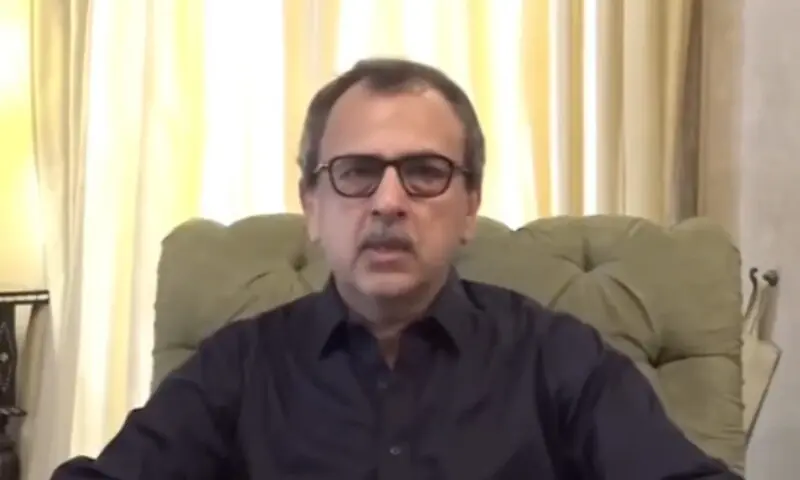

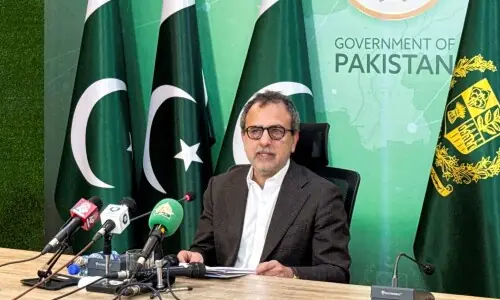
ISLAMABAD: Power Minister Awais Leghari on Friday declared the end of a month-long loadshedding period after a shipment of liquefied natural gas (LNG) arrived in Pakistan a day earlier.
The power minister made the announcement in a recorded televised message, saying that the recent power outages were caused by a gas shortage linked to the war between the US and Iran, and were not the result of “incompetence or system failure”.
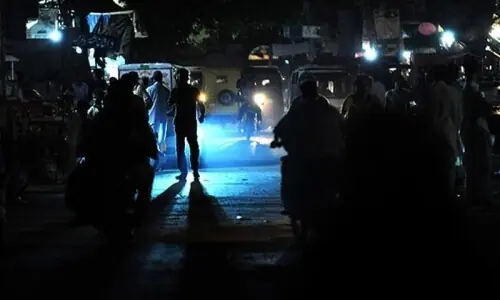
He recalled that on “April 13 and 14, consumers faced power outages of up to five hours, while on April 15–16, they lasted around seven hours”. Leghari added that in the following days, outages were “brought down to zero,” and until April 29, the loadshedding duration was reduced to 2–2.5 hours.
He also recalled that the ministry held a press conference to clarify the government’s stance on the matter.
“Loadshedding had not been experienced for six to seven years, having been eliminated during the tenure of Nawaz Sharif,” he said.
“Using diesel or furnace oil would have made electricity more expensive,” he said, adding that during this period, “hydropower generation increased to 6,000 MW compared to the previous 1,000 MW”.
The minister elaborated that the government had to use fuel-based plants to stabilise supply due to the unavailability of LNG.
“Furnace oil was used selectively to protect consumers from additional financial burden while also limiting loadshedding to 2-2.5 hours,” the power minister said.
Leghari said the government had to buy “expensive gas on the spot market” to mitigate the situation, confirming that the first LNG cargo arrived in Pakistan a day earlier.
On April 24, the state-run Pakistan LNG Limited (PLL) had secured three bids at $17.997 to $18.88 per million British thermal units (mmBtu) for LNG cargoes, which were expected to be delivered between April 27 and May 8.
The minister promised that no further loadshedding would be carried out and expressed hope that the transmission system would withstand the peak summer season.
In his April 16 press conference, the power minister had apologised for excessive loadshedding, explaining that the external factor of the fuel supply crisis due to the Middle East war was one of the main reasons.
Leghari said the required LNG “stopped coming from abroad after April 1”.
He pointed out that Qatar’s state-run energy firm had declared force majeure, which resulted in a “huge gap” in the power requirements fulfilled through gas plants during peak hours.
The minister had further said that the decision of two hours of daily loadshedding had been made to keep electricity prices in control.
On April 14, the government had announced more than two hours of daily loadshedding “during peak hours”. However, K-Electric and Hyderabad Electric Supply Company (Hesco) were excluded from the loadshedding plan.