• Region’s leaders hold first in-person summit since start of Iran war
• Jeddah meeting focuses on regional security, coordinated response
• Emirati exit seen as a blow to oil producing group’s influence
• Oil pares gains, but stays firm as Mideast risks outweigh UAE move
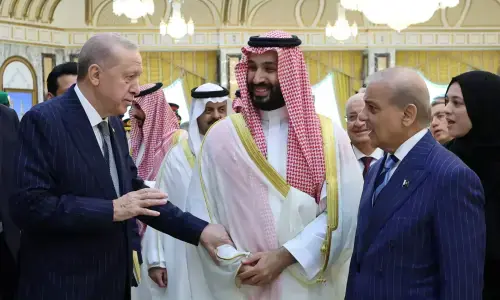
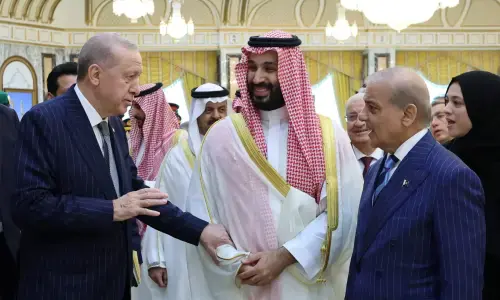
RIYADH: Gulf leaders met in Jeddah on Tuesday for their first in-person summit since the Iran war fuelled tensions across the region, as the UAE announced it would quit Opec next month, highlighting emerging strains within the Gulf bloc amid a deepening energy and security crisis.
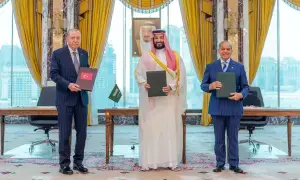
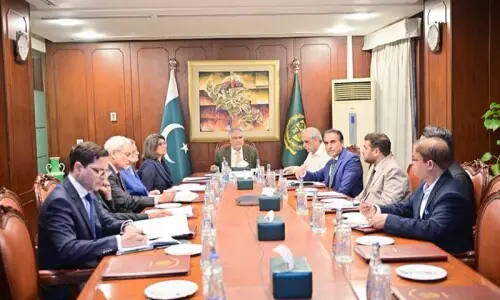
Saudi Crown Prince Mohammed Bin Salman chaired the consultative meeting of the Gulf Cooperation Council (GCC), where leaders discussed a coordinated response to the regional fallout of the conflict.
A Gulf official, speaking on condition of anonymity, said the Gulf leaders’ meeting aimed to craft a response to the thousands of Iranian missile and drone attacks Gulf states have faced since the US and Israel launched the war with strikes on Iran on Feb 28.
“During the summit, a number of topics and issues related to regional and international developments were discussed, as well as the coordination of efforts in response to them,” the Saudi Press Agency reported.
A source close to the government told AFP that “the current political and security situation in the region” was being discussed during the summit.
Qatari Emir Sheikh Tamim bin Hamad Al Thani later said in a message posted on social media that the gathering “embodied the unified Gulf position towards the current situation and what it requires in terms of intensified coordination and consultation”.
The Iran war has seen key energy infrastructure in all six GCC states damaged, with US-linked firms and other civilian infrastructure, as well as military installations, also targeted.
Attacks have subsided since the US and Iran entered a ceasefire on April 8, though Gulf capitals remain wary of resumed conflict, with US-Iran talks for a permanent deal to end the conflict so far inconclusive.
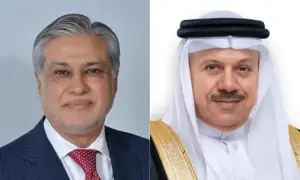
Qatar’s emir, Kuwait’s crown prince, Bahrain’s king and the United Arab Emirates’ foreign minister attended the summit, Saudi state media reported. It was unclear who represented Oman, the remaining member of the GCC along with Saudi Arabia, which hosts the council’s headquarters.
UAE exit
The UAE, one of the world’s top oil producers, which has previously chafed at Opec production quotas, will pull out on Friday, a statement carried by the official WAM news agency said.
“This decision reflects the UAE’s long-term strategic and economic vision and evolving energy profile,” the Emirati statement said.
“During our time in the organisation, we made significant contributions and even greater sacrifices for the benefit of all,” it added. “However, the time has come to focus our efforts on what our national interest dictates.”
The UAE’s departure came after Anwar Gargash, the diplomatic adviser for the UAE president, criticised the Arab and Gulf response to recent Iranian attacks in a session at the Gulf Influencers Forum on Monday.
The Emirates’ Energy Minister Suhail Mohamed al-Mazrouei told Reuters the decision was taken after a “careful look” at the regional power’s energy strategies.
Asked whether the UAE consulted with Opec’s de facto leader and regional heavyweight Saudi Arabia, he said the UAE did not raise the issue with any other country.
“This is a policy decision, it has been done after a careful look at current and future policies related to level of production,” said the energy minister.
The UAE’s announcement trimmed gains in oil prices on Tuesday after climbing back above $110 per barrel, amid a lack of progress in re-opening the key Strait of Hormuz.
Brent crude for June delivery rose 2.7 per cent to $111.19 a barrel. The benchmark US contract, WTI for June delivery, rose 3.4pc to $99.68 per barrel.
Mazrouei said the UAE’s move would not have a huge impact on the market because of the constraints in the strait.
The Organisation of the Petroleum Exporting Countries (Opec) and allies including Russia are known collectively as Opec+, and the UAE was their fourth-largest producer. Together they controlled nearly half the world’s oil before the war.
‘More volatile oil market’
The UAE has been an Opec member through the emirate of Abu Dhabi since 1967, four years before the former British protectorate became a country.
The last Opec member to withdraw from the group was Angola in 2024. Ecuador and Qatar had left the group in 2020 and 2019. But the UAE is a much larger oil producer than these countries, and its decision is more consequential as a result.
Before the war, the UAE was the fourth biggest producer in the 22-member Opec+, behind Saudi Arabia, Russia and Iraq.
Jorge Leon, an analyst at Rystad Energy, said its withdrawal may not immediately impact oil markets while Hormuz shipments remain on hold.
But the UAE will now be free to raise production, “raising broader questions about the sustainability of Saudi Arabia’s role as the market’s central stabiliser — and pointing to a potentially more volatile oil market as Opec’s capacity to smooth supply imbalances diminishes”.
Founded in 1960, the 12-member Opec in 2016 partnered up with 10 other producers to form Opec+ to gain more clout.
The Vienna-based group drew international attention in 1973, when it imposed an oil embargo against Israel’s allies in the midst of the Yom Kippur War, triggering the first oil crisis.
Within just a few months, prices quadrupled, highlighting Opec’s dominance.
Faced with rising competitors in the 1980s, it introduced its famous quota system that enabled it to exert more control over the market.
This strategy meant the group fared relatively well during the 2008 financial crisis and the price shock in the wake of the Covid pandemic, despite increased internal tensions.
Published in Dawn, April 29th, 2026